Harshavardhan Neotia: The restaurateur who eats at home
The chairman of the Ambuja Neotia Group talks about why it is important for him to sharpen his focus on the hospitality business at this stage in his life
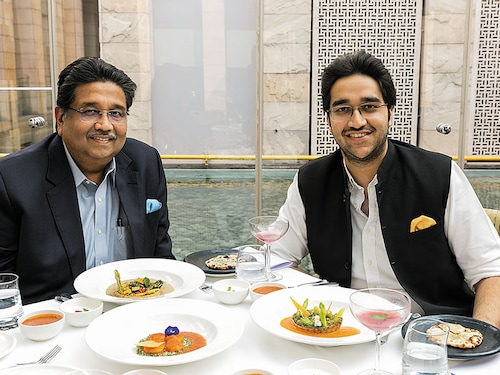
Harshavardhan Neotia, chairman of the Ambuja Neotia Group, with son Parthiv at Delhi’s Indian Accent, the poster child for luxury Indian diningPhotographs: Madhu Kapparath
Advertisement
Pomegranate and churan sorbet
It’s a surprising statement. So, given that he is not a foodie and given the return on investment is not so great in the restaurant business, why get into it at all? I ask again, spooning up a bite of a soothing avocado raita that has now been placed before us.
Harshavardhan is candid. “The return on investment is much lower [in hospitality] than in real estate,” he acknowledges, “but hospitality and restaurants allow you to engage with a range of creative activities that are not possible in other businesses. Within restaurants, you are designing experiences. Having grown up in a joint family with many house guests and surrounded by food, art and culture, I like these influences to be a part of my work too. At this stage in my life, I want my life and work to be unified seamlessly.”
However, he is cognisant of the seriousness of the business. “You need constant innovation and effort. You can’t slip up even with one outlet,” he says, voicing the thoughts of many experienced restaurateurs who often warn ambitious newcomers about spreading too fast and thin. That is why the Neotias are taking one step at a time. Three outlets per financial year have been planned, which are expected to give the company time to build corporate bandwidth necessary to build scale. “Either you can have one mom-and-pop restaurant and operate it well, or hold on till you build enough bandwidth to scale up. If you try to grow without that, you are bound to fail.” Puchkas with water in five different flavours were a part of the tasting menu
We’ve now reached out for our desserts. There’s a delicately sweetened custard apple cream in a jar, served with biscotti. As I dip the biscuit into the cream, I contemplate the equally mild strain of philosophy that has been underlining this conversation all through the afternoon. Harshavardhan’s take on business and life stem from it, and we get glimpses of this larger thought process as he says, “It is important to flow let things happen and let chance come.” It is something he has observed in his life, where things have not gone as planned and yet he has “not been unhappy”. (His real estate business, for instance, began as a passion project on the sidelines of the main cement business the family wanted him to join. It is now the mainstay of his business and has won him a Padma Shri in 1999 for contribution to social housing.) Kashmiri morel mussalam with parmesan papadWinter vegetables and sarson ka saag tart
It’s this same strain of a larger philosophic outlook that I see when he adds how it is important to not chase numbers but “get things right”. “If someone gets into this business [restaurants] to make money, he will definitely fail. He must be genuinely interested in it,” says Harshavardhan.
As the last bite appears on the table, fittingly enough it is daulat ki chaat, chef Manish Mehrotra’s iconic recreation of the Delhi dessert that is made with milk froth, set in clay pots on cold winter nights and sprinkled with sugar. It’s a classic dessert favoured by old-world connoisseurs, a description that fits Harshavardhan well.
It’s light and subtle and also “as ephemeral as wealth”, he smiles.
 Puchkas with water in five different flavours were a part of the tasting menu
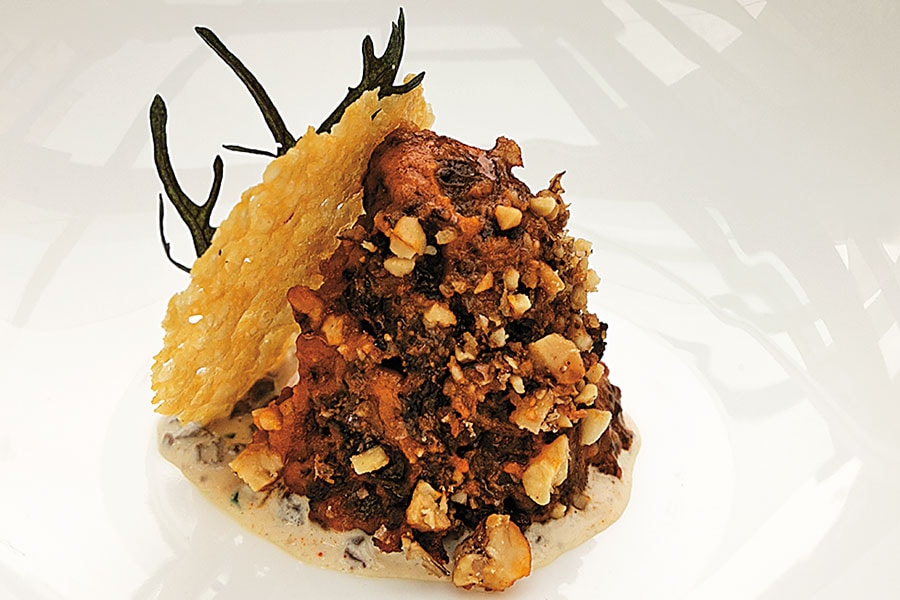 Kashmiri morel mussalam with parmesan papad
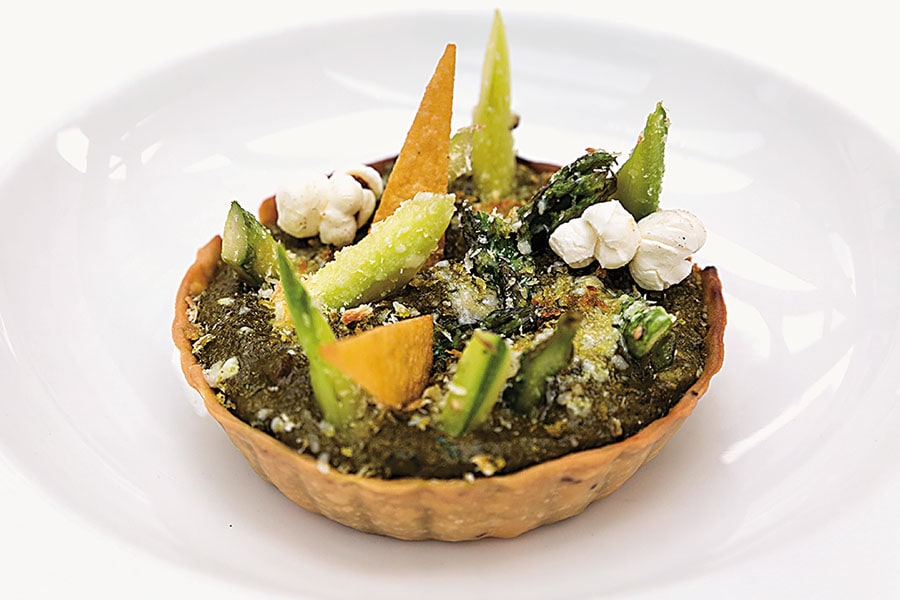 Winter vegetables and sarson ka saag tart