- Home
- Multimedia
- 78th Independence Day Special
The Pressure and the Glory: India’s Olympic medallists since its Independence
Curated by Madhu Kapparath
Since its independence in 1947, India has won 36 medals until the just concluded Olympics in Paris. For a nation of over 1.4 billion people, this meagre medal haul at the Olympics has clearly been a hard hurdle to cross. Over the last two decades, a concerted effort on the part of the government and enterprising initiatives by private entities as well as ambitious athletes have begun an overhaul in talent management and access to world class coaches and training facilities. The scientific process of training and preparing champions is now in place. The upside to India’s slow rise in winning medals is this: We are no longer content with celebrating those who came close to winning one.
India had sent in its largest-ever contingent of 117 athletes across 16 diverse sports disciplines to the Paris Olympics, hoping firmly to step beyond its last performance. As these photos of India’s medal-winning strivings since 1947 indicate, the swell must slowly, but surely, turn into a tide.
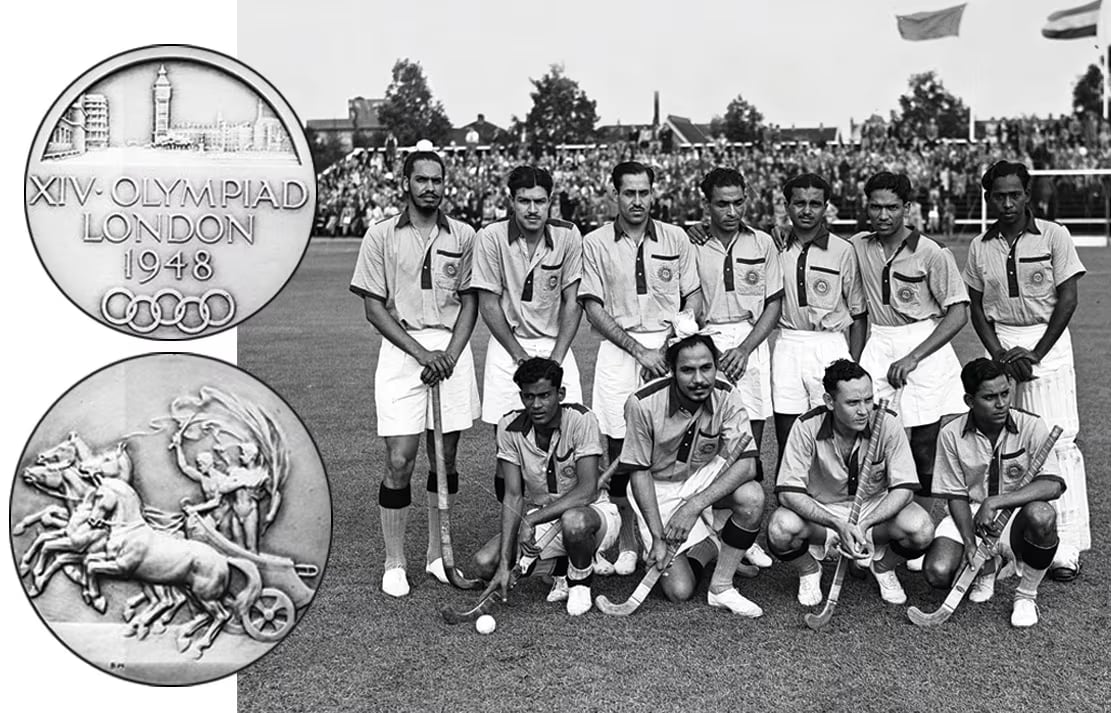
India men’s hockey team
A year after India gained its independence from Great Britain, the 1948 London Olympics saw its hockey team pitted against Britain before a home crowd of 25,000 at the iconic Wembley Stadium. The rising star Balbir Singh Sr scored twice to help India to a resounding 4-0 win, its first gold medal as an independent country. India’s gold was after an enforced lull of 12 years, since World War II that had led to the cancellation of the 1940 and 1944 Olympics.
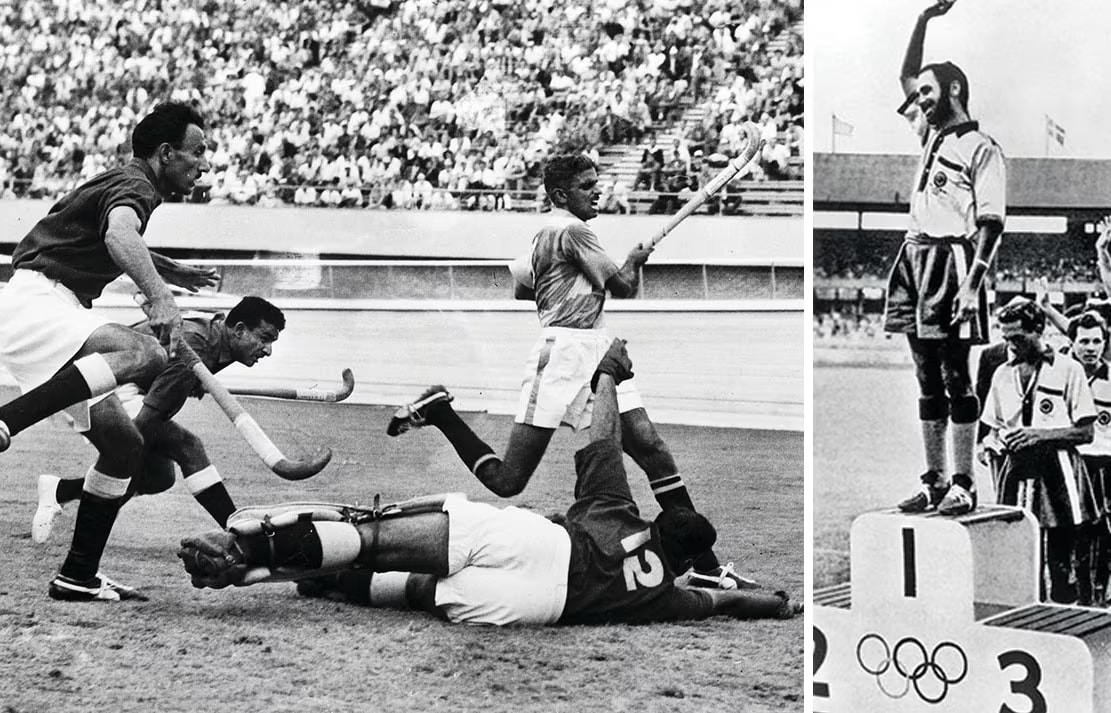
India men’s hockey team
The hockey team would go on to achieve the gold standard, winning it at Helsinki in 1952, Melbourne in 1956 and Tokyo in 1964. The team had to make do with the silver at Rome in 1960, the bronze at Mexico and Munich in 1968 and 1972, respectively. India’s hockey team wouldn’t achieve those heights again until the gold at the 1980 Olympics in Moscow. It would be another 40 years before India would win a medal in hockey, bagging the bronze at the 2020 Olympics in Tokyo.
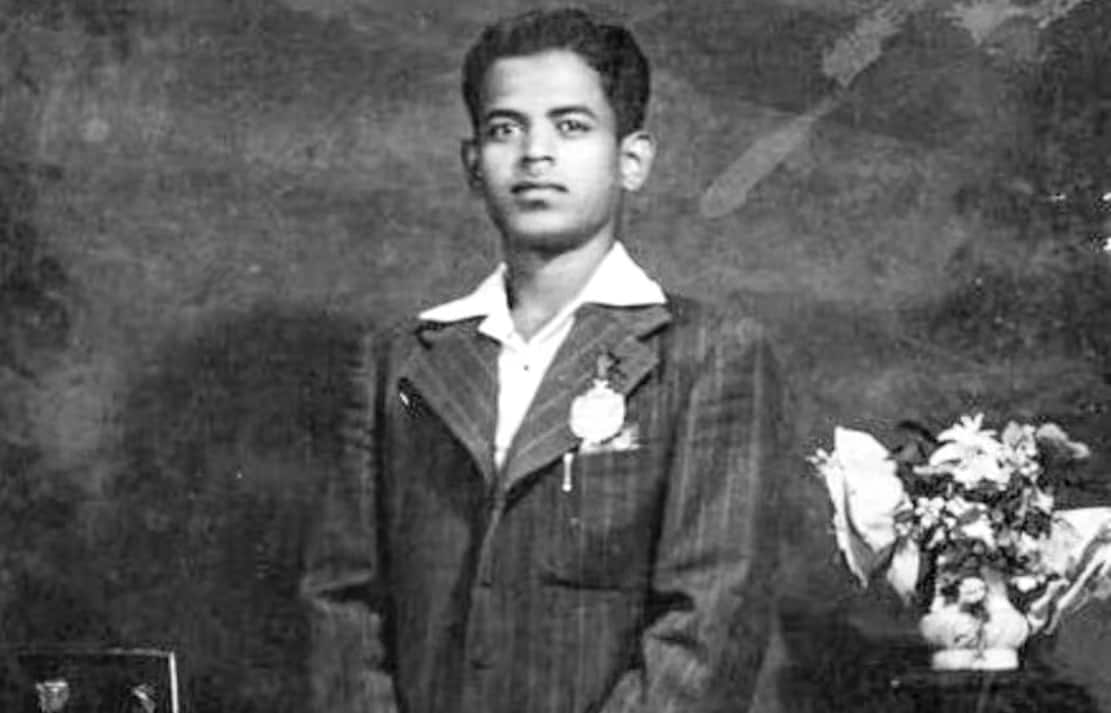
Helsinki Olympics
KD Jadhav - BRONZE
Men’s wrestling (bantamweight)
KD Jadhav was born to a family of wrestlers in Satara, Maharashtra. The diminutive but agile wrestler, used to mud-laden akhadas, finished a creditable sixth at the 1948 Olympics, despite being new to wrestling on a mat. Training even harder for the 1952 Olympics, Jadhav’s trip was crowdfunded by his village and other neighbouring villages, with the principal of a local college even mortgaging his house to help him. Despite losing a bout from being rushed into it, without the mandatory half-hour rest between bouts, Jadhav won India’s first individual medal. He returned home to a cavalcade of 151 bullock carts and dhols, a hero’s welcome.
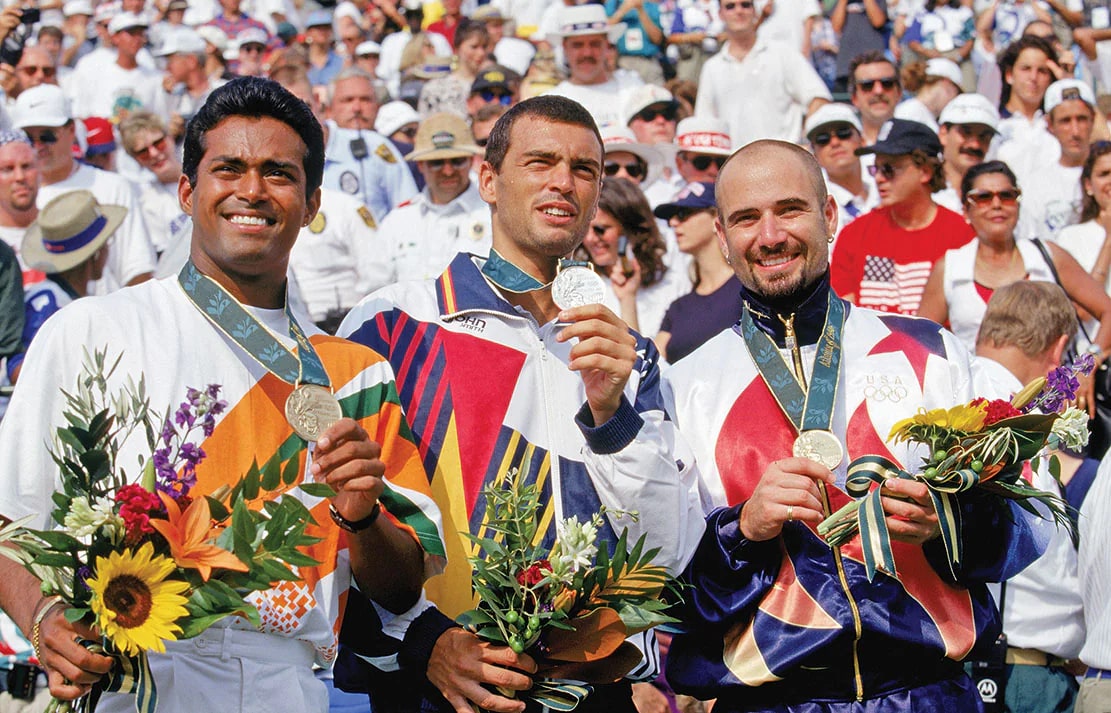
Atlanta Olympics
Leander Paes - BRONZE
Men’s singles, Tennis
Ranked 138th at the start of 1996, Leander Paes made it to the 1996 Games in Atlanta as a wild card entry. The last three Olympics had seen India return empty-handed. Paes had an icon to match up to, his father Vece Paes, who was a member of the bronze-winning Indian hockey team at the 1972 Olympics. Paes lost to Andre Agassi in the semis and was left with a badly injured wrist, but he braved on in the bronze medal-playoff to bring it home, ending a 44-year drought.
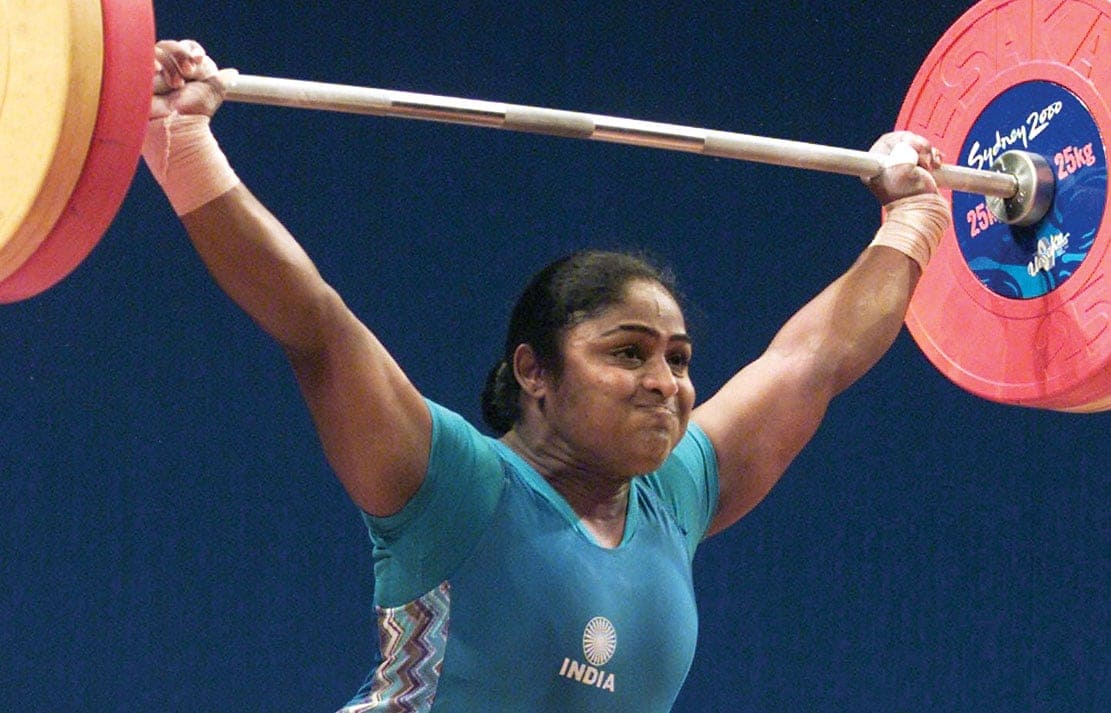
Sydney Olympics
Karnam Malleswari - BRONZE
Women’s weightlifting (54kg)
In interviews, Karnam Malleswari recalls that hardly any of the Indian mediapersons turned up to cover her event at the 2000 Olympics. It was a historic moment when she lifted 110 kg in the snatch and 130kg in the clean & jerk, finishing third, and became the first Indian woman to win an Olympic medal. Malleswari’s regret to this day: An ill-advised attempt to go for 137.5 kg in her final attempt when 132.5 kg could’ve won her the gold.
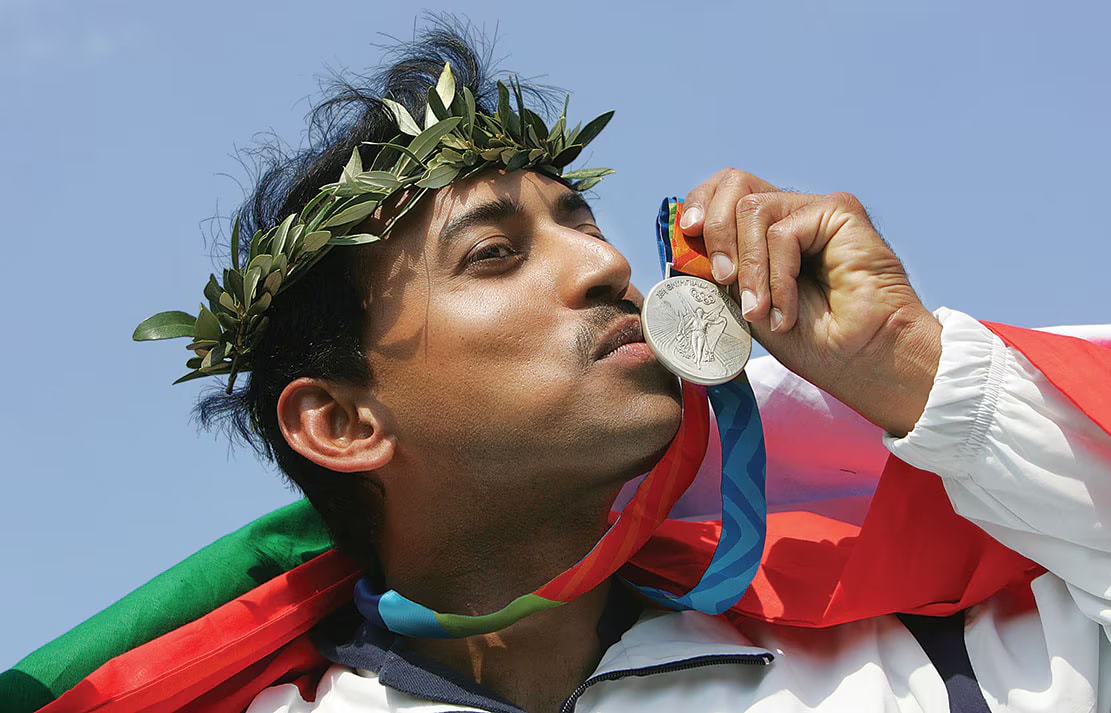
Athens Olympics
Rajyavardhan Singh Rathore - SILVER
Men’s double trap shooting
A graduate of the National Defence Academy, Rajyavardhan Singh Rathore fought in the Kargil War and served in counter-terrorist operations in Jammu & Kashmir. When Rathore went to Athens competing in the men’s double trap event, he was determined to win. “I reached the final two shots and I knew that if I nailed these the Olympic silver is ours. At this point of time, instead of fear, there was an immense amount of aggression coming in…. I shot the first target and my eyes shifted to the next target and bang, I shot that as well.” It was the first ever individual silver for India.
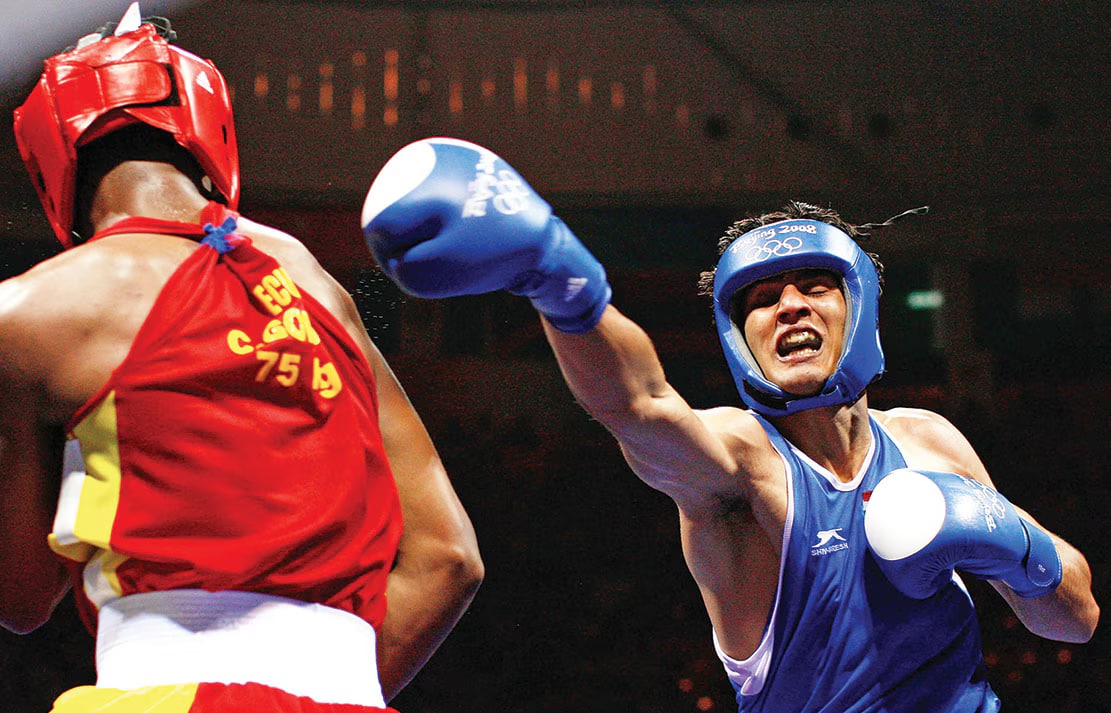
Beijing Olympics
Vijender Singh - BRONZE
Men’s middleweight boxing
Landing a government job was all that the 22-year-old Vijender Singh dreamed of. And boxing was the means to attain the goal for this Jat from Bhiwani, Haryana. At the 2008 Olympics, Vijender was clearly the underdog as much was expected of the other Indian boxers who had qualified for it. Not thinking much about the bigger picture, Singh tuned into ‘signs’ at the Games that filled him with a conviction that something special was coming his way. And it did: An Olympic bronze, a first and the only one by an Indian boxer.
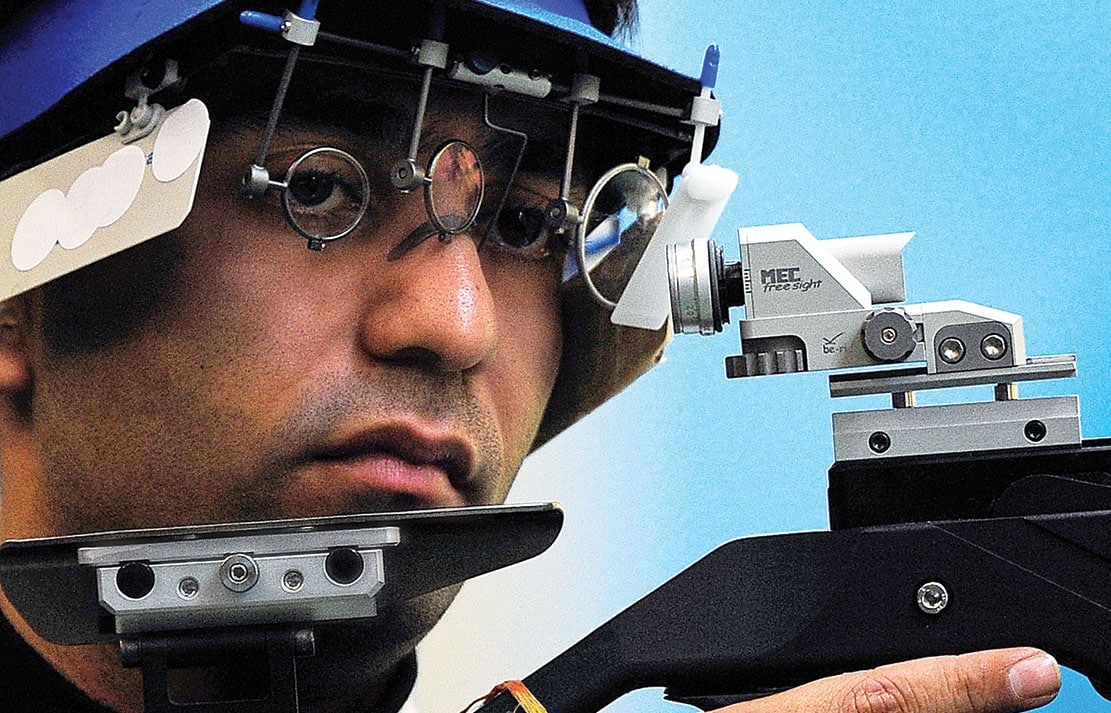
Beijing Olympics
Abhinav Bindra - GOLD
Men’s 10m air rifle shooting
It was a watershed moment in Indian sport. Abhinav Bindra became a national hero, winning India’s first individual gold medal in the men’s 10m air rifle category at the Beijing Olympics. But not many knew of the meticulous preparation that Bindra put himself through, with coaches Heinz Reinkemeier and Gabriele Buhlmann by his side, dress rehearsing in a hall that mirrored the Beijing arena, subjecting himself to every possible eventuality. Despite all that preparation, minutes before the finals the sights on his rifle went out of sync leading to Bindra missing his mark during the practice shots. However, he didn’t panic, and shot an almost perfect 10.7 right through to a gold.
Beijing Olympics
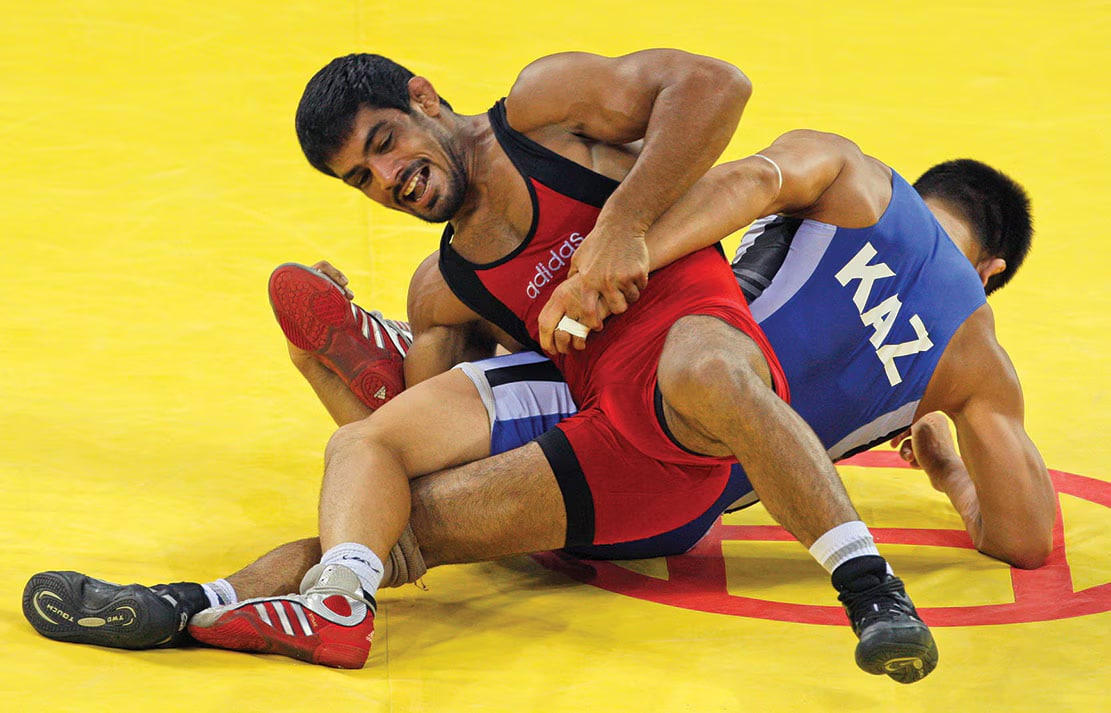
Sushil Kumar - BRONZE
Men’s wrestling (freestyle 66kg)
Harbouring a dream, Sushil Kumar was 14 when he left home near Najafgarh, Delhi, and came to the Chhatrasal stadium to live and train under Satpal Singh, a famous former wrestler himself. Though Kumar started living up to his promise, no one outside the wrestling fraternity thought the Indian grapplers stood a chance to win a medal at the Olympics. Heading into the repechage rounds, Kumar’s fight with Kazakhstan’s Spiridonov was a battle of nerves. Pushed into a crunch situation, Kumar took a daring gambit, twice, with the kainchi daav, using his only standing leg to sweep the opponent off balance and lock him in a leg scissor. Kumar converted the slimmest chance into a bronze, a wrestling medal, ending a 56-year-long wait.
London Olympics
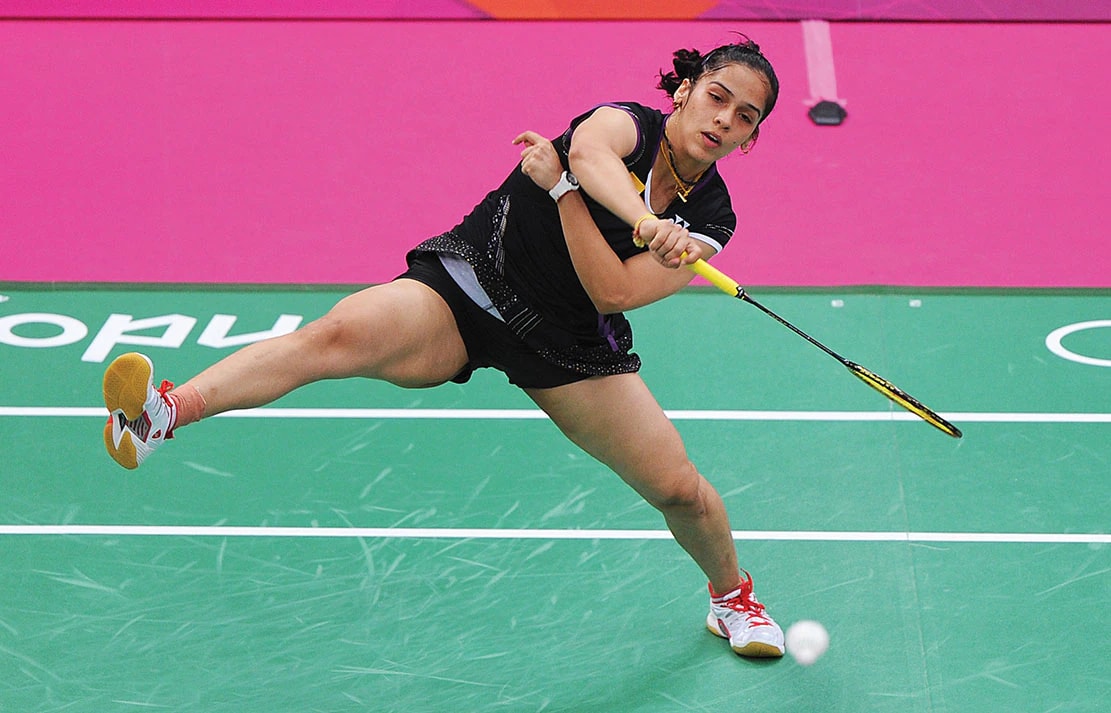
Saina Nehwal - BRONZE
Women’s singles, Badminton
The first Indian shuttler to win an Olympic medal, Saina Nehwal’s bronze kickstarted a revolution in Indian badminton. Nehwal had prepared for London to make up for her loss at the previous Olympics, winning many Superseries titles along the way. Despite the after effects of a viral illness that affected her chance at the gold and silver, Nehwal entered the semis, braved the bronze playoffs, and was trailing in the second after losing a close first game, when her opponent retired hurt injuring her knee, and conceded the match.
London Olympics
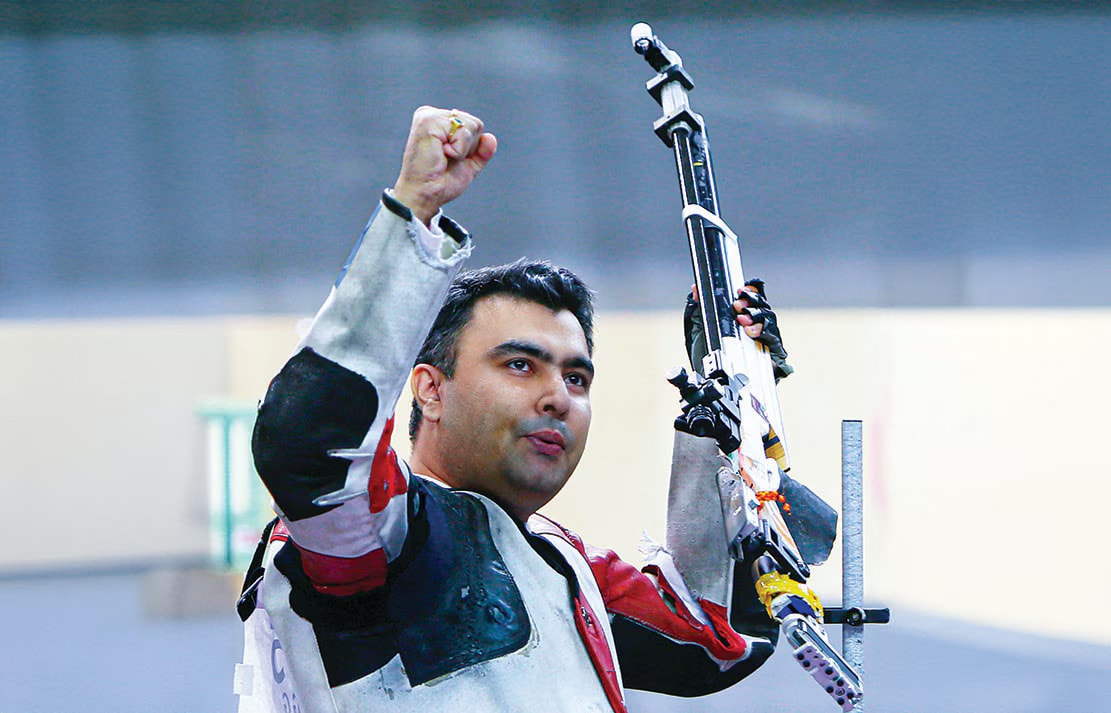
Gagan Narang - BRONZE
Men’s 10m air rifle shooting
Gagan Narang’s childhood interest in shooting was triggered by James Bond and his Walther rifle. Narang had almost every medal in shooting to his name by 2010, but the Olympic medal had proved elusive. He narrowly missed out on the Olympics final by an agonising 0.01 point. The redemption came with the bronze medal in men’s 10m air rifle at the Olympics, India’s first medal at London 2012. He missed out on a silver medal by 000.4 points, but thats another story.
London Olympics
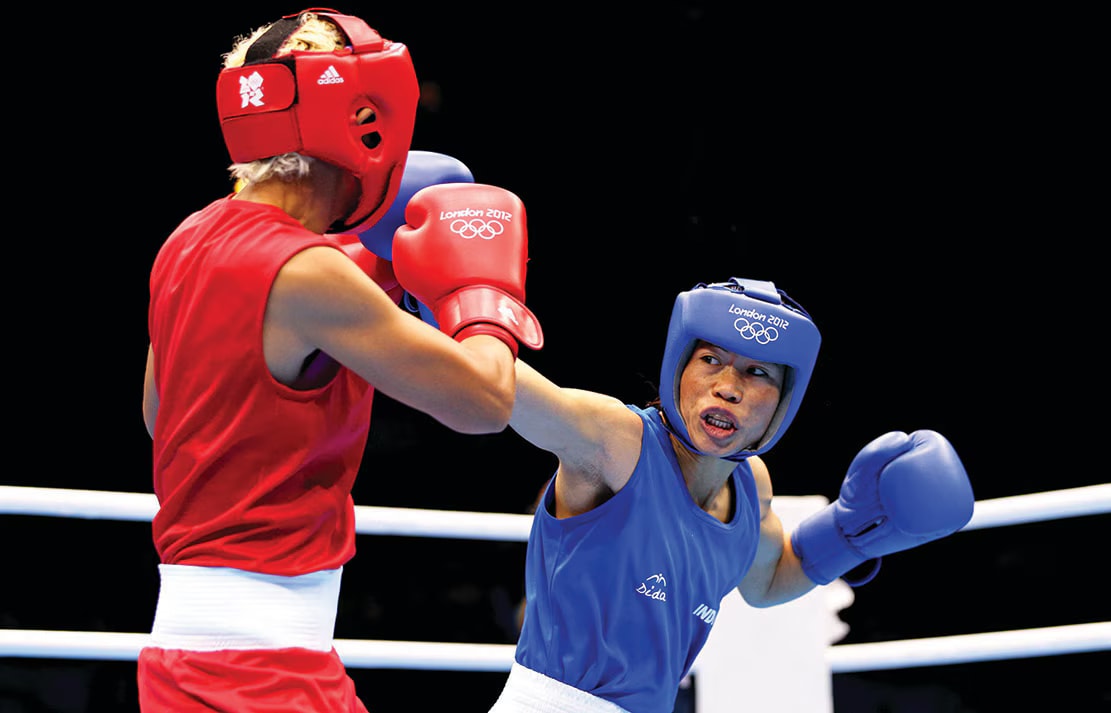
Mary Kom - BRONZE
Women’s flyweight boxing
Lovingly nicknamed Magnificent Mary, Mary Kom was already a sporting legend in India, winning a slew of championships. Celebrating the fifth birthday of her twin sons, the diminutive 29-year-old from Manipur battled fiercely with eventual gold medal winner Nicola Adams and settled for a bronze, creating history by becoming the first Indian woman to win an Olympic medal in boxing, when women’s boxing was included in London Games for the first time.
London Olympics
Sushil Kumar - SILVER
Men’s wrestling (freestyle 66kg)
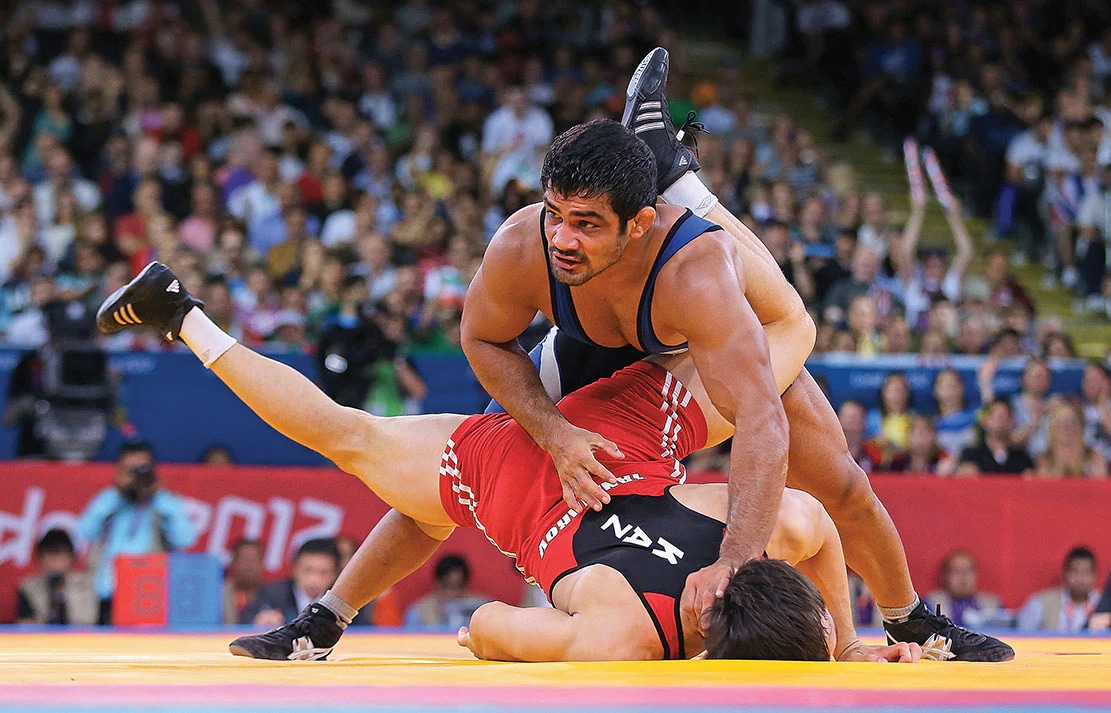
Sushil Kumar came close to bagging India’s second individual gold in London, only to be undone by a bout of vomiting and dehydration before the final against Japan’s Tatsuhiro Yonemitsu. Kumar clinched the silver and became the first Indian athlete to win two individual Olympic medals. However, the moment to savour came from an Hercules-like act in his comeback in the semis, when he stood up with the opponent hanging on his shoulders and floored him on the mat.
London Olympics
Yogeshwar Dutt - BRONZE
Men’s wrestling (freestyle 60kg)
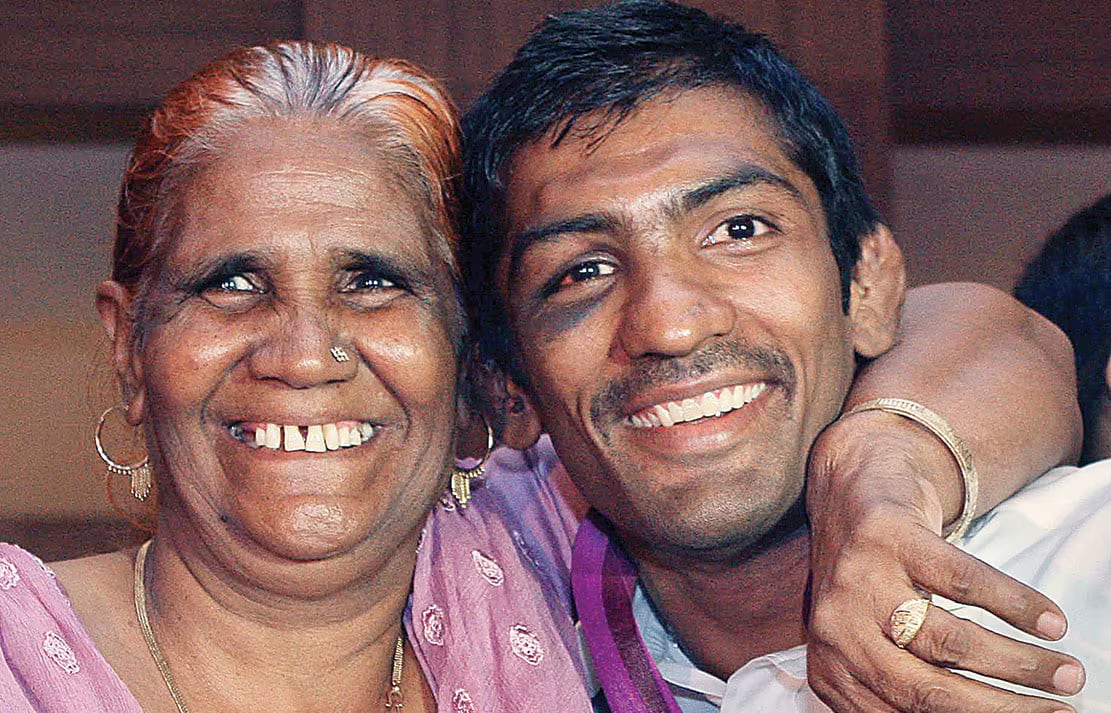
Introduced to the sport by a local wrestler at his village in Sonipat, Haryana, Yogeshwar Dutt first heard of Olympics when he was 13 years old. Dutt had already been grappling with a career-threatening knee injury for years when he entered the 2012 Olympics. Despite his vision severely hampered by a swollen right eye from a injury during the bouts, Dutt locked onto the opponent’s legs in the last repechage round, and rolled him over several times, securing the bronze. Six years later, he would magnanimously refuse the offer of his medal being upgraded to silver, after the second-place finisher failed a dope test.
London Olympics
Vijay Kumar - SILVER
Men’s 25m rapid fire pistol shooting
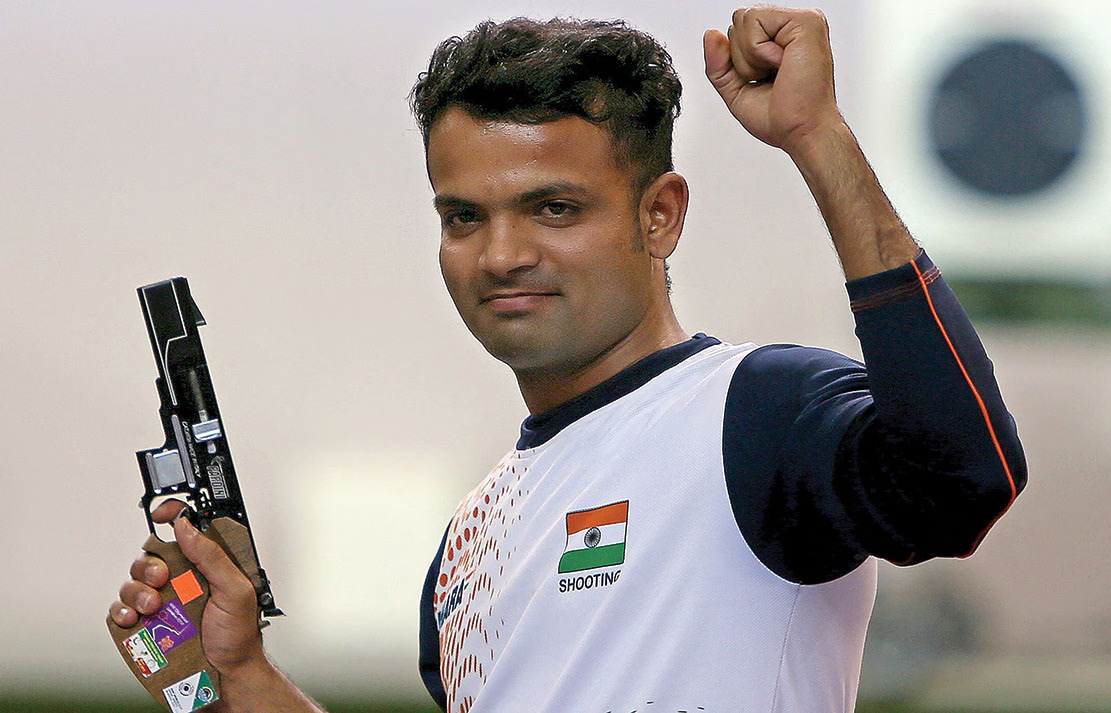
Vijay Kumar’s association with the sport began early, but he took it up as a serious sport only after joining the Indian army in 2001. He trained professionally under Russian coach Pavel Smirnov after being transferred to the Army Marksmanship Unit. Despite a nerve-wracking seventh round and a winning silver, India’s first-ever Olympic medal in a pistol event, what stayed was Kumar’s understated demeanour at his achievement.
Rio de Janeiro Olympics
Sakshi Malik - BRONZE
Women’s wrestling (58kg)
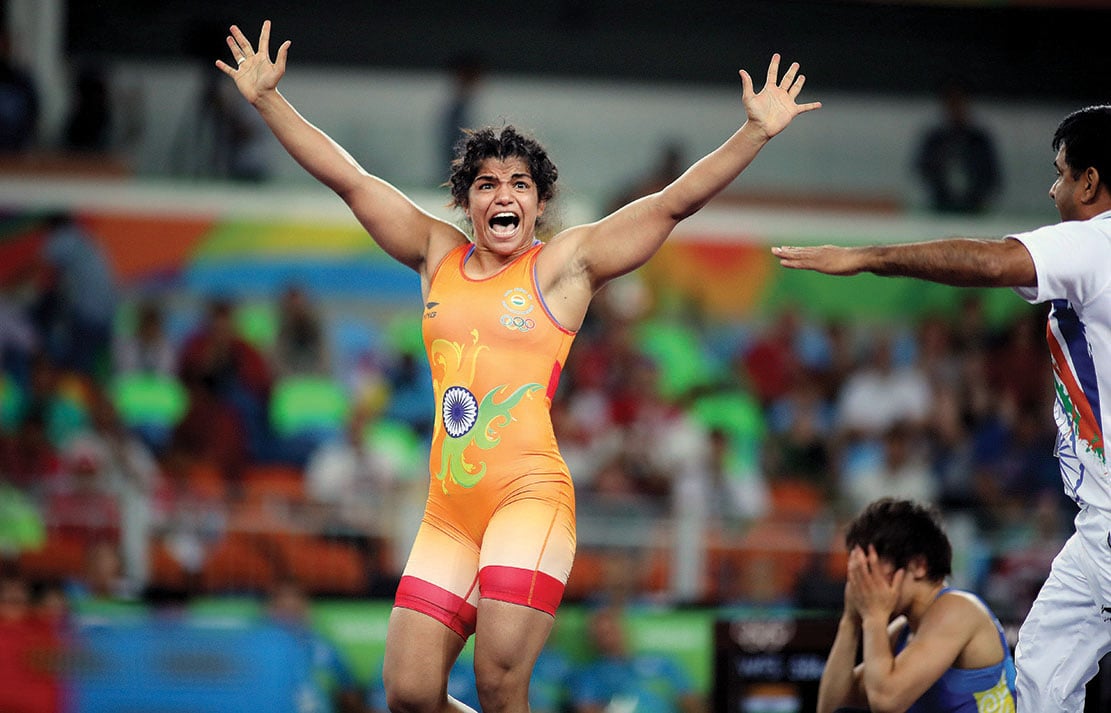
The yearning to fly in a plane and see the world fuelled Sakshi Malik’s dreams. Her parents, humble villagers from Haryana’s Mokhra village near Rohtak never forced their hand on their daughter’s twelve year journey of struggle and hardship, which was often overshadowed by the Phogat sisters, in a sport considered ‘only for boys’ in the region. In the bronze medal match, Malik was trailing 0-5 after the first period in 58kg repechage but staged a fine comeback to snatch the victory from Kyrgyzstan’s Aisuluu Tynybekova with seconds left on the clock.”I can’t explain in words what the feeling was, I didn’t know whether to laugh, smile or cry,” said Malik.
Rio de Janeiro Olympics
PV Sindhu - SILVER
Women’s singles, Badminton
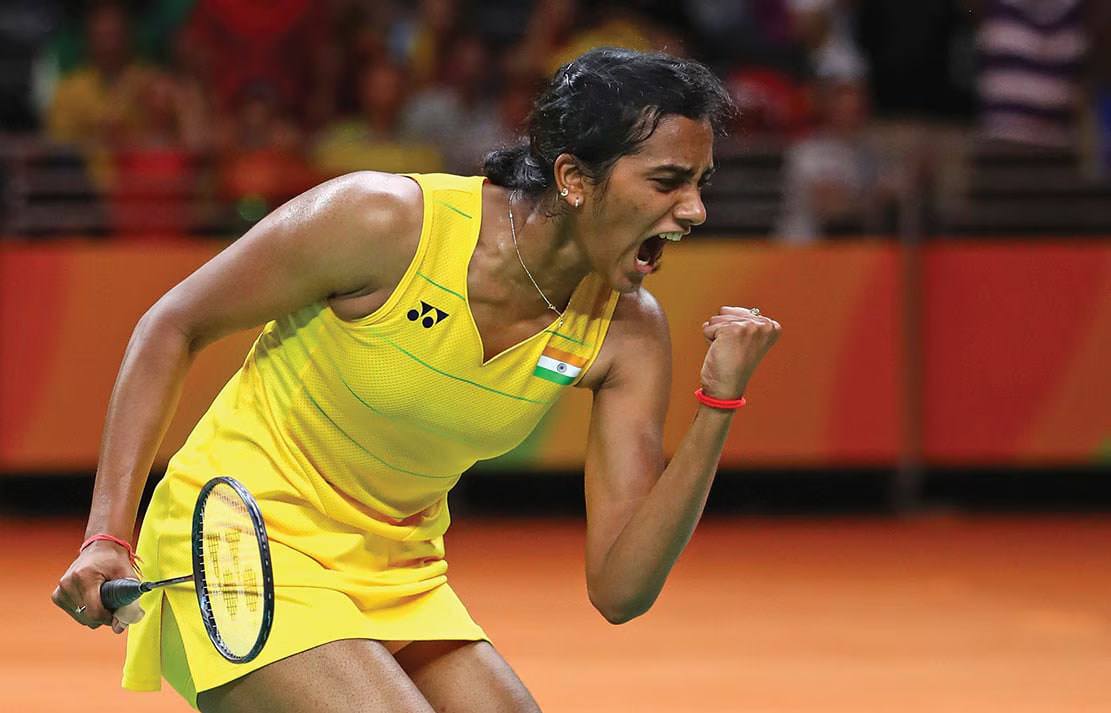
The turning point in PV Sindhu’s life came when she met with the legend shuttler Pullela Gopichand at a public function when she was eight years old. Inspired by his story, she set her sights and joined practice at his academy, ably supported by her parents who were national level volleyball players. Defeating many top players enroute, Sindhu knocked at the Badminton finals in Rio Olympics. The nation watched as the classic rivalry of PV Sindhu and World No 1 Carolina Marin played out on the world stage. Despite winning the first game and leading 11-10 in the decider in an intensely fought match, Sindhu was overcome and settled for silver, making her the youngest and the only Indian female player to achieve this feat.
Tokyo Olympics
PV Sindhu - BRONZE
Women’s singles, Badminton
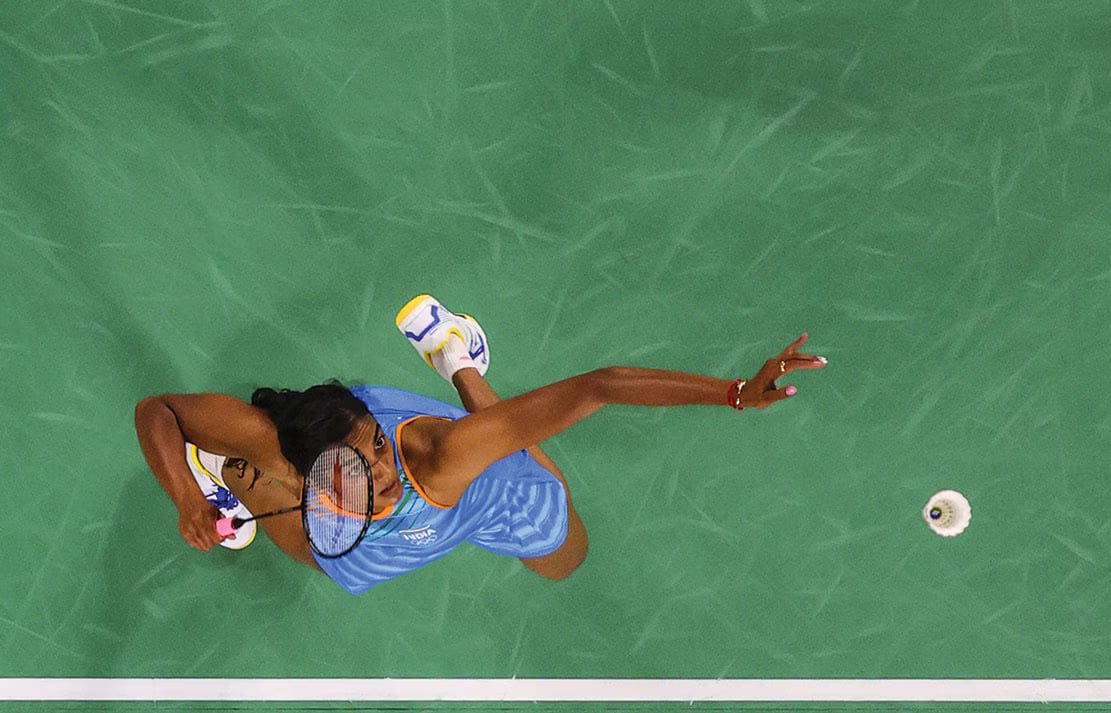
PV Sindhu entered the Tokyo Games devoid of spectators in the Covid-affected year with the pressure of expectations as the reigning world champion. Losing the semis, she recouped herself to outwit He Bing Jiao with her trademark aggression in straight games to clinch the bronze at the Games and become the first Indian woman to win two individual Olympic medals. Her recouping secret: Erase all thoughts of the loss, wade into the next and manifest the energy.
Tokyo Olympics
Lovlina Borgohain - BRONZE
Women’s welterweight boxing
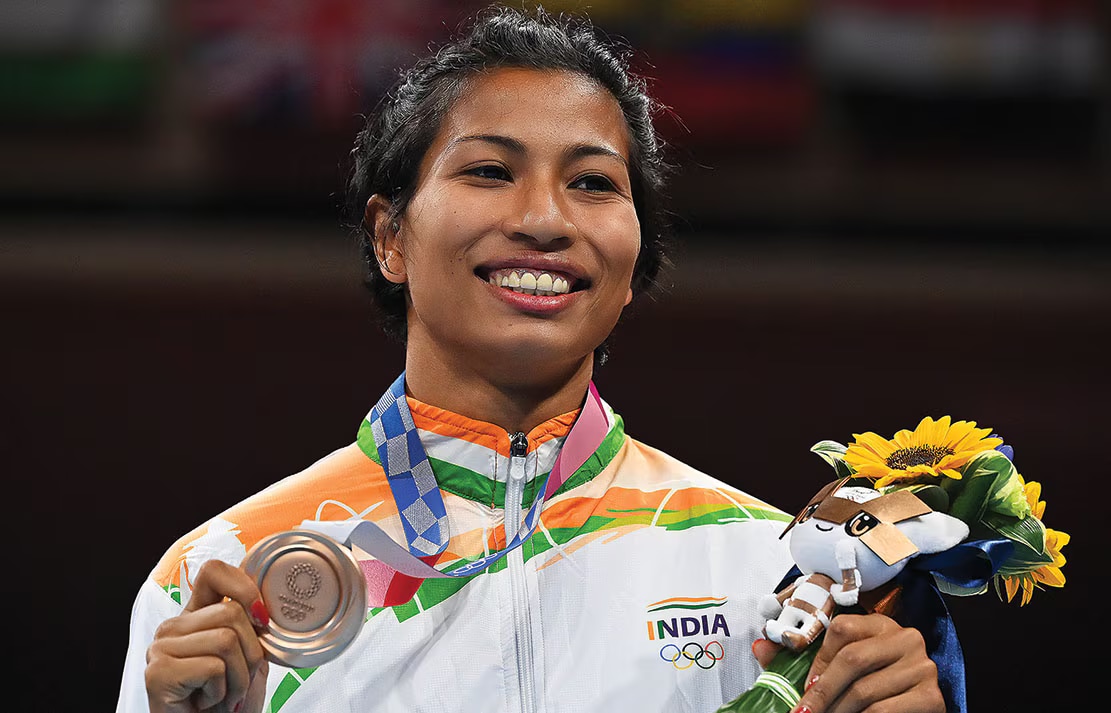
After a brief stint as a kick-boxer in a small hamlet in Assam where women taking up boxing was looked down upon, Lovlina Borgohain’s life took a definite turn in 2012 when she met her first coach Padum Boro at SAI boxing trials in Golaghat, Assam. After qualifying for the Tokyo Olympics, and recovering from Covid-19, Borgohain had a tough draw against Chinese Taipei’s Nien-Chin Chen who had beaten her the last three times, but Borgohain attacked her from the word go. The 4-1 split decision assured her of a bronze medal.
Tokyo Olympics
Mirabai Chanu - SILVER
Women’s weightlifting (49kg)
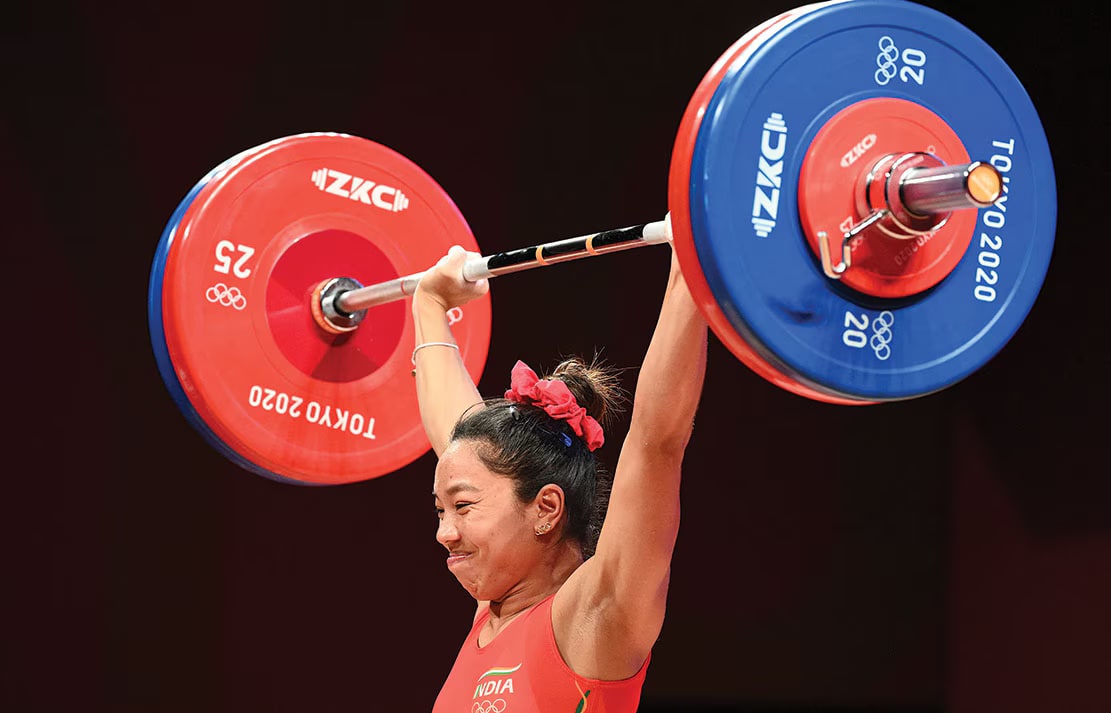
Born to a family of limited means in a village that often sees conflict between security forces and militant groups in Manipur, Mirabai Chanu’s mother worked their paddy field, and sent the teen to a stadium for practice. When Mirabai failed to register a single valid lift in clean & jerk at the 2016 Games, the 22-year old weightlifter was trolled and written about as a failure, almost breaking her self-confidence. Her doggedness, and five years of rigorous work with with the chief coach Vijay Sharma, saw her through to a shiny silver at the 2020 Olympics, notching up a combined lift of 202kg (87kg snatch; 115kg clean and jerk) to claim the podium.
Tokyo Olympics
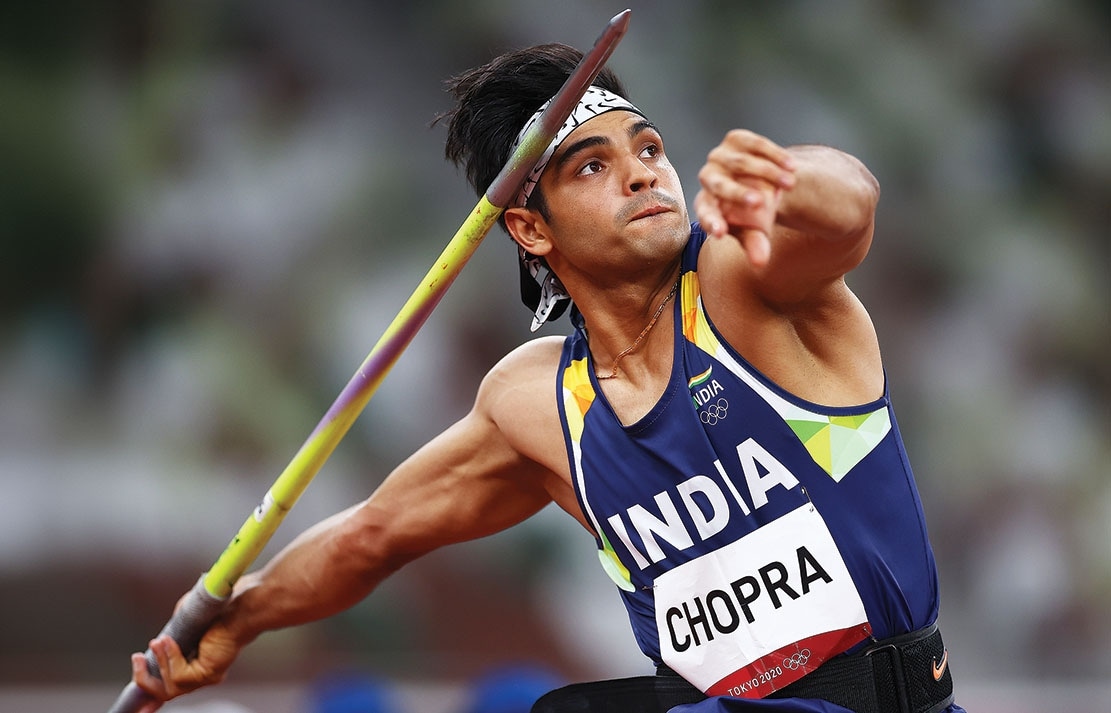
Neeraj Chopra - GOLD
Men’s javelin throw
A pampered Neeraj Chopra was overweight as a kid, prompting other kids in his village Khandra to call him ‘sarpanch’. Taking to javelin after he saw some senior boys throwing one in Panipat’s Shivaji stadium, he learned the basics of the sport from Jaiveer Choudhary. Chopra was 19 years old when the Indian army signed him on its sports quota in 2016, seeing him hurl javelins close to the 80m mark at the National Institute for Sport in Patiala. On August 7, 2021, at the Tokyo Olympics, Chopra sauntered in and released a throw of 87.58m on his second attempt, a monumental achievement that won India its first gold medal in athletics.
Tokyo Olympics
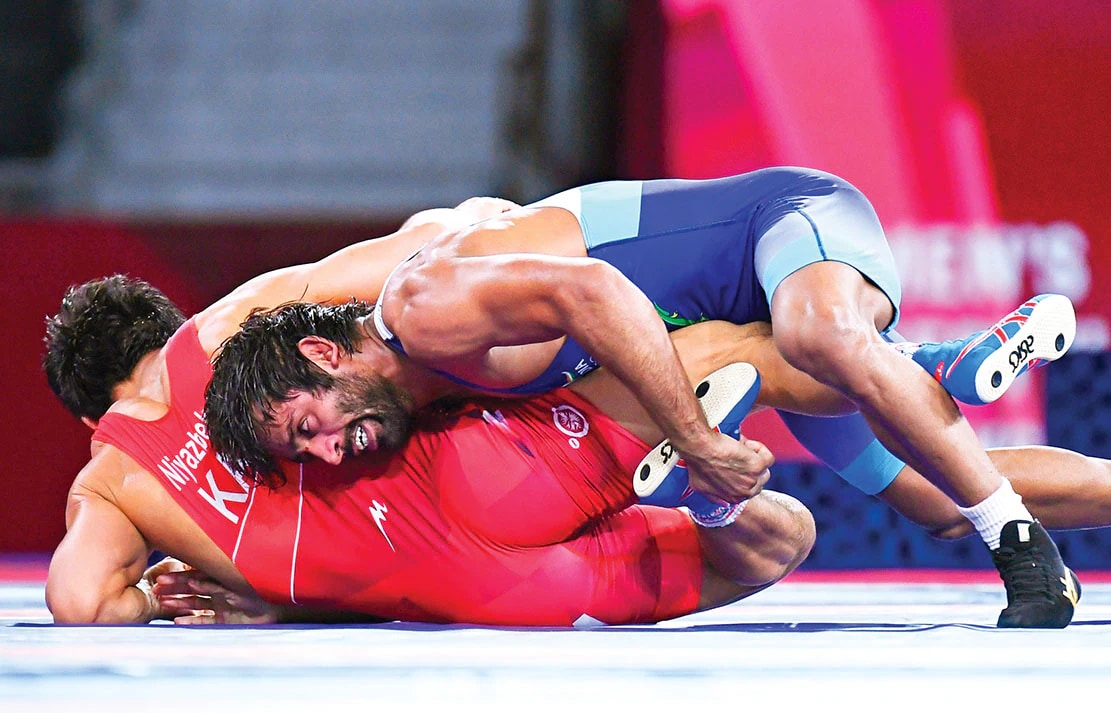
Bajrang Punia - BRONZE
Men’s wrestling (freestyle 65kg)
Nursing a knee injury just before the Olympics and staying off mat training for three weeks hampered Bajrang Punia’s Olympic preparations. He was far from his attacking self at Tokyo until his bronze medal playoff against Kazakhstan’s Niyazbekov. He heard his coach Bentinidis say “You can go back to India with nothing. Or you can return with your honour intact”. That is when Punia took off the knee protection cap, switched to aggression mode and crunched Kazakhstan’s Daulet Niyazbekov 8-0 to take bronze in the men’s freestyle 65kg category.
Tokyo Olympics
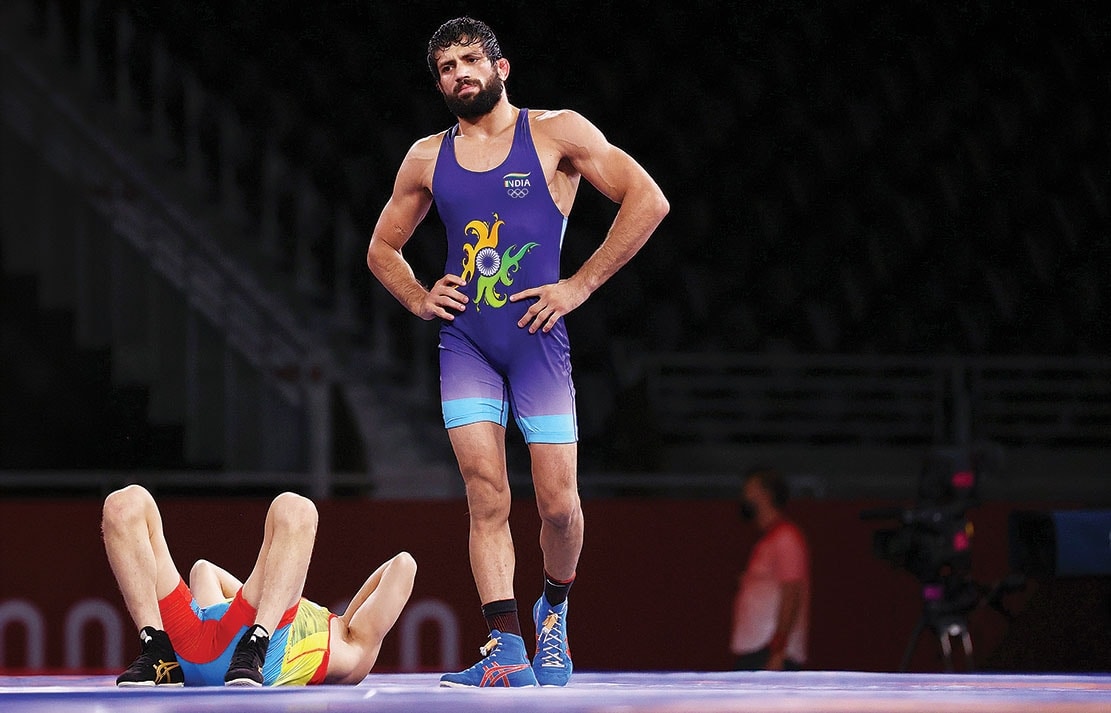
Ravi Kumar Dahiya - SILVER
Men’s wrestling (freestyle 57kg)
When 10-year-old Ravi Kumar Dahiya began training under Satpal Singh at Delhi’s Chhatrasal Stadium, his father, a small farmer, would travel everyday from his village in Sonipat to bring him fresh milk and fruit. Establishing himself as India’s premier wrestler in the 57kg category, Dahiya grappled his way up the 2020 Games to face a much tougher opponent in Kazakh’s Sanayev in the semifinal. Trailing 2-9 with just two minutes to go, Dahiya bounced back with a stunning offensive to book his place in the finals. He became the second Indian wrestler to win an Olympic silver after losing 7-4 to Russia’s Zavur Uguev in the finals.
India men’s hockey team
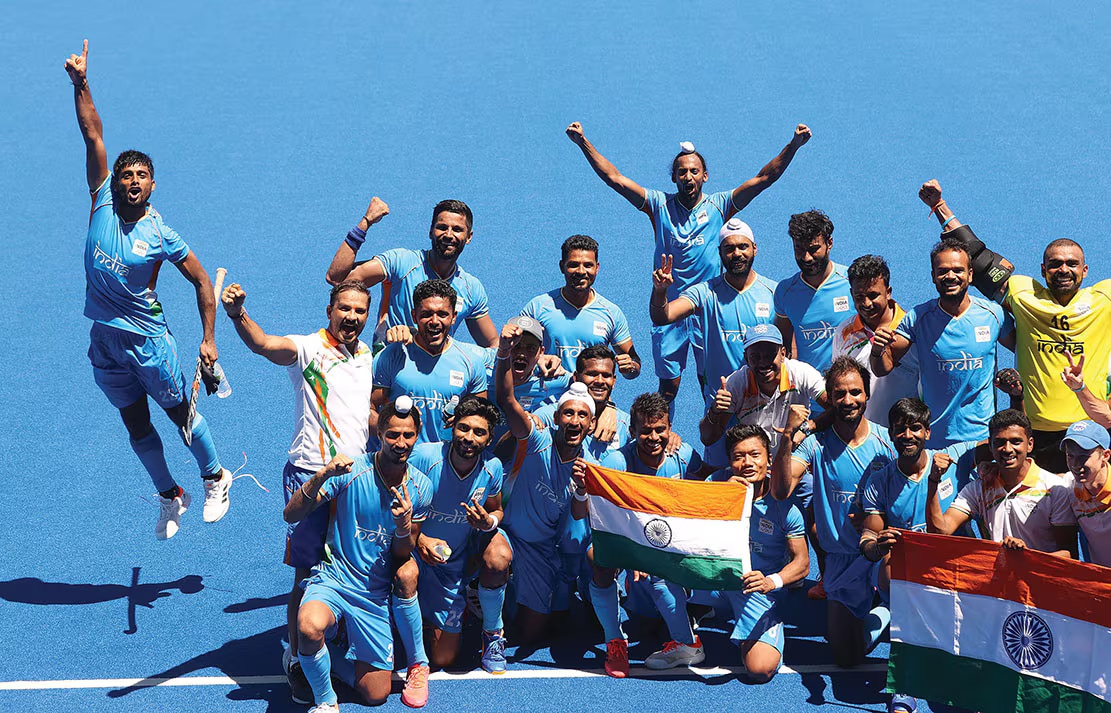
India men’s hockey team - BRONZE
Field hockey
After a 41-year medal slump, a resolute hockey team rewrote history, claiming a bronze at the Tokyo Olympics in a thrilling playoff match against Germany. A new generation of Indians—unaccustomed to the idea that India could dominate hockey and win the gold eight times in the past—were witness to a vigorous Manpreet Singh and his team fight like warriors from 1-3 down to upend the four time Olympic champions with a 5-4 win. None of the team’s players were born when the last medal was won in Moscow in 1980. The coaches helping plot the team’s revival with their ideas and energy were the former internationals Graham Reid and Sjoerd Marijne.
Paris Olympics
Manu Bhaker - BRONZE
Women’s 10m pistol shooting
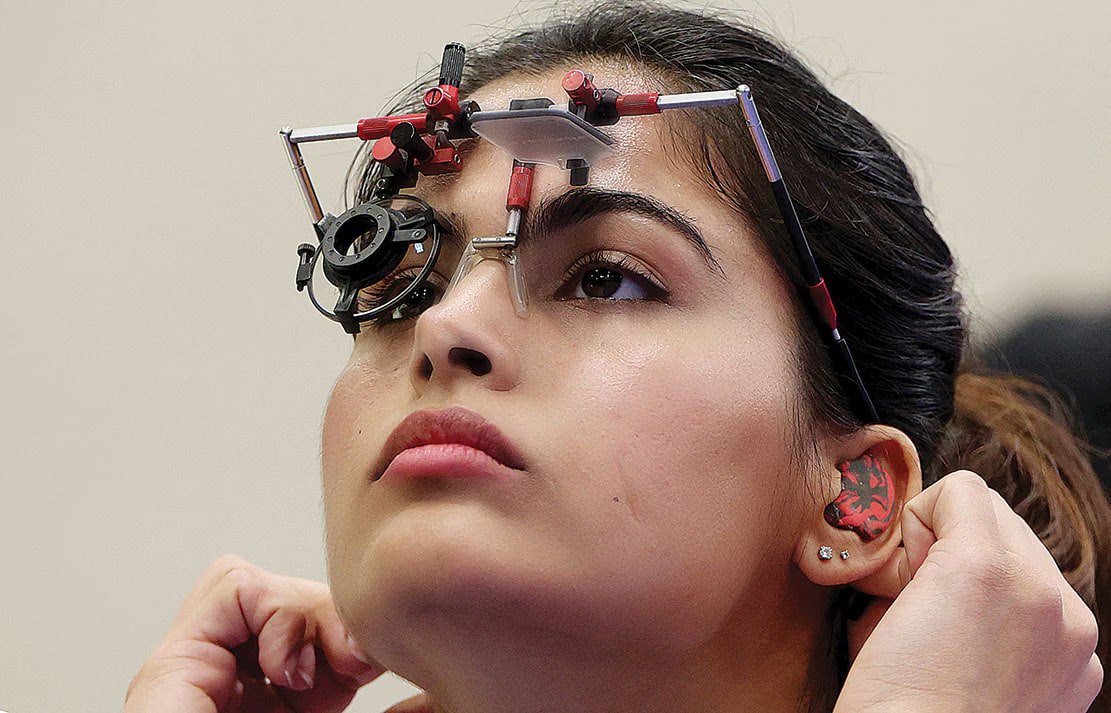
For the prodigious Manu Bhaker, the last Olympics, where she was the youngest to qualify as a 19-year-old, was a nightmare. She competed and failed across three different events that made her weep in frustration and part ways with her demanding coach Jaspal Rana. Last year, Bhaker made up with Rana, and focused steely-eyed on the target again, this time at Paris Olympics, and became the first Indian woman to win an Olympic medal in shooting, clinching a bronze in the women’s 10m air pistol event.
Paris Olympics
Manu Bhaker and Sarabjot Singh - BRONZE
Mixed team 10m pistol shooting
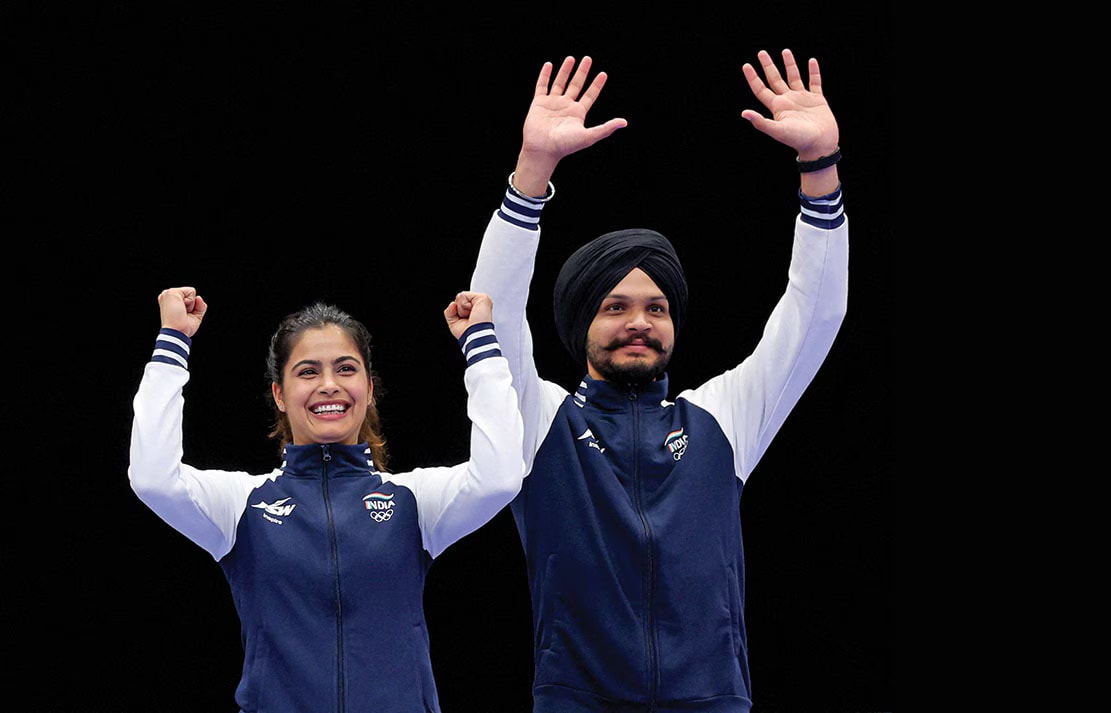
Singh’s devotion to the sport he picked up by chance at his school’s summer camp, was equalled by his coach Abhishek Rana’s devotion to his stringent training regimen. He combined with Manu Bhaker for the Mixed team 10m pistol shooting at Paris. It was a tough fight won by fine margins. While Bhaker made up for Singh’s shaky start, Singh compensated for Bhaker’s less than ideal ending with a winning final shot of 10.2. The bronze was theirs, and Bhaker made history as the first-ever Indian to have won two medals in the same edition of an Olympics.
Paris Olympics
Swapnil Kusale - BRONZE
Men’s 50m air rifle 3P shooting
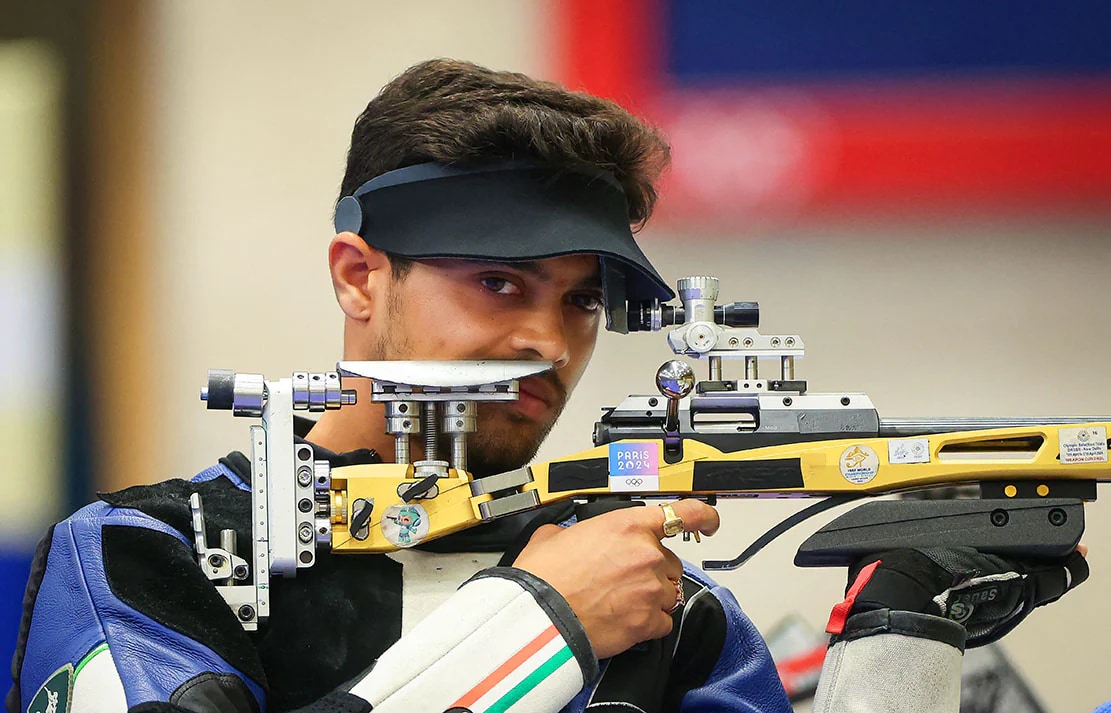
Swapnil Kusale was 14 years old when his father, seeing budding potential, enrolled him in Krida Prabodhini, a Maharashtra government sports scheme in 2009. Opting to master shooting after a year of rigorous training, Swapnil found a steady job in the Indian Railways as a ticket examiner, which helped him buy his own rifle and hone his skills. His steely calm under pressure, a quality he says he shares with MS Dhoni, was on display when he won India its third medal at the Paris Olympics, claiming a bronze medal in the 50m rifle 3 position event.
Paris Olympics
India men's hockey team - BRONZE
Field hockey
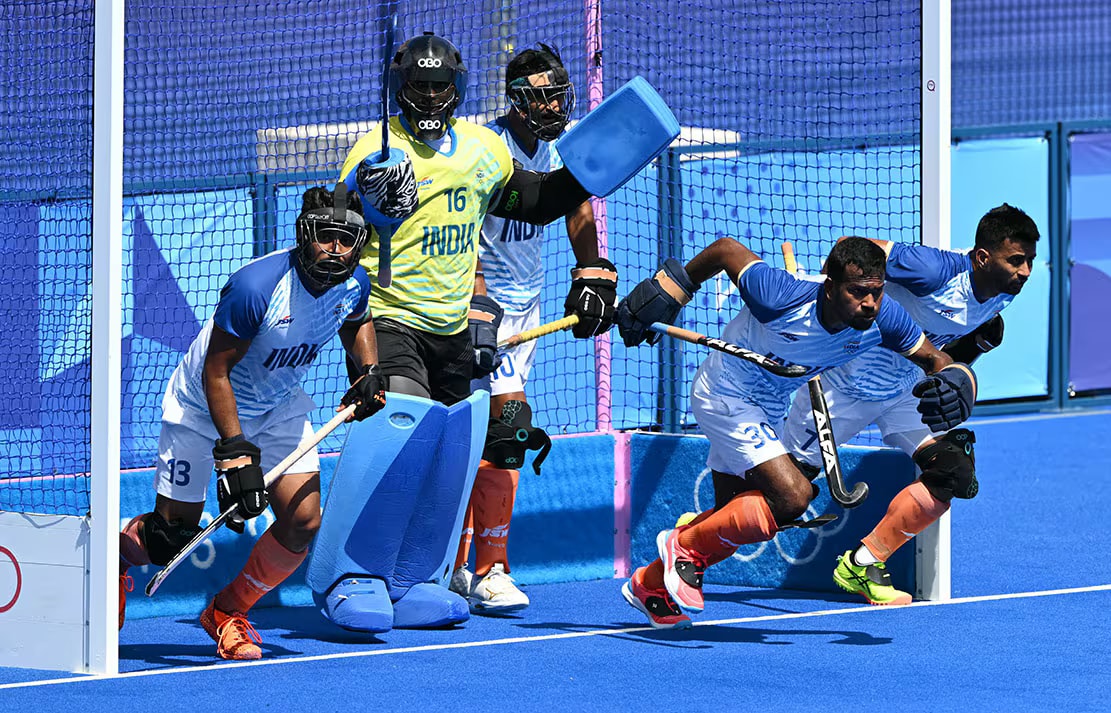
The hockey team didn’t come to Paris to retain a third-place finish, unlike in 2020 Tokyo. With gold in their sights to give a fitting farewell to their mercurial goalkeeper P R Sreejesh, the team, reduced to ten men for most of the time in the quarterfinals, put up a sensational defence to get through. Bouncing back from the emotional impact of their loss in the semis, the team played out a hard third-place finish to a bronze, again. India’s captain and ‘drag flick’ champion Harmanpreet Singh finished as the top-scorer with 10 goals while his boys kept to their promise of not returning home ‘empty-handed’.
Paris Olympics
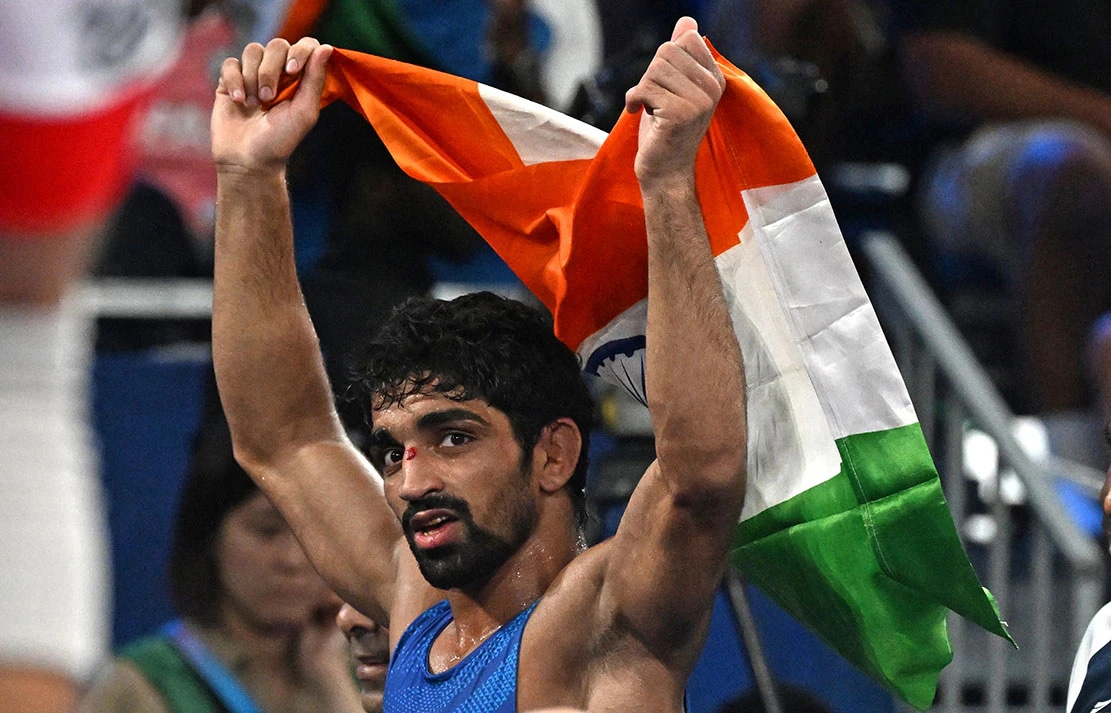
Aman Sehrawat - BRONZE
wrestling men's 57kg freestyle
When Aman Sehrawat, reigning world U-23 champion and India’s lone male wrestler at the Games, pinned down Abakarov, a former world champion, in the quarterfinals and turned him over repeatedly, the fine show raised hopes and Aman didn’t disappoint. Orphaned at 11, Aman had trained at India’s great wrestling school, Chhatrasal, under a residential programme. Aman’s performance, an attacking style combined with upper body strength and speedy leg work, undid his Puerto Rican opponent in the bronze medal playoff bout to make him India’s youngest ever Olympic medallist at 21 years, 24 days.
Paris Olympics
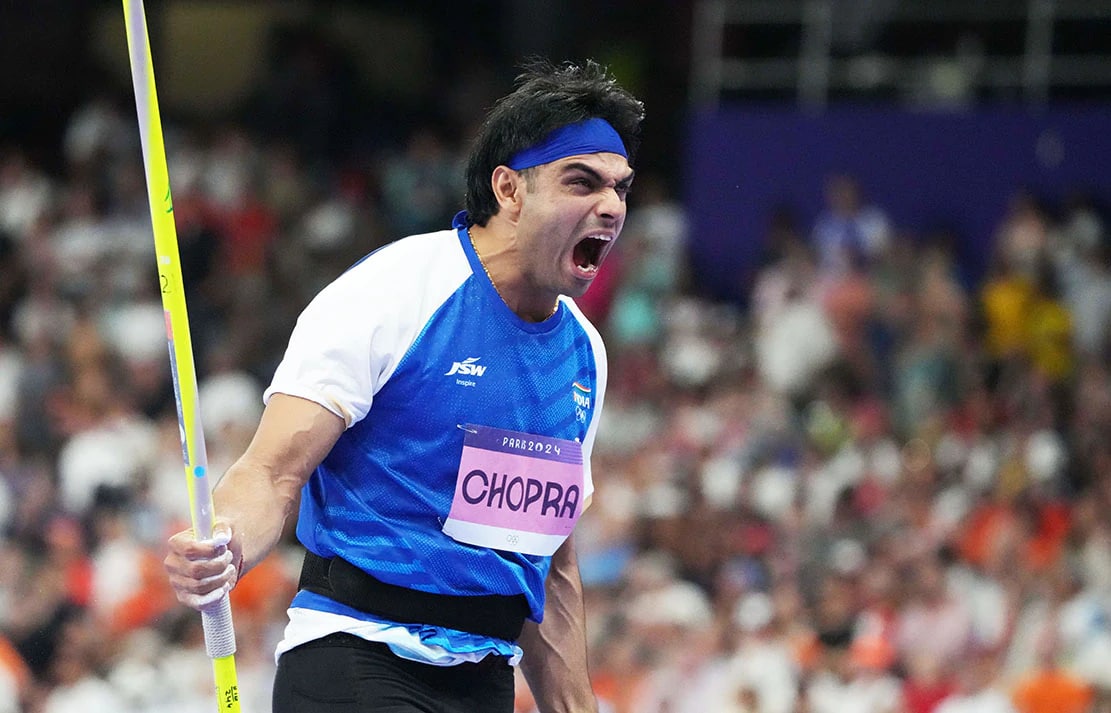
Neeraj Chopra - SILVER
Men's javelin throw
Defending javelin champion Neeraj Chopra roused the nation’s confidence when he won the gold in javelin at the Tokyo Olympics. This time, the field was competitive, with nine throwers crossing 84m in the qualifications. Battling a groin injury up to the final, Neeraj’s best effort, his season’s best of 89.45m wasn’t enough to see him through to a repeat gold, where a new benchmark was scripted with a record throw of 92.97. Neeraj wont be at peace until he gets there, but for now, India’s greatest-ever has stayed consistent, following up a gold medal with a silver, the first Indian at the Olympics to do so.