1. Home
  2. Multimedia
  3. 79th Independence Day Special

India: A Year, in Progress

When India gained freedom 78 years ago and set forth on a plan for development, the basic goals were to achieve self-reliance, eradicate poverty and raise productivity levels of agriculture and industry. The achievements listed here across sectors, just in the last year, are an outline of how far we have come

Indian Space Research Organisation
Photo courtesy of NASA

Indian Space Research Organisation astronaut and Axiom-4 Mission Specialist Shubhanshu Shukla aboard the International Space Station’s Kibo laboratory module. During his 18-day stay in June/July, Shukla participated in seven microgravity experiments designed by ISRO. The first Indian to go to the ISS, Shukla’s mission was crucial for India’s future space endeavours, particularly the Gaganyaan human spaceflight program, as the mission’s data and insights will inform and refine ISRO’s strategies for crewed missions.

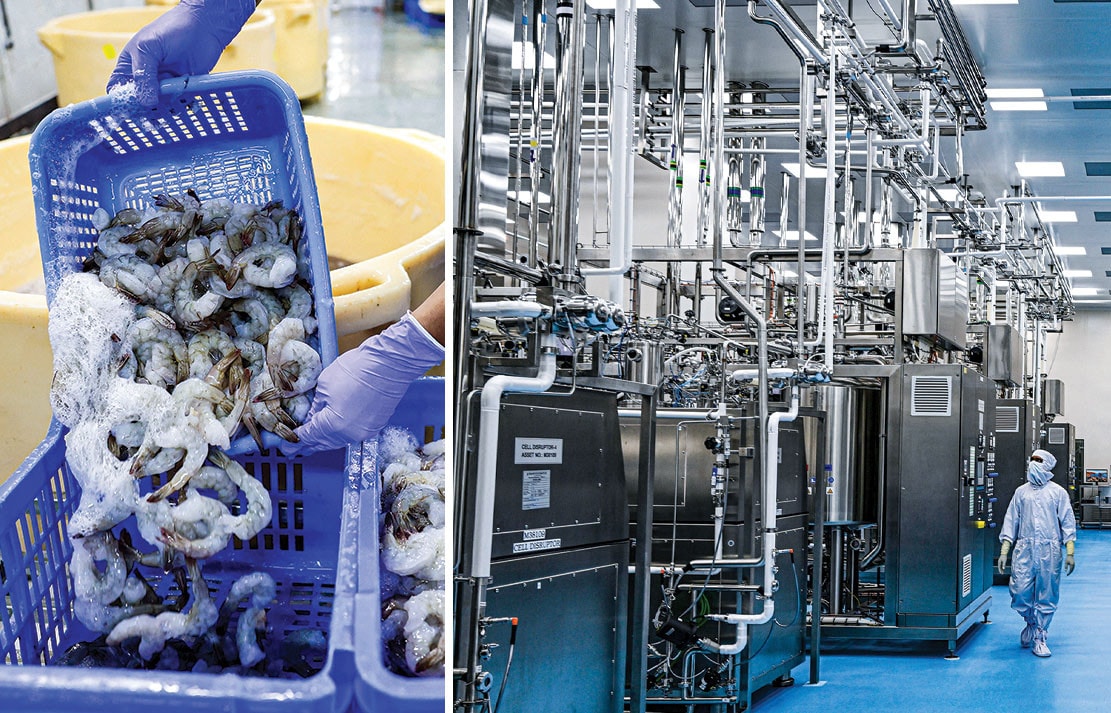
Shrport at a marine food processing unit
Photo by Indranil Mukherjee /AFP | Photo by Sahiba Chawdhary / Reuters

Shrimp being processed and frozen for export at a marine food processing unit on the outskirts of Visakhapatnam. The India-UK Comprehensive Economic and Trade Agreement (CETA), signed in July 2025, represents a significant win for India. Textiles, footwear, carpets, automobiles, seafood, and fresh fruits, valued at about $6.5 billion, which constitute about 45 percent of what India currently exports to the UK, will now be duty-free. The remaining 55 percent of goods which constitutes petroleum, pharmaceuticals (right), diamonds, and aircraft components worth $8 billion already enjoys zero duty, according to an analysis by the Global Trade Research initiative.

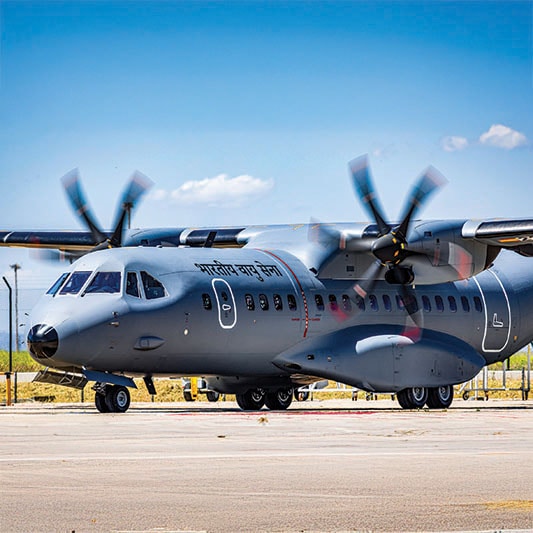
 Tata Advanced Systems Limited
Photo courtesy of Airbus / Adrian Molinos    

As a major milestone for India’s Aerospace & Defence industry, Tata Advanced Systems Limited and Airbus inaugurated the Final Assembly Line (FAL) complex for the manufacture of the Airbus C295 aircraft in Vadodara in October 2024. This is the first aircraft manufacturing contract for the private sector in India. The programme involves the delivery of 40 C295 aircraft to the Indian Air Force. The ecosystem begins with the sourcing of raw materials and manufacture of up to 13,000 detailed parts in Nagpur, Bengaluru and Hyderabad. These are then assembled into larger components at the Main Component Assembly site in Hyderabad, and shipped to the FAL in Vadodara, Gujarat. The first C295 will roll out of the facility in September 2026.

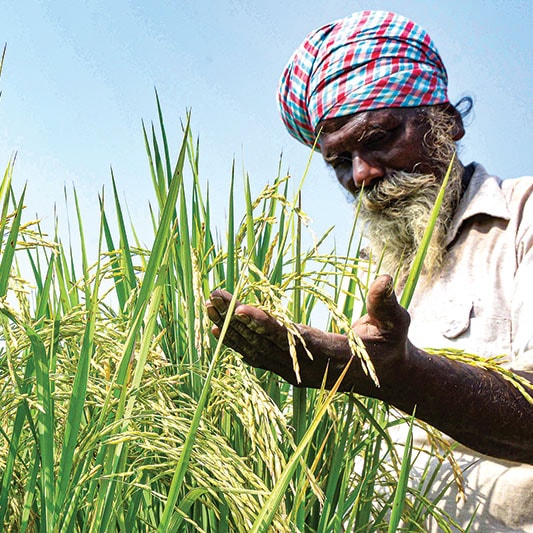
India implements the Mahalanobis Plan
Photo by Narinder Nanu / AFP

In a major breakthrough, Indian Council of Agricultural Research released two genome-edited varieties of rice in May 2025, marking it as the first achievement of its kind in the world. The new varieties, which have been developed indigenously by scientists using the revolutionary CRISPR-Cas9 genome-editing technology, are climate-resilient, requiring less water to grow, and produce bigger yields with lower emissions. When Dr Satendra Kumar Mangrauthia and his team at Indian Institute of Rice Research, Hyderabad, began work on a rice variety, no expert labs or protocols for genome editing existed in India. They had to develop everything from scratch—from editing protocols to transformation techniques.

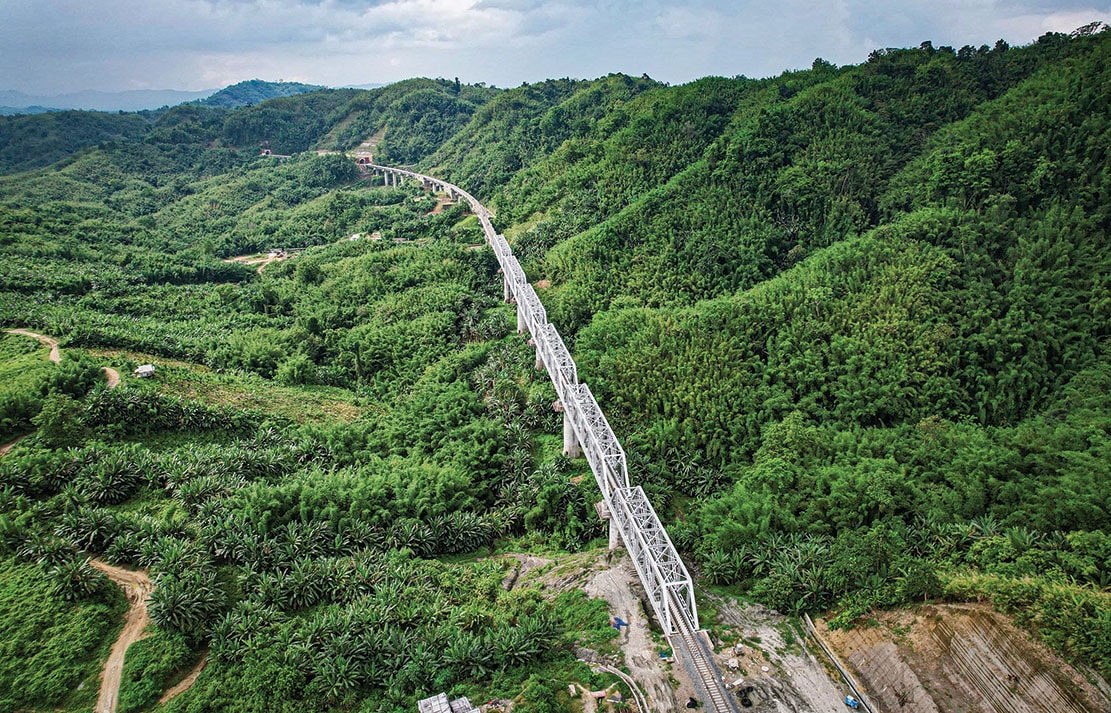
Indian Railways
Photo courtesy Ministry of Railways

The Indian Railways made an historic advance into Mizoram in July 2025, boosting connectivity with its Bairabi-Sairang railway line. Traversing over dense forests, steep hills, and landslide-prone zones through 48 tunnels and over 40 bridges, this rail line is a feat of persistence and planning, a symbol of India’s growing focus on Northeast infrastructure through its Act East Policy.

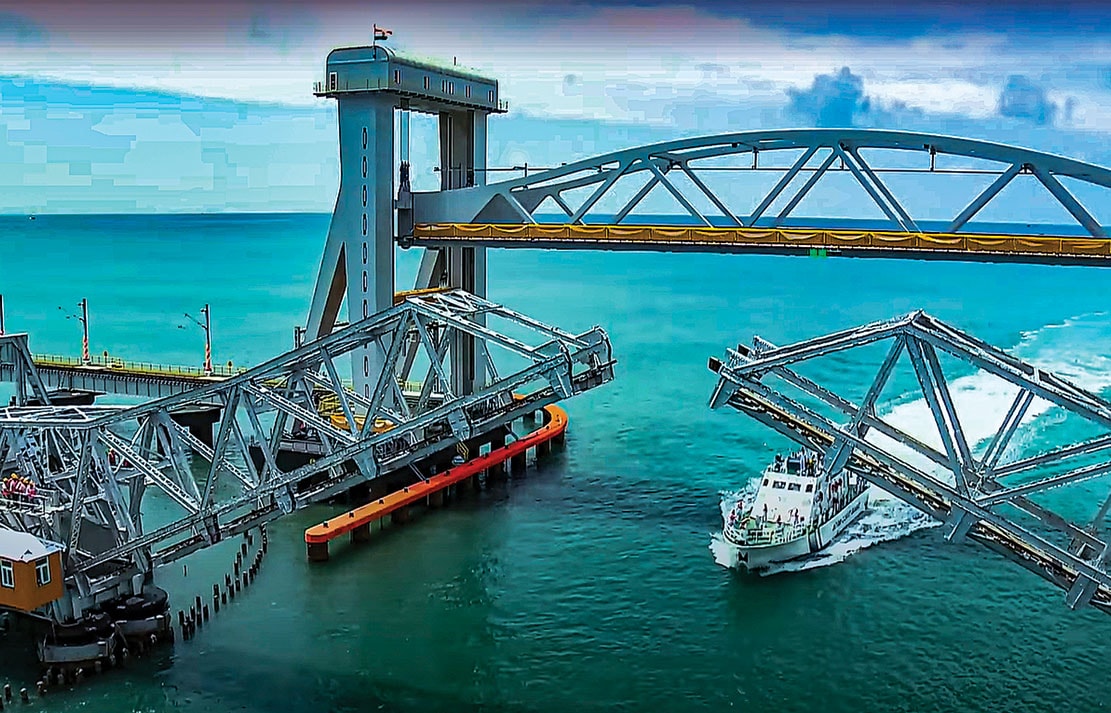
Pamban bridge
Photo: PM India via PTI

The new Pamban bridge, opened in April 2025, is India’s first vertical lift railway sea bridge that connects mainland India to Rameshwaram Island. The 2.07 km bridge replaces the ageing original bridge in commission from 1914. The new bridge features a 72.5-metre vertical lift span that can be raised to 17 metres in just five minutes to allow ship passage.

Gowramma
Photo by Madhu Kapparath

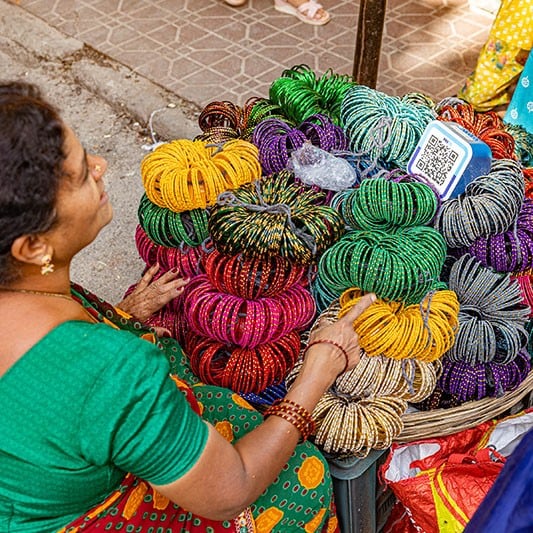
Gowramma, a bangle-seller selling her wares by a sidewalk in Basavangudi, Bengaluru displays a Paytm Soundbox that announces a payment confirmation from a customer who has paid using a QR code. From local vendors to large retailers, Indian businesses of all sizes have embraced the UPI (Unified Payments Interface), leading it to become the world’s leading real-time payment system, surpassing Visa in daily transactions volume. Developed and maintained by National Payments Corporation of India, UPI now handles over 600 million transactions a day.

Terrorist attack in Pahalgam
Photo by Ravi Choudhary / PTI

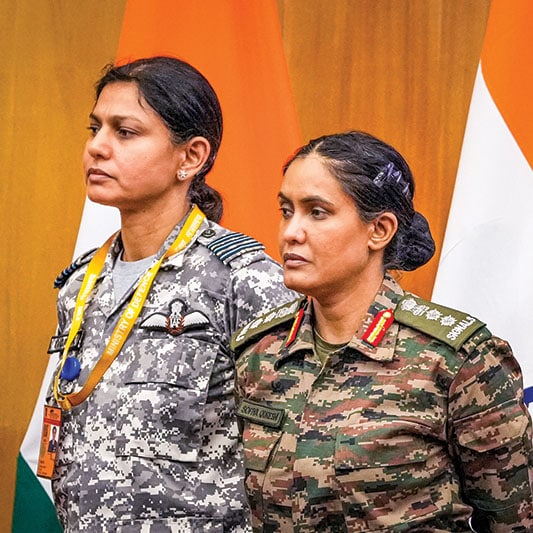
In a decisive action against aiding and abetting the terrorist attack in Pahalgam, the Indian Armed Forces launched Operation Sindoor on May 7, 2025, a series of precision strikes on terrorist infrastructure across Pakistan and PoK. The successful Op demonstrated tactical coordination among the Indian forces and provided a crucial testing ground for India’s defence systems, validating the nation’s self-reliance in the defence sector. Colonel Sofia Qureshi (right) and Wing Commander Vyomika Singh jointly led the press briefing on the Op, symbolising the rising prominence of women in India’s armed forces and their growing role in shaping strategic operations.

Indian Railways
Photo Courtesy of ICF Chennai

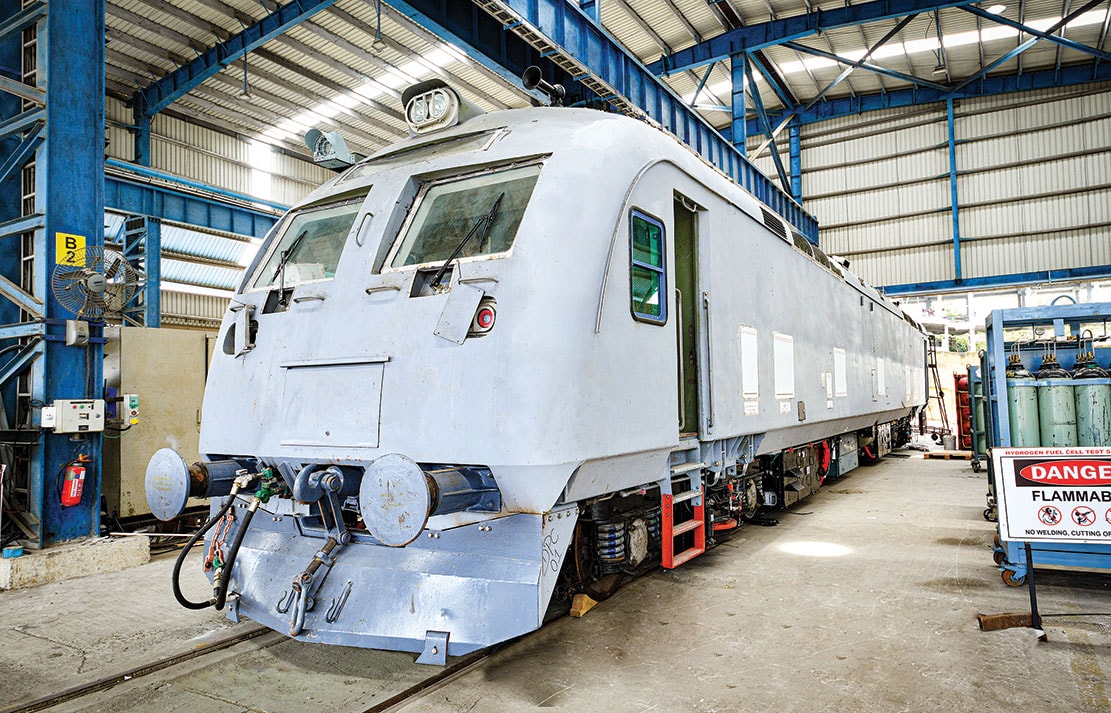
The Indian Railways, in July 2025, successfully tested the first hydrogen-powered coach at its Integral Coach Factory (ICF) in Chennai. This is a significant step for the Railways, a key player in India’s mission to support zero carbon emission goals as a clean energy source. Being a highly flammable gas, the mounting structure of hydrogen cylinders and fuel cells on driving power cars involves critical safety challenges.

Chenab Bridge in Reasi, Jammu & Kashmir
Photo: PTI

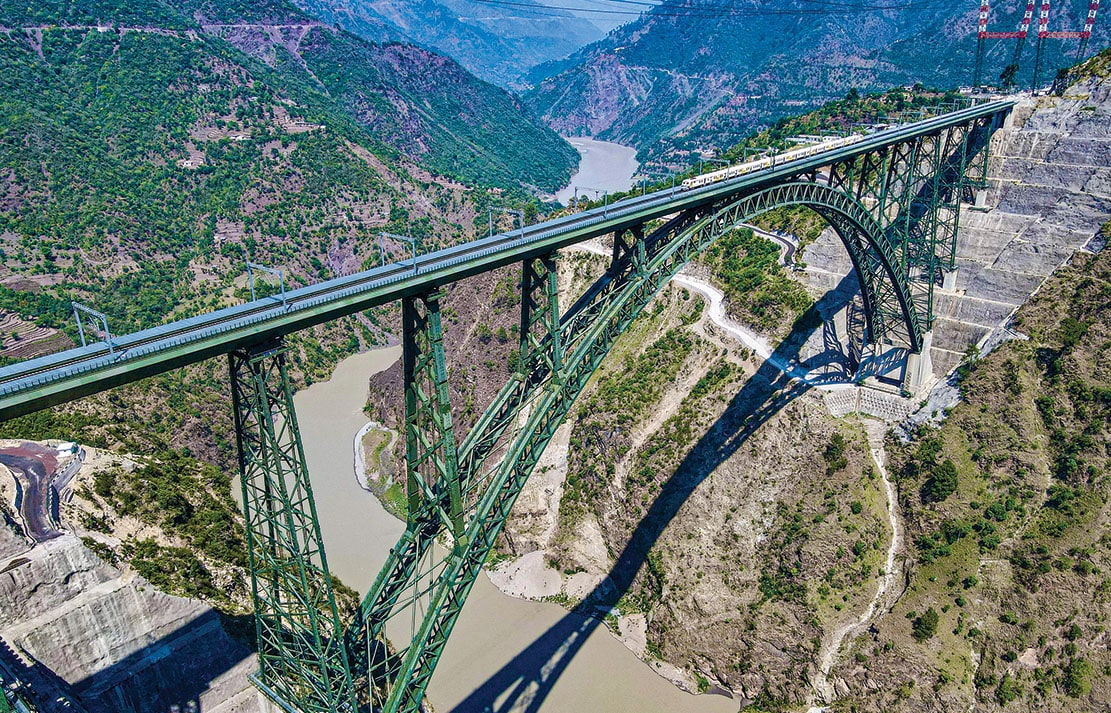
The 1.31 km-long Chenab Bridge in Reasi, Jammu & Kashmir, inaugurated in June 2025, rises taller than the Eiffel Tower at 359 metres above the deep gorge of the Chenab river. Connecting the Kashmir Valley to the rest of India, the world’s highest railway arch bridge is an engineering marvel, made with 28,660 mega tonnes of steel that cost Rs 1,486 crore and took two decades to complete.

Divya Deshmukh
Photo: PTI

In July 2025, teenager Divya Deshmukh became the first Indian World champion, winning the FIDE Women’s Chess World Cup title. Starting the event as only the 15th-best-rated player in the field, Deshmukh faced off World No. 6 Zhu Jiner, veteran GM Harika Dronavalli, former women’s world champion Tan Zhongyi and finally, fourth seeded Koneru Humpy, to a triumph that has once again put the limelight on Indian chess.

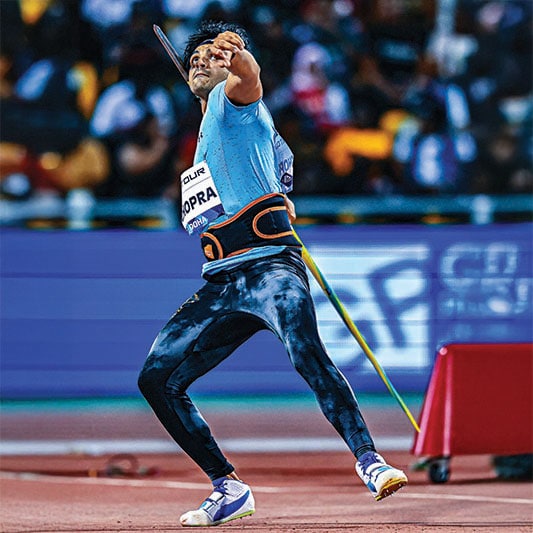
Neeraj Chopra
Photo by Noushad Thekkayil / NurPhoto via Getty Images

After years of near misses, Neeraj Chopra, the Olympic medallist, became the first Indian to breach the 90-metre mark in Javelin throw. He achieved the personal best of 90.23 meters with a career-best throw at the Doha Diamond League on May 16, 2025.

X