Pixxel has signed an agreement with IN‑SPACe to design, build and operate India’s first privately‑led national Earth Observation constellation under a public-private partnership model. The Rs 1,200+ crore programme will see a consortium led by Pixxel deploy 12 multimodal satellites—spanning optical, multispectral, SAR and hyperspectral imaging—over the next five years. The milestone marks India’s first private‑led EO constellation and one of its largest space‑sector PPPs, signalling a shift towards private industry‑led development of critical national space assets.
The system is intended to provide assured EO data access for Indian government users through IN‑SPACe, while also enabling global commercial applications across sectors such as agriculture, energy, infrastructure and the environment.
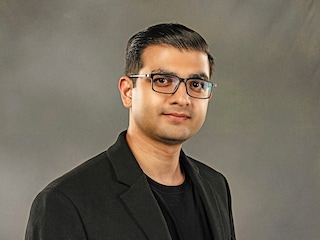
Founder and CEO Awais Ahmed talks to Forbes India about building a satellite company from the ground up, advancing hyperspectral and AI‑led Earth observation, and where India’s space sector is headed. Edited excerpts:
The company was founded in 2019—that’s when this vision really took shape. In 2021, we launched our first demo satellite—a small one, just to test the satellite technology and camera systems. It worked. Then, in 2022, we launched two more demo satellites—one with Isro (Indian Space Research Organisation) and one with SpaceX. Both worked and transmitted data that we were able to sell to customers. They paid for it, which proved the business concept: With one or two satellites, we could run pilot projects. The next step was scaling up.
So, those were the three demo satellites launched in 2021 and 2022. In 2025, we’ve launched six commercial satellites—three in January and three in August. Back in 2021 and 2022, we were the only private company in India to have launched a satellite. In fact, in 2021, we launched India’s first-ever private satellite, followed by the second and third in 2022. By 2024, a few other companies launched smaller CubeSats, but not hyperspectral ones. And, in 2025, we became India’s first private company to deploy a constellation—multiple satellites working together to provide services.
Q: In terms of the tech stack, could you walk us through what that looks like—from satellite design to data analysis?
It starts with customer requirements. Customers tell us what quality of data they need—say, 5-metre or 10-metre hyperspectral resolution. What was available from Nasa or Isro was at 30 metres, and even then, it wasn’t accessible commercially. So, even if they had provided it, the resolution wouldn’t have been good enough. We had to improve that quality, based on direct feedback from customers.
From there, we design the hyperspectral camera—its optics, sensors, electronics. That’s our core intellectual property. Then the camera needs to go on a satellite platform. Initially, we considered buying platforms, but they were too expensive and not suited for hyperspectral imaging, which is far more power-hungry and data-intensive than standard cameras. So, we decided to build our own platforms.
Once the camera and platform are ready, we integrate them and launch via a provider like SpaceX or Isro. We design the satellites to be compatible with multiple launch providers. After paying for the launch, the satellite goes into orbit. Then we communicate with it through ground stations we rent worldwide—in Norway near the North Pole, Antarctica near the South Pole, Chile, New Zealand, and so on. We have a ground control system here that commands the satellites, monitors their health, and troubleshoots issues.
When data comes down to the ground stations, it’s stored on servers—AWS, Azure, etc. Then the AI layer kicks in. For example, if we have images of an area for the past week, we run algorithms to detect changes or identify invisible issues like gas leaks or methane emissions. That’s the full tech stack—from hardware design and manufacturing to operations and data analysis.
Q: So far, you’ve tied up with Isro and SpaceX. You haven’t used any Indian private launch companies?
Building satellites is already risky. They could fail for countless reasons—even after rigorous testing, components that work individually might fail when integrated. Add cosmic radiation and gamma rays in space, and you have more challenges. So, with that much risk already, we need a launch vehicle that’s as reliable as possible. The two most reliable options globally are SpaceX and Isro. Isro’s PSLV is a workhorse, and SpaceX launches so frequently that costs have come down significantly. Their last failure was in 2016 or 2017—quite a while ago.
Q: When you talk about customers right now, what sectors are you specifically focusing on? And are they mostly India-specific or global?
Global since day one. We have some clients in India, but traditionally India hasn’t been a big market for satellite data. Isro used to build satellites internally, and usage was largely government-to-government—two or three agencies at most. That’s changing now. For example, we have an agreement with the Ministry of Agriculture, and we work with airports. But the bulk of our business has been global because there was already a large market in the US and Europe.
Companies like Rio Tinto, for instance, have been buying satellite data for years. It was easy to convince them why they needed hyperspectral data—because they didn’t have access to that dataset. It helps them identify minerals that other datasets can’t, such as lithium, cobalt, uranium, and so on.
Q: Do customers have access to a stack where they can monitor in real time?
Yes, there are two ways. In some cases, customers have their own dashboards or platforms, so we deliver the data directly to their cloud servers. But most of our customers use our AI platform called Aurora.
Aurora does two things. First, it works like Google Earth—you type in a location, draw a square or define an area, and then task our satellites to capture images of that area every week. The request goes into our system, gets scheduled on the satellites, and once the image is captured and downlinked—usually within two or three days—it appears on their dashboard.
Second, Aurora allows customers to run models on the hyperspectral images. These aren’t visual images you can interpret by eye—you need algorithms. For example, if you want to analyse soil nutrient content, you select that model, pay a small additional fee, and Aurora runs it to give you the output.
Q: This is a highly technical and highly regulated space. What are some of the biggest technical challenges—or just challenges in general—in building and launching satellites in India today?
Almost everything (laughs). The first challenge for companies like ours is funding. Thankfully, we’ve raised about $96–97 million so far—the second highest in India after Skyroot, by just a couple of million. That makes things a little easier. For most deep-tech companies, the amount of funding you have directly translates to the quality of technology you can build and how much risk you can mitigate.
So, the first challenge was ensuring we had enough capital to build what we wanted at the level of quality we aimed for. From a technical standpoint, assuming money wasn’t a constraint, the biggest hurdle was the hyperspectral camera. When we launched, the best available hyperspectral satellites—by Nasa, Isro, and the German Space Agency—offered 30-metre resolution. That wasn’t good enough. We built a 5-metre camera, which is six times better. Lower numbers mean better resolution: 5 metres means you can distinguish objects 5 metres apart from 500 km up in orbit, versus 30 metres for older systems. Even today, no one else has achieved 5 metres commercially—outside of classified spy satellites, which we don’t know about. Publicly, we’re the best, with 150 wavelengths of light at 5-metre resolution.
Getting there was a huge challenge because space technology is all about trade-offs. If you want better resolution, weight and cost go up. If you want to keep weight and cost low, resolution suffers. If resolution is high, your field of view shrinks. If you try to keep the field of view wide, resolution drops. So, achieving 5 metres without compromising coverage or quality was the hardest part.
Q: When it comes to the technical side of things—building a satellite and sourcing components—access to those from an India standpoint must have been tough, right?
Actually, in our case, we ended up doing a decent amount in-house. When we started, about 40 percent of the content was indigenous or built internally. Today, we’re at roughly 50–55 percent, depending on the satellite. But even in the early days, the first Fireflies had about 40 percent done here.
The remaining 60 percent still had to be imported. For example, no one in India makes high-efficiency solar cells for space—we import those. Same with high-efficiency batteries. Battery packs are made here, but the cells themselves need to be imported. Components like reaction wheels, which keep the satellite oriented, also have to be imported because no one in India manufactures them yet.
That’s where the 60 percent comes from. But Isro has built a strong ecosystem over the last four decades, so for things like avionics and onboard computers, we’ve been able to do them here.
Q: Isro’s role in opening up India’s space sector—what are your thoughts? What changes were needed, and how has this impacted you from a regulatory standpoint?
When we started, there was no policy—no sign of one. We still decided to go ahead, build, and then figure it out later. We began in February 2019. Then, in April or May 2020, the finance minister announced a slew of economic measures to revitalise the economy, and one of them—completely out of the blue—was that space would be privatised. That was a good start; at least the government signalled support. But the actual policy wasn’t there yet.
From 2021 to 2024, there was a lot of back and forth, but at least there was confidence that clarity was coming. Even during those years, things were ad hoc. For example, our first satellite, Anand, was initially supposed to launch on a Soyuz rocket with Russia—this was before the Ukraine invasion—because they were the only ones willing to take a student-led project seriously. Isro wasn’t engaging much then, and SpaceX wasn’t launching as frequently. After the policy announcement, the Department of Space called us and said, “Would you like to launch from here?” We said yes and moved Anand from Soyuz to ISRO’s PSLV.
So, things started happening on a case-by-case basis. Since there weren’t many companies doing this in 2021–23, we managed to keep things moving and get approvals. Finally, in 2024, the policy came out after consultations with startups like ours. It clarified that startups can build and launch satellites, and it introduced FDI norms—up to a certain amount without approval, and up to 100 percent with approval. Today, it’s a well-oiled process. Regulatory issues aren’t a problem for 99 percent of cases.
Q: Going forward, are there areas of innovation or R&D you’re focusing on that haven’t been explored before?
Hyperspectral was one big leap, and we’re still improving it—especially resolution. Beyond that, we’re bringing AI and large language models (LLMs) into Earth observation. For example, on our Aurora platform, you can log in, create an account, and simply chat your request. You don’t need prior experience with satellite data. Just ask questions like, “Give me a report on how water quality in Bengaluru’s lakes has changed over the last 12 months.” Aurora will ask a few clarifying questions, then run the analysis automatically and deliver the report. That might take 20 minutes because it’s complex, but simpler tasks—like showing Bengaluru on the map or detecting changes between two images—take seconds.
We’re also working on ultra-high-resolution satellites—sub-metre imaging—which only two other companies globally have done. We aim to make ours even better. And eventually, we might integrate with constellations like Starlink for real-time connectivity. Today, we wait about 90 minutes to downlink images; with such integration, it could take a minute or two.
Q: From a business standpoint, given the heavy investment required, do you have a roadmap for profitability?
Data is a very high-margin business. It takes a lot to launch satellites, but once they’re up, margins are excellent. So, EBITDA-positive next year looks likely. Cash-flow positive is different because we’ll keep investing in satellites. Reasonable chance we get there by 2027 or 2028.
Q: What trends in space excite you most?
One very exciting development in the last week is data centres in space. Nvidia announced a partnership with a YC startup. Elon Musk said Starlink will do something similar—put servers on their satellites. Google announced plans too.
It’s still a moonshot, but with Starlink, it’s feasible. They already have close to 10,000 satellites. Adding servers isn’t a huge leap once you’ve launched such large satellites. It won’t be as reliable as Earth-based data centres, but the use cases are different.
I think these are very exciting times for India. The next five years will be critical. Look at China—in 2015, they were where we are now. Today, they’re close to competing with the US. India needs to push hard over the next decade. The ingredients are there: Government as an anchor customer, more investment flowing in. Ten years ago, no one thought China would be a space leader. Now they’re number two. India can absolutely aim for the top three—and eventually number one.