How to Fix India's Internet Woes Once and for All
Broadband connectivity is lagging behind rising internet user base
By
Prefer us on GoogleLast Updated: Jul 05, 2013, 06:32 IST4 min
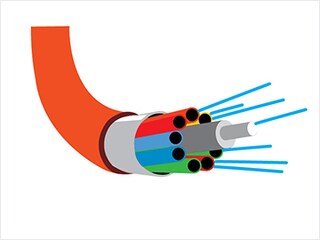
With 137 million internet users, India, on paper, is second only to China’s 564 million in terms of the user base. In reality, we are miserably placed when it comes to meaningful internet access. For instance, the average broadband speed in India is a measly 1.2 Mbps, the lowest among 14 countries in the Asia-Pacific region and just over 40 percent of the global average.
Only 2.8 percent of our internet population connect at speeds of 4 Mbps or above 89 percent connect at speeds less than 256 Kbps! India also accounts for just 2 percent of the entire set of nearly 700 million unique IP addresses that Akamai (an internet content delivery network) tracks around the world, compared to China’s 14 percent.
Successive governments, regulators and industry associations have been planning to improve our woeful internet broadband infrastructure, but nothing much has ever come of it. Because fixing broadband connectivity means solving multiple chicken-or-egg problems across the entire delivery chain.
Fixing Each Link in the Internet Chain
SolutionThrough a countrywide digital literacy campaign N Ravi Shanker, CMD of Bharat Broadband Network (BBNL), the government entity charged with deploying a Rs 20,000-crore National Fibre Optic Network, says, “We need pan-India digital literacy campaigns and missions that are aligned to existing literacy and education programmes like the National Literacy Mission and the Sarva Shiksha Abhiyan. We should aim to make at least one person in each household computer-literate.”
SolutionLet device-makers seed the marketFrom Sakshat to Aakash, one thing is clear: The government does not have a clue on how to design, mass produce or sell affordable computers. It should simply step aside and let device-makers seed the market. From MNCs like Samsung to Indian giants like Micromax, private players are smart enough to grow the market prices will fall as volumes pick up.
In spite of defining broadband as any connection faster than 256 Kbps (it’s 4 Mbps in the US), India has just 15 million connections. Blame unclear or prohibitively expensive ‘right of way’ rules around laying underground cables for that. Worse, of the 94 million cable TV homes—homes that are already wired with cable that can be upgraded to carry internet data—the bulk remain ‘dumb’ TV consumers only. On the wireless side, there isn’t enough spectrum for mass provisioning of true broadband.
Solution
SolutionNo intervention required currently.
SolutionCommunicate and implement a phased plan to slash cable landing charges year after year, keeping both international benchmarks and Indian market conditions in mind.
Introduce a policy of ‘open landing rights’ that will facilitate and enable more ISPs or telecom operators to invest in their own landing stations. That will increase compe-tition and bandwidth, while reducing prices.
First Published: Jul 05, 2013, 06:32
Subscribe Now