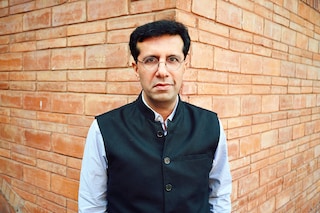
In an exclusive and wide-ranging conversation on Forbes India Pathbreakers, Ashish Dhawan, co-founder, Ashoka University, and founder and CEO, The Convergence Foundation talks about the cracks in India’s education system. On the one hand, there’s a need for world-class universities so that Indian colleges can feature among the top 100 global universities, but, on the other, there’s a bigger problem of ensuring 250 million school children get access to quality education. “But as you come to the bottom half, who are in government schools, if you look at the learning levels, I think we have a lot of room for improvement," Dhawan says.
Learning Poverty
Dhawan believes, in terms of quality, there are islands of excellence, but, at a mass level, he feels India hasn’t been able to deliver quality education. “I think those who are in the top 20-25 percent of the socioeconomic spectrum get access to good education. But as you come to the bottom half, to those who are in government schools, if you look at the learning levels, I think we have a lot of room for improvement. And learning starts to break down quite early. By Class 3 itself, a report shows that about 70 percent of children can’t read second-grade text. The World Bank has this marker called Learning Poverty which says that at age 10, or Class 5, 55 percent of children can’t read third-grade text. Now, I think the government knows this and they have started a programme called NIPUN Bharat, which the prime minister launched, which is focussed on foundational literacy in infancy.