Details on relaxation to SEZs within 2 months: Official
Budget proposal to allow SEZs to sell goods domestically has been kept for a limited period as SEZ focus must remain exports
Last Updated: Feb 16, 2026, 11:10 IST2 min

The government will soon issue rules regarding a one-time relaxation provided to Special Economic Zones (SEZs) in the Union Budget to sell their goods in the domestic market.
“A notification should come within a month or two. It will be an exemption notification issued under the Customs Act,” said a government official.
To address the issue of underutilised manufacturing capacity in SEZs amid disruptions to global trade, Finance Minister Nirmala Sitharaman had announced a one-time policy intervention in her Budget speech.
The proposal allows eligible SEZ manufacturing units to sell a portion of their output in the domestic tariff area at concessional duty rates. Such sales, she had said, would be capped at a defined share of the units’ export volumes.
Currently, goods sold by units in SEZs into the domestic market are subject to steep import duties. “The relaxation has been limited to a fixed period of time because the core objective of SEZs must remain exports. Details will be out in the notification,” the official said.
Exports from SEZs reached Rs14.63 lakh crore in fiscal 2024-25, up 7.9 percent compared to previous year’s Rs13.55 lakh crore.
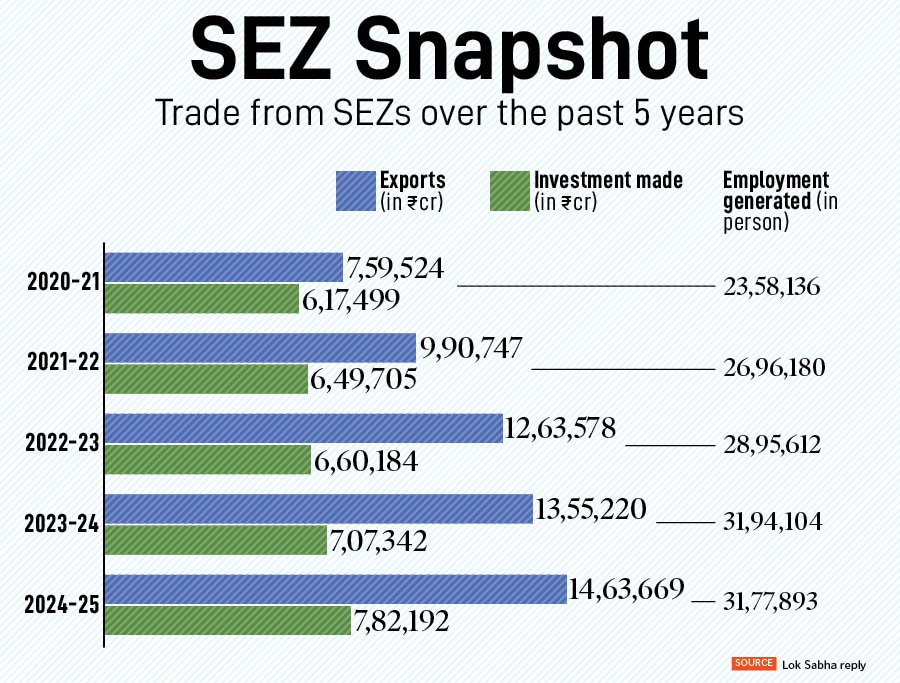
India has 276 operational SEZs housing about 6,279 units, many of which could see improved market access and better capacity utilisation with the Budget proposal.
The move would also encourage domestic industry to source goods from SEZs instead of relying on imports from third countries.
The proposed change is expected to significantly benefit seven to eight sectors—such as leather, textiles and engineering goods—which face particularly high import tariffs in India.
“SEZ units had sought this relief, particularly as global trade volatility and increased US tariffs left many of them unable to utilise or manage surplus inventory,” said Saloni Roy, partner, Deloitte India.
The US has already withdrawn the additional 25 percent tariff on Indian-origin goods that had been tied to India’s purchases of Russian oil, effective February 7. Reciprocal tariffs, currently set at 25 percent, are expected to be reduced to 18 percent once an interim trade agreement is finalised, a step anticipated by mid-March.
The 18 percent tariff structure will improve India’s position in the US market relative to regional competitors such as Bangladesh and Sri Lanka, where tariff rates exceed 18 percent, according to Roy.
“The one-time relaxation for DTA (domestic tariff area) sales will also help SEZ units in sectors currently subject to US national security tariffs, such as steel, aluminium, automobiles and auto components, by allowing them to deploy spare capacity and supply to the domestic market at concessional rates.”
However, Roy said, it remains to be seen whether the relaxation will apply broadly or be limited to certain industries. “But either way it offers a positive avenue for capacity utilisation, employment and growth. This also supports the national theme of Make in India.”
First Published: Feb 16, 2026, 11:19
Subscribe Now