The one thing home buyers want more of, and it’s not just location
Homebuyers aren’t just buying addresses anymore. They’re buying breathing room
By
Prefer us on GoogleLast Updated: Mar 17, 2026, 17:32 IST2 min
Not too long ago, the definition of luxury in real estate was uncomplicated. A prime pin code. A recognisable skyline. Premium finishes and impressive lobbies. The assumption was simple: the better the address, the higher the value. But as cities like Gurugram have grown denser and more vertical—and as infrastructure development and seamless connectivity have expanded across the city—that definition has begun to feel incomplete.
Today, a quieter shift is underway. Homebuyers are no longer asking only where a project is located. They are asking how it will feel to live there every day. And increasingly, the answer lies not in location alone, but in space — particularly green, open, breathable space.
This shift is clearly reflected in recent homebuyer research. According to industry studies, over 80% of urban homebuyers say access to open green spaces significantly influences their purchase decision (Source: Knight Frank Research 2024). Additionally, nearly 75% of buyers rank proximity to large, continuous green spaces as a key consideration when evaluating residential projects (Source: JLL Residential Market Insights 2024). What was once seen as a lifestyle add-on has now become a core expectation — especially in the premium segment.
This shift has been shaped by lived experience. Over the past few years, residents have spent more time at home than ever before. Views mattered. Balconies mattered. The ability to step out into nature — even within one’s own community — mattered. In contrast, developments offering only fragmented lawns or decorative landscaping began to feel limiting. Token green patches, however well marketed, could not replicate the sense of openness that comes from true, uninterrupted green cover.
As land parcels in established city areas shrink, large-format developments with continuous greens have become increasingly rare. And as with all luxuries, rarity has begun to define value.
It is within this evolving context that Serenity Hills by Emaar India emerges as a defining statement—reimagining luxury living in Sector 86 by placing expansive, uninterrupted green spaces at the very heart of its design.
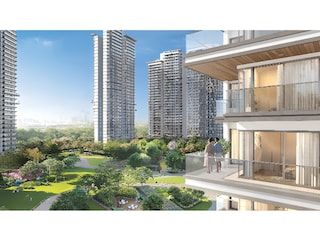
Spread across over 25 acres, the development is anchored by a planning philosophy that treats green cover as the main experience, not a supporting feature. More than 20 acres are dedicated to open greens, with an 8-acre uninterrupted central green complemented by a serene waterbody and walking promenade—a rare offering in today’s urban residential landscape. Unlike fragmented lawns, this continuous green expanse becomes part of everyday life, shaping routines, views, and a sense of calm that is increasingly difficult to find.
The current launch introduces thoughtfully planned towers, oriented towards these vast greens to prioritise openness over density. Spacious residences, full-height glass corners, wide balconies, and flexible utility niches extend this connection to nature indoors, while nearly 1 lakh square feet of amenities, anchored by an approx. 65,000+ square feet clubhouse, complete the lifestyle ecosystem. With IGBC Platinum Pre-Certification, the project’s sustainability credentials emerge naturally from its green-led design—enhancing comfort today while strengthening long-term value.
As Gurugram continues to evolve, luxury is being redefined in real terms. It is no longer just about the prestige of an address, but about the quality of space it offers. In a city where uninterrupted green land is fast disappearing, developments that prioritise large, continuous green cover are setting a new benchmark. In today’s urban reality, true luxury isn’t measured by how central your location is—but by how much nature you can still call your own.
The pages slugged ‘Brand Connect’ are equivalent to advertisements and are not written and produced by Forbes India journalists.
First Published: Mar 17, 2026, 17:44
Subscribe Now