Spaces should go beyond being just a backdrop for photos: Gauri Khan
In an exclusive conversation, Gauri Khan speaks on designing Soraia, Mumbai’s newest luxury restaurant, what the celebrity identity brings to the table, and more
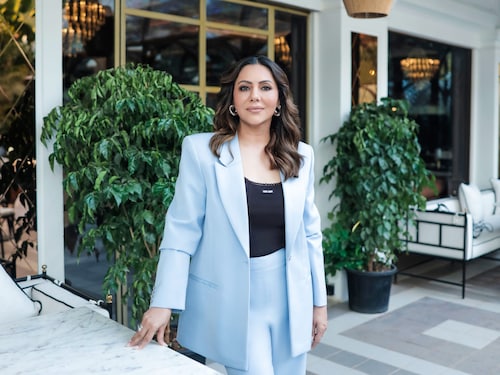
Gauri Khan at Soraia, a newly launched restaurant in Mumbai, designed by her. Image: Aishwaryaa Nayak / Soraia
Advertisement
A new restaurant is about to enter Mumbai’s luxury dining space. Soraia, designed by Gauri Khan, is opening on December 4 within the Mahalakshmi Race Course, an iconic location in the city. Founded by restaurateurs Dhaval Udeshi, Afsana Verma, Amit Verma, and designed by Khan, the idea behind it was to build a destination that didn’t just serve food and drinks, but was at the intersection of culture, community and craft. “Our vision was to pioneer a fresh culinary language and a bar programme rooted in exploration, technique, and seasonality—something south Mumbai hasn’t experienced before,” says Udeshi.
Restaurateur and hotelier Udeshi, who owns a number of restaurants, including Scarlett House, Gigi Bombay, Lyla, Kaia Goa, Donna Deli, and more, has executed more than 30 restaurant projects in the past few years. Soraia is Khan’s second venture as a designer in Mumbai’s F&B space, after Torii. The partnership came about with Udeshi’s vision to do something premium for the large space that Soraia offers. Udeshi had two concepts in mind—a super-premium luxury restaurant downstairs and an invite-only bar at the top. “When I thought of luxury and premium spaces, the first person that came to mind was Gauri, and hence the collaboration,” says Udeshi.
The setting of Soraia is expansive, with indoor and alfresco seating flowing together. Drawing inspiration from a European glasshouse at dusk, the space reflects warm espresso tones, soft velvets, and woven textures. The menu wanders from India's coastlines to Europe's countryside, with offerings such as a Shiso-Leaf Chaat, Honey Nut Brie, Forest Mushroom Risotto, and more.
In an exclusive conversation with Forbes India, Gauri Khan talks about the restaurant’s design, designing for a luxury-focussed audience, expectations associated with celebrity-led dining spaces, and more. Edited excerpts:
Q. Soraia reflects an intimate part European, part Indian soul. What was the central design philosophy?
I wanted to bring in elements of timeless luxury, quiet elegance and slow indulgence. Soraia’s location within the Mahalakshmi Race Course makes the space very natural. There's lots of greenery, there's nature coming together, there's use of natural materials, subtle textures, soft lighting—it shows all of that. The idea of warmth and welcoming space is what we were looking at.
Q. You’ve designed many high-profile homes and commercial spaces. How does designing a restaurant differ from those projects?
I think designing a restaurant is unique. It's all about creating an experience which extends to how it feels, smells, what it sounds like. Homes, on the other hand, are deeply personal. Commercial spaces are more about brand identity and the functionality of the space.
Q. Food experiences are multisensory. How did you integrate design to enhance the dining experience rather than just beautify the space?
The menu is entirely inspired by nature in all its elements. The design is deeply inspired by nature again, and, therefore, the dining experience is an extension of design. Soraia takes its name from ‘soul’ and ‘soraya’—light and radiance. Every touch point is considered to make the dining experience more immersive and elevating.
Q. How do you design for Mumbai’s audience, which is a mix of global travellers and local loyalists?
Our audience in Mumbai is certainly mixed. They all are well travelled, and they become used to a certain quality, luxury experience. At Soraia, the luxury and personal style of the space are all an extension of the brand. We wanted to build in line with Mumbai's high standards of food-style and hospitality.
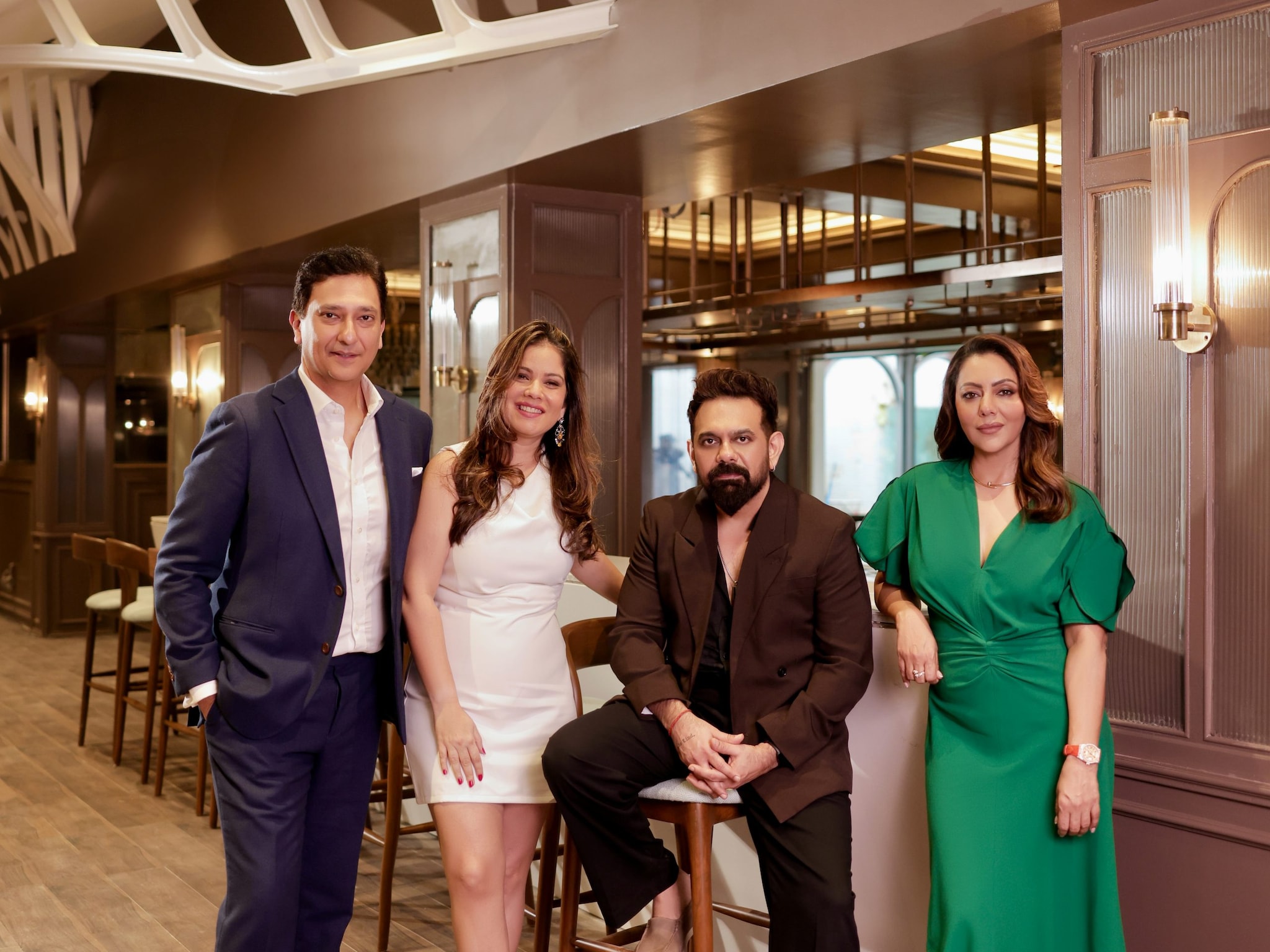
Founders Soraia - (from left) Amit Verma, Afsana Verma, Dhaval Udeshi and designer Gauri Khan; Image: Aishwaryaa Nayak / Soraia
Q. Do you feel that having a celebrity identity attached to a restaurant raises expectations when it comes to design and branding?
I think it brings in a lot of creativity and fresh ideas. For the luxury and the personal style of the space at Soraia, it is something I am passionate about. I take on to design projects that I'm personally passionate about, and whether they are residential, commercial, or F&B spaces, they are personal. I enjoy designing it. I only work on projects that I feel my design can find a vision and can provide some value.
Q. What role do you think design plays in shaping a restaurant’s identity today, especially in the age of Instagram and digital-first dining culture?
In today's digital world where Instagram is available to everyone, I believe spaces should go beyond being just a backdrop for photos. I design spaces that invite people to engage, but more importantly, I create spaces that will stand the test of time. And Soraia was designed to be visually striking, but with depth, and the idea for it to be a space that one can return to and discover, with each time you're discovering a new design space.
Q. What was the most exciting part of bringing this restaurant to life? And what was the most unexpectedly challenging?
I wanted to keep the original structure of the restaurant, as an ode to the restaurant’s past. But I also wanted to make sure it has something fresh and new. So it was both exciting and challenging—respecting the bones of the place while creating a bold and new vision.
Q. Is there a signature corner, installation, or design detail you personally love?
I loved having the opportunity to design a space where we didn't have to compromise into the space constraints. Each space is unique, warm, and inviting.
Q. Do you think India is entering an era where design-led restaurants may outshine cuisine-led ones?
Well, I certainly hope not. Design is very important. It's a very important element, but cuisine has to absolutely shine through. At the end of the day, that's what is going to keep the restaurant going.