Budget 2026-27 redraws rural employment framework
Union Budget raises rural employment outlay through new Gram Rozgar mission as MGNREGA is phased down
By
Prefer us on GoogleLast Updated: Feb 01, 2026, 18:11 IST2 min
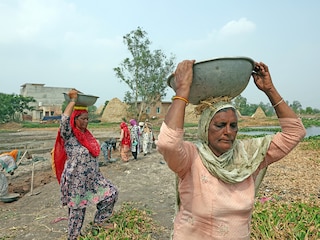
The Union Budget for 2026-27 provided Rs95,692.31 crore for the Viksit Bharat-Guarantee for Rozgar and Ajeevika Mission (Gramin), or G-RAM-G, marking the first full-year budget allocation for the new rural employment scheme.
At the same time, it reduced the allocation for the Mahatma Gandhi National Rural Employment Guarantee Programme (MGNREGA) to Rs30,000 crore compared with Rs88,000 crore in the revised estimates for 2025-26. Read together, allocations for G-RAM-G and MGNREGA in 2026-27 crossed Rs1.25 lakh crore, 43 percent higher than the previous year’s provision for MGNREGA alone.
In numbers: Budget 2026: Complete snapshot at your fingertips
G-RAM-G was introduced through legislation in December 2025 and is intended to replace MGNREGA, which has been in operation since 2006. The new scheme increased the legal guarantee of wage employment from 100 days to 125 days per rural household in a financial year. Core features of the earlier programme, including the entitlement-based nature of employment and the requirement to pay unemployment allowance if work is not provided within 15 days of demand, were retained.
Under MGNREGA, the Union government bore the full cost of unskilled wages, which formed the largest share of expenditure, while states contributed to material and administrative costs. However, G-RAM-G follows a different funding structure—costs are shared between the Centre and states. For most states, the Centre will fund 60 percent of total costs, with states funding the remaining. Northeastern and Himalayan states will continue under a 90:10 arrangement, while Union Territories without a legislature will receive full central funding.
States have up to six months to move from MGNREGA to G-RAM-G, and both programmes will run during this period. Making separate provisions allows ongoing work and wage payments under MGNREGA to continue without interruption while states adjust to the new system.
In her Budget speech on Sunday, Finance Minister Nirmala Sitharaman said the government had sought to ensure that “citizens benefit from every action of the government”, through measures supporting employment, farm productivity, household purchasing power and access to public services. These steps, she said, had contributed to growth of around 7 percent and supported poverty reduction.
Sitharaman said the objective was to ensure that “every family, community, region and sector has access to resources, amenities and opportunities for meaningful participation”.
The scope of works under G-RAM-G has also been more clearly defined. While village councils, or gram panchayats, will continue to identify projects, these must focus on water security, rural infrastructure, livelihood-related assets and measures to mitigate the impact of extreme weather. Planning will be bottom-up, with gram sabhas and panchayats deciding local priorities, and plans aggregated at higher administrative levels.
The new scheme also provides for greater use of technology in planning, implementation and monitoring, including biometric authentication, geospatial tools, and digital dashboards for tracking works and payments. The government has indicated that rules are being framed to ensure a smooth migration of existing MGNREGA workers into G-RAM-G and to define how funds will be allocated across states.
Read Forbes India's complete Budget 2026-27 coverage here
First Published: Feb 01, 2026, 18:24
Subscribe Now