Novo Nordisk has slashed prices of its blockbuster diabetes and weight loss drugs Ozempic and Wegovy in India by up to 36 percent and 48 percent respectively, as a wave of lower priced generics enters the market following the expiry of semaglutide’s patent. The revised prices, effective April 1, bring the 0.25 mg starting dose of both Ozempic and Wegovy to Rs1,415 per week, or Rs5,660 per month, translating to Rs202 per day. Across strengths, the average price reduction works out to about 24 percent for Ozempic and 27 percent for Wegovy.
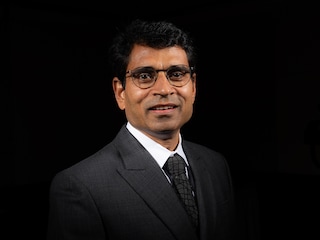
Announcing the move, Vikrant Shrotriya, managing director, Novo Nordisk India, said in a statement that the decision was driven by patient access. “We’re driven by science, but our focus is always on patients. By revising the price of our innovative treatments, we’re trying to make best in class cardiometabolic care more affordable for as many people with type 2 diabetes, overweight and obesity in India as possible,” he said.
Generics will come, but Novo Nordisk is differentiated. Any biosimilar entrant would likely be semi synthetic, and that distinction matters. Our focus remains on leading with science and building this market responsibly.
We make this through a certain process called rDNA—recombinant DNA technology—and we’ve been doing it for more than 10 years.
Now, when others use a different process, we can’t comment on that. We don’t know how they do it—but we know how we do it. With our molecule, we’ve conducted over 40 trials. We have results across a very large number of patients.
Q. But won’t rDNA technology be replicated over time?
rDNA is a very capital intensive process. We’ve been doing this for nearly 100 years, starting with insulin. That experience spans fermentation, yield optimisation, purification, filtration, and understanding immunogenicity profiles. All that knowledge has accumulated over decades and has been extended to the manufacturing of semaglutide.
We know the stability, quality, purity, biological structure, and half life of our molecule. We stand by this process. Others may use different processes, but we can only speak for ours. With our molecule, we’ve conducted over 40 trials, generated extensive clinical and real world evidence, and treated more than 38 million patients.
Our approach is end to end—from APIs and purification through to the device. The drug, the device, and the needle are designed and calibrated together to ensure consistent dosing and reliability over time. That system based approach is a key differentiator.
Making a product is one part; leading the science is another. We continue to extend the science across indications—from diabetes to obesity, kidney disease, and MASH—and we invest heavily in knowledge sharing and capacity building with doctors and patients. That builds trust and long term outcomes beyond the medicine itself.
Generics will come, and that’s a good thing—the market is large enough. But leadership is built on consistency, scientific depth, and long term commitment. That is where Novo Nordisk differentiates itself.
Q. From a company standpoint, when you know the market is about to grow, how prepared are you? Are there changes you’re making—increasing productivity, manufacturing capacity, and so on?
We are prepared, and we welcome new players. While many may want to enter, only those who are genuinely committed and willing to work deeply with both the science and the therapy will sustain. This is a long term play, not an opportunistic one.
Generics will come, as they do in every therapy. But as we’ve seen in insulin, leadership does not automatically shift. Many companies entered, some exited—but Novo Nordisk remained and continues to have the largest insulin franchise in India.
For us, there is no question mark. The benefit of taking a long term view is that we are prepared not just for market growth, but for market leadership over time.
Q. What about your largest global competitor, Lilly—with Mounjaro and other products? They entered the Indian market before you did. Do you think they’ve taken market share, and did the first mover advantage impact your strategy?
Somebody has to come first. In many innovations, we were first and they were second; this time, they are first.
But the important point is not who came first or second, it is that together we are building the anti obesity market. There is enough space for strong players who bring science, knowledge, and sustained engagement.
From a competitive perspective, of course we want to be a strong challenger. With the launch of Wegovy in obesity and semaglutide in diabetes, we are very confident about our position and proud of our progress.
This journey is not about winning or losing. It is about sustaining the effort and tackling the burden of obesity. If, together, we can bend that curve in India, that would be the real success—and something we would consider a shared achievement.
Q. With so many brands and generics in play, does it ultimately come down to marketing and brand recall? If a patient is given options X, Y and Z, does familiarity still matter, where they might say, “I want Ozempic”?
Consumer awareness has increased significantly, largely due to social media. Today, people understand the problem, the need for action, and the role of exercise, time, and medicines. That awareness is a positive development—as long as people do not start prescribing for themselves.
As a company, however, we work primarily through doctors. Doctors play the central role in empowering patients, and if doctors are talking about obesity, that itself is meaningful progress. A few years ago, obesity was rarely seen as something to prescribe for; today, more doctors are recognising it as a disease that requires treatment.
In that process, patient familiarity with a brand can help with compliance. But awareness does not drive prescriptions or revenue. The prescription must come from the doctor, and we continue to respect that central role.
Q. There are instances where people can walk into a chemist and get Ozempic without a prescription. Is this something you are actively working to prevent?
We do not encourage that at all. This is still early in the disease journey, and also early in terms of access. Today, the medicine is available at good pharmacies across the country, and we only wish and hope that good pharmacies follow local laws and do not dispense without a prescription.
We keep emphasising one very important message, and we keep repeating it: Please take this medicine only when advised, and please take it through the proper channel. That is our continuous effort.
Q. There’s also a tie-up you’ve done with Emcure to improve reach and engagement. How did that partnership come about, and how has it helped?
Alone we can only do so much, but together we can do quite a lot. We bring the strength of being a multinational company—processes, innovation, manufacturing, and rDNA-technology-based semaglutide. Emcure, on the other hand, is a large Indian player with very wide reach.
India can be a demographically challenging country for any business. You have thousands of villages, hundreds of districts, multiple metros and mini-metros. It’s not a country where one city accounts for half the population. It requires scale, reach, and depth.
Q. Are you seeing adoption increase in Tier-2 and -3 cities? Has that uptake begun?
It has already started. One important thing we have done is an all-India launch. We have done an unrestricted launch. Earlier, there was a time when semaglutide availability was constrained—there were supply challenges. Today, we have committed ourselves to unrestricted reach. We have ensured that supply will be there, and we have launched it across the country.
Like any therapy, this follows a diffusion curve—early adoption first, then wider diffusion. I am confident that diffusion will happen in Tier-2, -3 and even -4 cities over time, because obesity is not just an urban problem.
Q: In terms of formulations—tablets, injectables and so on—how much of that portfolio is already available in India?
India is a very large market. While we have injectable semaglutide for obesity, we also have semaglutide for diabetes. We have just launched the Wegovy pill in the US, and in India we already have oral semaglutide available for diabetes.
Our aspiration is that any innovation that comes out of our laboratories should also find viability in India. But the key question is always viability—and that is something we continuously evaluate. It has to be the right market fit.
The population requires multiple options. Some people prefer injectables, others are comfortable with tablets. We’ve seen in the US that after the tablet was launched, many people opted for it. It provides choice—for prescribers and for patients—rather than forcing everyone into a single mode of administration.