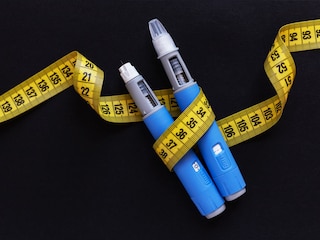
Earlier today, Sun Pharmaceutical Industries said it had received approval from the Drugs Controller General of India (DCGI) to manufacture and market a generic version of semaglutide injection, a glucagon‑like peptide‑1 (GLP‑1) receptor agonist indicated for chronic weight management in adults. The product will be launched under the brand name Noveltreat after the expiry of Novo Nordisk’s semaglutide patent in India in March 2026.
Globally, the weight‑loss drug market has been reshaped over the past few years by the runaway success of Novo Nordisk’s Wegovy and Ozempic, and Eli Lilly’s Mounjaro and Zepbound, which brought GLP‑1–based therapies into the mainstream. Morgan Stanley Research now estimates the global market for obesity drugs could reach $150 billion at its peak in 2035, an increase from a previous forecast of $105 billion. In 2024, this market had about $15 billion in sales.
India’s anti-obesity pharmaceutical market surged to Rs 628 crore as per the moving annual total (MAT) ending June 2025, a five-fold increase over five years with a 46 percent CAGR, making it the fastest-growing therapeutic segment in the Indian pharma landscape, according to market research firm PharmaTrac.
Sun Pharma’s Noveltreat received DCGI approval following a review of its Phase III clinical trials conducted in India. The once‑weekly injectable will be available in five dose strengths—0.25 mg/0.5 ml, 0.5 mg/0.5 ml, 1 mg/0.5 ml, 1.7 mg/0.75 ml and 2.4 mg/0.75 ml—with a maintenance dose of 2.4 mg administered weekly via a prefilled pen, the company said in a press release.
Market analysts expect the generic pens to be priced 30-50 percent lower than the current branded cost in India.
“Obesity and diabetes have emerged as two of the most pressing health challenges confronting India and GLP-1 based therapies can play a meaningful role in addressing this growing burden. Noveltreat meets global quality standards and is supported by robust Indian clinical evidence on efficacy and safety for weight management,” said Kirti Ganorkar, managing director, Sun Pharma, in a statement.
India’s GLP‑1 market has already crossed Rs 1,000 crore in annualised sales, led by Novo Nordisk’s semaglutide portfolio and a rapid surge in Eli Lilly’s Mounjaro, underscoring the scale of demand Indian generic drugmakers are preparing to tap post‑2026. In fact, in October 2025, Eli Lilly’s Mounjaro (Tirzepatide) achieved a historic milestone by becoming the highest-selling pharmaceutical brand in India by value for that month, racking up Rs 100 crore in monthly sales.
“GLP-1 receptor agonists like semaglutide are an important scientific advancement for overall metabolic health, not just weight. We are seeing growing patient interest in this therapy, and improved accessibility will help address unmet needs,” said Dr Unnikrishnan AG, chief endocrinologist and CEO, Chellaram Diabetes Institute.
Besides Sun Pharma, a growing roster of Indian drugmakers is gearing up to enter the GLP‑1 space, lining up generic versions of semaglutide ahead of the patent expiry in March 2026 and tap into the demand:
Dr Reddy’s Laboratories
Hyderabad‑based Dr Reddy’s Laboratories has also secured regulatory approval for a generic semaglutide product, receiving DCGI clearance earlier this week to manufacture and sell a generic version of Ozempic for the treatment of type 2 diabetes. The approval does not yet extend to the weight‑loss indication, for which regulatory clearance is still awaited. Dr Reddy’s has said it plans to sell around 12 million semaglutide pens in the first year following launch, positioning itself as an early volume player once the patent barriers lift in March 2026.
Alkem Labs & Zydus Lifesciences
Alkem Laboratories and Zydus Lifesciences are among the other Indian manufacturers reported to have secured the necessary regulatory approvals to enter the generic semaglutide market, though both have maintained a relatively low public profile so far. Neither company has disclosed brand names, pricing or launch timelines, but industry watchers expect them to emerge as fast followers, leveraging their established diabetes portfolios and doctor networks to compete aggressively on price once multiple generics hit the market in Q1 FY27.
Torrent, MSN, and Natco Pharma
Several other Indian drugmakers are close behind. Earlier this month, the Central Drugs Standard Control Organisation’s Subject Expert Committee (SEC) gave favourable recommendations to Torrent Pharmaceuticals for oral semaglutide tablets, and to MSN Laboratories and Natco Pharma for injectable semaglutide formulations, after reviewing Phase III clinical data. These recommendations clear an important regulatory hurdle, although final marketing permissions and domestic sales remain tied to the expiry of Novo Nordisk’s India patent.
Analysts view Torrent’s focus on the oral formulation (the generic version of Rybelsus) as a massive differentiator. In the Indian market, oral pills are expected to see higher compliance and faster adoption than injectables due to needle-phobia and easier storage.
Interestingly, all three of these companies (Torrent, MSN, and Natco) are notably seeking approval for Synthetic Origin semaglutide. This differs from Novo Nordisk’s recombinant DNA (biological) process. This is important to note since using a synthetic process allows these companies to scale manufacturing faster and potentially offer even deeper price cuts than those using biological processes.
Cipla and Emcure Pharma
Several Indian drugmakers are also already plugged into the GLP‑1 opportunity through marketing and distribution partnerships with global innovators.
Cipla, for instance, has tied up with Eli Lilly to distribute and commercialise tirzepatide in India under the brand Yurpeak, a locally marketed version of Mounjaro, leveraging its chronic therapy sales force to expand reach beyond major metros.
Emcure Pharmaceuticals, meanwhile, has partnered with Novo Nordisk to market a second branded version of Wegovy in India under the name Poviztra, aimed at widening access to semaglutide‑based weight‑loss treatment through a broader pharmacy network.
These arrangements allow Indian companies to build early scale and prescriber familiarity in GLP‑1 therapies even as they prepare their own generic semaglutide launches once patent protections expire in March 2026.