When nutrition labels work – and when they don't
At-a-glance nutrition labels on restaurant menus can promote healthier choices among middle-class consumers. But what about the rest?
By
Prefer us on GoogleLast Updated: Feb 24, 2026, 13:54 IST5 min
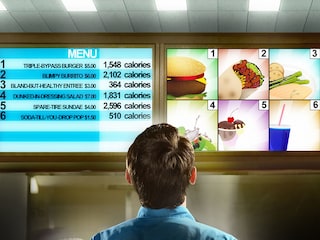
Imagine walking into a quick-service restaurant where every item – main, side, beverage and dessert – displays a simple colour-coded grade indicating its nutritional quality. Would this information make you order healthier food?
This answer is less straightforward than you may think. Nutrition labels are among the least effective nudges to healthier eating, an INSEAD study found. Another earlier INSEAD study showed that, in supermarkets, nutrition labels boosted the sales of the healthiest products but didn’t diminish the sales of less healthy ones in the same category. Worse, other studies found that highlighting health benefits can sometimes backfire: When food is presented as healthy, some consumers may assume it is less tasty, less filling or more expensive, and shun it as a result.
But here’s the good news, at least for healthy-eating advocates: Our latest study, published in the Journal of the Academy of Marketing Science, shows that displaying a simple nutrition label helps consumers choose healthier meals at fast-food restaurants.
Our research partner was French sandwich chain Pomme de Pain. The company computed Nutri-Score for all its products, allowed us to display the labels in some restaurants and survey its clients, and shared its sales data with us. They also agreed that the results would be published no matter what we found.
In our first experiment, we asked 812 online participants to select a meal from two menus (pictured below) as if they were eating at a Pomme de Pain restaurant. Half of them were shown the standard menu without Nutri-Score labels, while the other half saw the same menu with Nutri-Score displayed alongside every item.
The results revealed that displaying Nutri-Score led to a 10-percent improvement in the average nutritional quality of meals chosen. The proportion of healthier meals – graded A or B – rose from 32 percent in the control group to 37 percent when Nutri-Scores were displayed on the menu (pictured below), while that of less healthy ones (D and E) fell from 58 percent to 52 percent.
This improvement was driven primarily by participants choosing healthier desserts, for example, apple sauce instead of chocolate cookies. Desserts, as you might guess, typically have the lowest nutritional quality and account for nearly half of a meal’s calories.
Importantly, Nutri-Score did not lead consumers to think that the food was less filling, less tasty or more expensive. There’re no unintended consequences here. The labels did not change people’s priorities or make them care more about nutrition. They simply made the products’ nutritional quality more visible. Think of it like turning on the lights in a dim restaurant – suddenly, you can see what you're choosing.
Our second experiment was a field study that examined how Nutri-Score displayed in restaurant menus influenced diners’ food choices. Over 30 weeks, we collected data on some 200,000 meals purchased at four comparable Pomme de Pain restaurants, of which two were located in middle-class, metropolitan areas (Parisian suburbs) and the other two in lower-income provincial towns in the Hauts-de-France region. In each locality, one of the restaurants displayed menus with no nutritional information, while the other displayed menus with Nutri-Score labels.
First, the good news: All consumers valued this transparency. Fully 93 percent said displaying Nutri-Score was a good initiative, and 85 percent said it helped them eat better. But did the labels work as intended?
Very well, in fact, for both the restaurant and its customers in the Parisian suburb. Nutri-Score led to a 2.3-percent improvement in nutritional quality of meals chosen and a 3.4-percent increase in revenue. In the restaurant located in the lower-income region, however, Nutri-Score led to a 1-percent decline in nutritional quality, and revenues fell by 3.7 percent.
These results highlight two important lessons. First, the fact that consumers say they value an initiative does not mean it will necessarily change their behaviour. Second, simple nutrition labels don’t have the same effect on everyone.
The results: Among middle-class consumers and those living in metropolitan areas, Nutri-Score improved nutritional quality by 8-14 percent. But for consumers in the lowest socioeconomic tier or living in provincial towns, the label had no significant effect.
This finding shows that well-intentioned policies to increase transparency, such as displaying Nutri-Scores, can sometimes widen pre-existing inequalities. The nutrition gap between low and middle-class consumers in the control group in Study 3 was just 1.8 percent. But with nutrition labels displayed, this gap ballooned to 11.1 percent.
After testing nine potential factors, including cost, taste and satiety (feeling satisfied), we found that nutrition importance was the only factor explaining the different findings in low and middle SES groups. People with lower socioeconomic status and those in smaller towns appear to attach less importance to nutrition than to other factors, such as “fillingness", cost or taste when making food choices.
Fortunately, our research also turned up a practical solution. We discovered that products with the best Nutri-Scores often weighed more than less healthy options, at least in our study. For example, a Nutri-Score A salmon salad weighs 382 grams, while a Nutri-Score D ham sandwich weighs just 190 grams. Displaying size information might reassure customers, particularly lower-income ones, that choosing the healthy option doesn't mean going hungry.
Second, combining multiple methods and cross-sector collaboration can uncover more multifaceted and nuanced findings. Public opinion and approval of Nutri-Score, field experiments and online studies complement one another by combining real-world data with scale. All this is possible only when government, academia and private enterprise collaborate.
Finally, for nutrition labels to truly serve public health, they must be part of a broader framework that acknowledge diverse priorities and constraints. Since not everyone cares equally about nutrition, restaurants could emphasise protein content or use descriptive names that signal generous portions.
As we work towards healthier societies, public policies must serve everyone, regardless of how much they earn or where they live.
First Published: Feb 24, 2026, 14:37
Subscribe Now