In Indian fintech, scale has seldom been the hardest challenge. Distribution is expansive, adoption is rapid, and once digital behaviors set in, demand accelerates. What truly defines success is discipline. The strength of governance, depth of risk culture, and rigor in product design that allow growth to be sustained without strain, and progress without compromise.
Over the last few years, as payments expanded rapidly and scrutiny increased, the sector gained a clear insight. Sustainable growth is built on strong guardrails. Speed, when matched with compliance, earns confidence. And scale, anchored in trust, becomes resilient, even when tested.
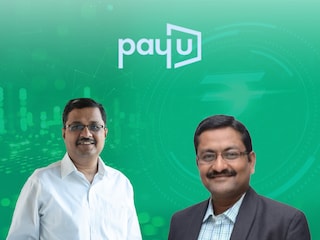
PayU, India’s leading diversified fintech platform, believes these guardrails are required to meet the burgeoning needs of the Indian digital economy. “Compliance isn’t a checklist for us, it’s a product capability. In fact, compliance is and will always be one of our competitive advantages in the market” says Anirban Mukherjee, CEO, PayU.
That philosophy isn’t cosmetic, it’s structural, reflected in robust governance frameworks, a deep risk and legal bench, and an open cadence of dialogue with regulators. And the payoff is tangible. PayU was granted all three RBI authorizations - online, offline, and cross‑border which well-positions the company to work more cohesively with the regulator and the government in building solutions which are more enduring in nature.
“Getting a unified payment license from the RBI is a testament to PayU’s compliance-first approach and trust of the regulators in our governance. The fact that we're now among the few players with all three licenses – online, offline, and cross-border, opens massive opportunities for us, including the ability to provide our customers with all relevant payment solutions.”, says Anirban Mukherjee.
Building for a Long Horizon
Even after more than a decade in India, PayU sees itself firmly at the beginning of the growth journey. Anirban Mukherjee sees 10–20 years of growth ahead, fuelled by the continued migration to digital payments, embedded credit, and a widening suite of commerce‑enabling services.
India continues to offer vast opportunities, with nearly 300 million consumers and over 20 million businesses to be incrementally digitized. “Our mission is simple,” he says. “Help sellers sell more and buyers buy more digitally through frictionless payments, embedded credit, and solutions that make commerce work end‑to‑end.”
PayU’s focus is on removing friction across the lifecycle of a purchase from payment to affordability to post‑transaction services so that digital commerce feels natural, trustworthy, and repeatable.
The Platform Approach
To do that, PayU has built an end-to-end platform offering services across Payments, Embedded Credit, Value‑Added Services (VAS).
Read More
As Anirban Mukherjee explains, “Our ambition is to build a platform that is indispensable to digital commerce in India. Our winning formula is simple but powerful: Payments + Embedded Credit + Value-Added Services. Each of these pillars has already demonstrated scale, market leadership, growth, and profitability. Together, they create a flywheel of synergies: more payments drive more credit opportunities, which unlock VAS adoption, which in turn strengthens engagement across the ecosystem.”
The strength of this approach lies in compounding and this compounding is visible in the numbers. In FY25, PayU India reported $669 million in revenue, with payments breaking even in the second half. In H1 FY26, revenue grew ~20% YoY to $397 million, and adjusted EBITDA improved from a –6% loss to breakeven, with India turning profitable in the second quarter. What’s showing up now is not a sudden turnaround, but the payoff from years of platform investment and a deliberate bias toward discipline.
Arvind Agarwal, CFO, PayU, elaborates “This growth is driven by disciplined execution of four priorities for us: Onboard new digital merchants at an accelerated pace coming out of embargo last year; Grow wallet share in online payment processing among category leaders; Grow exponentially in UPI ecosystem; and Diversify revenue through VAS, SAAS and Credit offerings in merchant ecosystem through stronger partnerships with banks.”
UPI at Population Scale
As payments are the foundation of PayU’s platform, UPI is its most powerful distribution rail. The company's strategic investment in Mindgate Solutions strengthens its position deep inside India's real-time payments infrastructure. Anirban Mukherjee explains, "Mindgate today powers the UPI payments issuer stack of leading banks in India and processes around 10 billion digital real-time payments transactions monthly, accounting for about 43% of UPI transactions in the country. This partnership allows us to co-create innovative solutions for the UPI ecosystem, from enhanced UPI transaction experiences to new credit and cross-border offerings”.
This long-term vantage point is proving valuable as UPI evolves from a payment method into a programmable platform powering credit-linked transactions, subscriptions, and cross-border flows. It also enables PayU to collaborate closely with banks to modernize issuer technology, improve success rates, and build new capabilities such as real-time credit and higher-conversion experiences for merchants.
Credit, Embedded and Restrained
Credit is where discipline becomes a true enabler of scale, ensuring growth is both responsible and resilient. PayU’s answer is to embed credit inside transaction flows rather than chase volume for its own sake. “We solve two pain points: Affordability on the demand side through EMI and credit‑linked options, while providing working capital on the supply-side sellers. This combined payment and credit offering gives us a competitive advantage, helping merchants capture untapped demand for digital products and services," Anirban Mukherjee says.
In the first half of FY26, PayU's credit revenues grew 17% to $96 million, driven by $640 million in new loan issuances. About 65% of that volume came from consumer lending, with the remaining 35% from SMBs. The credit business turned positive in Q2 FY26 and is on track to deliver a 2% return on assets in the second half of the year.
PayU relies on data science-driven underwriting models and cash-flow-based lending structures, often built-in partnership with digital ecosystems such as Swiggy, Meesho, PhonePe, and Paytm. Programs are selective, tenures are shorter, and risk is shared rather than concentrated.
As Arvind Agarwal also explains, “This model helped us share the risk and reward with our partners and helped us diversify from consumer lending to SMB lending as a core offering. The repivot, in fact, delivered lower credit costs and reduced cost of acquisition, creating a leaner cost-to-income structure.”
AI as Operating Muscle
Artificial intelligence threads through the platform as operating muscle. “Today, 30–40% of merchant queries are resolved at first touch via AI‑assisted responses, freeing teams to handle nuanced issues,” Anirban Mukherjee says.
Beyond support, AI models power fraud detection, onboarding, and underwriting, while engineering workflows are accelerated with GenAI tools for in‑line quality checks and developer productivity. The goal is improved consistency - shorter turnaround times, fewer errors, and systems that can absorb volume spikes without compromising compliance.
The frontier is product: agentic commerce, MCP‑based integrations inside merchant ecosystems, and AI‑driven experiences that make digital transactions more personal and more predictable. “It is the art of the possible with AI and product intersection that keeps us excited to deliver value to our merchants and consumers,” adds Anirban Mukherjee.
Discipline as a Growth Strategy
PayU focuses on three strategic pillars: grow the core, build new, and partner where it compounds. That translates into clear execution - digitizing the next 300 million Bharat consumers, becoming the preferred growth partner for Indian SMBs, deepening omni-channel and cross‑border capabilities, and applying AI across risk, onboarding, and support to keep the platform efficient and secure.
On omnichannel payments front, PayU’s focus is to enable merchants to manage in‑store, online, and remote payments through a single interface, with consistent settlement and reconciliation. While on cross-border, it plans to scale its cross-border solutions, especially for exporters, SaaS companies, travel platforms and digital businesses that need seamless inward and outward flows.
As Anirban Mukherjee says, “We measure progress less by milestones and more by the trust we earn. For us every challenge is an opportunity to innovate; every solution is a step toward building India’s most trusted digital commerce platform. Even after years of growth, it still feels like Day 1.”
Scale, as India has learned, is rarely the problem. The platforms that last are those that choose what to protect as they grow. In a digital economy racing toward ever‑larger numbers, PayU is making a quieter bet: the winners won’t be the fastest to scale, but the most disciplined in how they do it.
The pages slugged ‘Brand Connect’ are equivalent to advertisements and are not written and produced by Forbes India journalists.