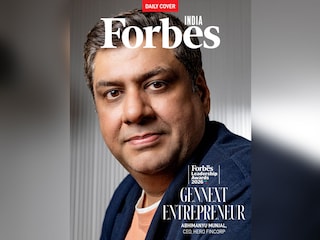
In 1984, when the Munjals of Hero group and Japan’s Honda Motor came together to start Hero Honda, Raman Kant Munjal became the joint venture’s first managing director. He was widely seen as the driving force of the company that would go on to become the world’s largest maker of motorcycles. His father, Brijmohan Lall, was understood to be handing over the reins to his oldest son.
Raman Kant’s death in 1991, when he was in his early forties, brought Brijmohan Lall back into active management while he groomed another of his sons, Pawan Kant, to run Hero Honda. But Raman Kant’s wife and three children remained integral to the family.
Brijmohan Lall moved from Ludhiana to the Munjal house in New Delhi’s Greater Kailash and told Raman Kant’s wife Renu to join the family business. She was given a desk in Brijmohan Lall’s office and became the head of the Munjal family’s first dalliance with financial services.
It did not go far because Honda was loath to anything that would distract the joint venture from the core business of motorcycles—even scooters. It was only after the partnership broke up in 2011 that the Munjals became free to have a bite of other areas. And one of those they tucked into with relish was financial services.
Hero FinCorp, born after Hero divorced Honda, is now a large business. Providing a nice symmetry, it is the entrepreneurial vehicle of Abhimanyu Munjal, the younger of Renu’s two sons, starting two decades after she joined her father-in-law’s office to mind the group’s first foray into financial services.
“I thought finance would be much, much easier,” Munjal, Hero FinCorp’s managing director and CEO, tells Forbes India with a chuckle. “We didn’t realise how complex a business we were getting into.”
He seems to have coped with the complexities well enough. Hero FinCorp’s AUM (assets under management) has grown from ₹300 crore at inception in FY12 to more than ₹56,000 crore today. It serves more than 13 million customers and operates in 90 percent of India’s pin codes, making it one of the country’s largest non-bank lenders.
It would have helped that Abhimanyu did stints at financial sector giants Citibank and ABN Amro before starting Hero FinCorp. But the real business education, he believes, came from the grandfather.
Brijmohan Lall’s house ran like a small public institution. Distributors, suppliers and dealers streamed in from early morning until late evening. “At the time I used to get frustrated,” Abhimanyu recalls. “From 7 am till 10 pm, there was always someone coming in with a problem.”
Dinner conversations revolved around helping partners, solving operational crises and keeping a vast ecosystem functioning. For a boy growing up in one of India’s largest business families, these were valuable early lessons. “Business is not about you,” Abhimanyu deduced. “It’s about the network you create.”
Vivek Chaand Sehgal, founder and chairman of Samvardhana Motherson Group, says Abhimanyu is a leader who is unusually focused on people. “What he wants to learn most about is people: How to manage them, how to have a large number work together in the same direction, towards the same target,” says the veteran auto parts entrepreneur who has been a mentor to the young Munjal. “At the end of the day the foundation of any strong company is people and Abhimanyu understands that very well.”
But there is another side to his management. Hero FinCorp’s nerve centre sits in what it calls “impact centres”—war-room-like spaces where charts cover the walls and teams track initiatives and targets. Amid the data sits an unlikely object: A cardboard cutout of a human figure labelled ‘Customer’. “It is a constant reminder that behind every number discussed in the room is a person whose dreams and ambitions are being financed,” says Priya Kashyap, chief operating officer and chief of staff.
In search of an Identity
“In school I was never called by my first name,” says Abhimanyu. “You get lost in the sea of a big family.” Building something of his own was a way to establish identity while still extending the family’s entrepreneurial DNA.
The early operation was tiny. Munjal jokes that the company began with “2.5 people”: He himself, another employee, and half of a business head who was working for another firm at the time.
From the start, the mandate was not to build a captive financing arm for Hero MotoCorp’s motorcycle sales; it was to build an independent financial services company.In the early days, Brijmohan Lall would ask Abhimanyu at the end of every day how many vehicles he had financed. It was a big day when they touched 100 in a day. “Beta, haulay haulay (son, don’t be in a hurry),” the grandfather told him.
“Today, we do six a minute,” says Abhimanyu with another chuckle. And despite the rough weather in the last couple of years—the financial services business is known to go through cycles—Hero FinCorp is on track for an initial public offer.
A Crisis and a Reset
In recent years India’s consumer lending sector has been hit by rising leverage and aggressive credit expansion. Hero FinCorp, at one point, had roughly 40 percent of its loan book as unsecured credit. In FY25, net profit dropped to ₹110 crore from ₹637 crore the previous year, according to Venture Intelligence data. There was a Compulsorily Convertible Preference Shares impact of ₹333 crore, shows the annual report. Cost of borrowing increased from a low of 7 percent in FY22 to 8.6 percent in FY25.
Munjal responded with an internal transformation initiative called Project Dhruv Tara, or ‘North Star’. The programme applied data analytics and artificial intelligence to the company’s lending operations, micro-segmenting customers into hundreds of risk cohorts. The goal was to eliminate unprofitable borrowers and double down on resilient ones.
The restructuring involved two business lines being shut down, a rare feat in promoter-led companies, where businesses often acquire an emotive value.The result is a portfolio that is now shifting toward secured lending.
The Aspiring India Bet
Instead of chasing affluent borrowers, Munjal has focused on a demographic he calls “Aspiring India”, which is households earning roughly ₹2.5 lakh to ₹10 lakh annually.
The insight came from months spent traveling through smaller towns and villages shortly after he took charge. What he saw was a market riddled with friction. Loan approvals took days. Fees were opaque. Dealers often waited weeks for payment.
His first call of action was inspired from a visit to an Aadhaar centre. Struck by the transparency of the double-screen monitors used in those centers, Munjal installed similar screens at motorcycle dealerships so customers could see exactly what data was being entered during loan processing. It led to rapid growth, and most of it came from first-time credit users.
Turning Data Into Decisions
Hero FinCorp is increasingly positioning itself as a technology-led lender rather than a traditional NBFC. The company spends 11 to 13 percent of its revenue on technology.
A 250-person tech centre in Bengaluru builds artificial intelligence (AI) systems used in credit underwriting, collections and customer service. One of the tools handles personalised debt collections strategies for each borrower—which means sending an alert on a particular day and time when the borrower is most likely to make the payment. Another enables loan disbursements within minutes after approval through an automated framework.
Meanwhile, even as banks enjoy cheaper funding and fintechs move faster and attract younger customers, Munjal says his strategy is to combine the elements of both. His company has launched digital-only products like Hero Instant Personal Loan while its heritage offers an advantage.
“Parentage matters,” he says.
Separate Paths, Shared Legacy
The Munjal family follows a rule that is designed to prevent internal rivalries and family friction: only one family member in a particular business.
“You won’t see more than one family member in any business,” Abhimanyu says. “There is one pilot flying the plane.”
Is that one of the things that has kept the sprawling Munjal family in amicable coexistence? The old theory is that family businesses begin to disintegrate in the third generation. The Munjals, on the other hand, have undergone a milestone settlement and continue to thrive, with Hero Moto still reigning as the world’s largest motorcycle maker and Hero Cycles ruling the roost in its own area.
Abhimanyu does not tire of telling Forbes India about the way the extended family took care of him, his mother and siblings after the father’s death and, at the same time, gave them room to come into their own. “When I was building my business, if I went to my uncle (Pawan Kant Munjal) and told him I had a problem, he would say: ‘Go figure it out yourself’. So you learned the hard way,” he says.
That ties in harmoniously with his philosophy that “to grow you have to let go”. As the company expanded from a handful of employees to more than 15,000 today, Munjal gradually withdrew from day-to-day operational decisions. “In my first year at Hero FinCorp, if I chose the chairs, the second year I wouldn’t be choosing the chairs.”Another of his beliefs is that short-term success builds companies, long-term thinking builds institutions. He says he is building a business for perpetuity, and his decisions must reflect that. He now spends much of his time allocating capital, shaping strategy and meeting regulators and investors.
Sanjay Kukreja, partner at ChrysCapital, which invested in Hero FinCorp in 2016, says the private equity firm picked it for its strong growth, access to low-cost funding, and credibility. “What it did not have at the time was a housing finance business. One of the ideas we brought to the table was that it made strategic sense to expand into housing and leverage the platform they had built. Today, the housing finance business alone is roughly the size the entire company was when we first invested,” Kukreja said in an earlier interview to Forbes India.
Next Chapter
India’s credit market is expanding rapidly. A CRISIL report says households earning between ₹2 lakh and ₹10 lakh annually—the cohort Hero FinCorp targets—are projected to reach 181 million by 2030.
That creates an enormous opportunity but also risk. Munjal appears comfortable with the volatility. Financial services, he says, is a cyclical industry that periodically humbles its practitioners. “Cycles are good,” he says, “they help you clean up.”
Motorcycles are good, too. But Abhimanyu Munjal is on his own trip.