It would be fair to assume that there is a pattern to the exuberance of investments flowing towards some of India’s banks and non-banking financial companies (NBFCs), considering that seven deals were announced in 2025, five of these in the first seven months of FY26. One of these—the UAE-based Emirates NBD Bank investing approximately $3 billion (₹26,850 crore) into RBL Bank (see table)—when completed, will be the largest ever foreign direct investment (FDI) in the domestic financial services sector and the largest ever equity fund raise in the Indian banking sector.
In all, nearly ₹50,000 crore will be invested in four banks and Sumitomo Mitsui Banking Corporation (SMBC) will buy out the stake of State Bank of India and other banks in Yes Bank to become its largest shareholder with a 24.99 percent stake. Add to this, in March 2025, private equity giant Bain Capital announced a move to get joint control in Kerala’s gold financier Manappuram Finance, and Bajaj Group bought back stakes in existing insurance joint ventures with Allianz.
So is India’s financial sector the most sought-after amongst global economies for capital providers?
Capital providers have always been willing to look at India favourably. Between 2002 and 2008, there were several deals, though smaller in size. Amsterdam-headquartered ING had hiked its stake in ING Vysya Bank to near 43 percent in 2002 before ING Vysya Bank was acquired by Kotak Mahindra Bank in 2015. Temasek Holdings acquired a stake in ICICI Bank in 2003, before nearly selling the entire stake by 2012 and Rabobank acquired a near-20 percent stake in Yes Bank in 2004, before paring it down and finally exiting India in 2021.
But somehow, “the regulatory comfort was not present at that time”, a banking research analyst tells Forbes India, on condition of anonymity, speaking about the Reserve Bank of India’s (RBI) approach to foreign capital into India’s banks. Earlier it seemed policy makers were not ready to welcome more players or they were not able to ring fence and monitor them better. The RBI, has, since 2017, flexed its muscles not just as a regulator but also as a supervisor. It has been unforgiving in extending the tenures of some of India’s most prominent bankers, including Rana Kapoor (Yes Bank) and Shikha Sharma (Axis Bank).
In other cases, it took independent disciplinary action against HDFC Bank, Kotak Mahindra Bank and card issuer Visa, which were later lifted once the issues were resolved.
Over the past decade, there has also been a change in the countries and foreign investors keen to bring capital into India. Singapore, the UAE, Japan and Canada have been seen as acceptable friends with India and feature high on the list of countries providing FDI. It is no coincidence then that these four countries have been capital providers to India’s financial services sector in 2025.
It must be noted here that RBI, in 2020, announced and later approved a scheme for the ailing Lakshmi Vilas Bank to be merged with Singapore-based DBS Bank. The latter got an approval from the RBI to become a wholly-owned-subsidiary (WOS) in 2017.
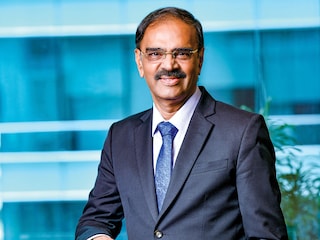
KVS Manian, MD and CEO, Federal Bank; Photo by Madhu Kapparath
Ashish Jhaveri, managing director and head of India Investment Banking at Jefferies India, tells Forbes India: “These deals provide confidence to the public markets in a massive way that bigger institutions are investing into India’s banks. It has triggered more incremental people to look at India now.”
There is data that makes banks and financial institutions worthy winners. Private banks did show resilience across tough cycles (Covid-19 and the global financial crisis) and grew 15 percent annually over the past 20 years, supported by India’s 10 percent nominal GDP growth, low credit penetration (58 percent versus 170 percent in China and 200 percent in the UK), and steady market share gains from state-owned banks.
Jhaveri says investor interest was always strong and is now stronger: “India is a different market in terms of scale, growth and quality: The balance sheets of banks are much stronger and their metrices are good, making them attractively priced. There is a strong value creation thesis for private equity, given the depth of the industry. For strategic investors, India was always an attractive destination.”
Jefferies India has been among the most active investment banks in lending deals: These have included Yes Bank, Aavaas Financiers, HDB Financial Services, Sammaan Capital (formerly Indiabulls Housing Finance) and Credila Financial Services. In the case of Sammaan Capital, Abu Dhabi-based International Holding Company (IHC) said it will acquire a 43.4 percent stake.
“The advantage that India brings is that these investors are entering when banks are of scale, opportunities are huge, economic growth stable and balance sheets of banks are clean, besides being regulated,” Jhaveri says. Also, at this scale, in other economies one would not find long-term credit growth of 12-13 percent and a return on assets (RoA) and return on equity (RoE) expansion story that will play out more.
Also Read: Is private equity good for rescuing failed banks?
Building scale, fast
The fresh capital infusion or strategic investment now indicates the commentary for most of these private sector banks, which is to climb to that No 5 position, behind the Big 4 private lenders: HDFC Bank, ICICI Bank, Axis Bank and Kotak Mahindra Bank.
Rajeev Ahuja, executive director with RBL Bank is a happy man, now that the bank will be armed with $3 billion that Emirates NBD will invest into RBL, making it the largest FDI into India’s banking sector. On November 12, the RBL Bank top management got the approval of legacy shareholders for the capital infusion from Emirates NBD Bank.
On October 18, the boards of RBL Bank and Emirates NBD Bank had approved the agreements, through which the latter will make a primary infusion of near $3 billion into RBL Bank to gain a controlling stake.
Emirates NBD Bank operates in India as a foreign bank under the branch mode, offering trade finance, treasury services, bilateral and syndicated loans, and assisting the needs of non-resident Indians (NRIs). Once the entire deal is complete, RBL Bank will become a subsidiary of the foreign bank.
“This deal allows us to change the trajectory of our journey, which will help boost our capability and also balance sheet strength. Whatever plans we had over the next five to seven years can be brought a little ahead and we can add new lines of business,” Ahuja told Forbes India on November 17. “This gives us opportunity to accelerate our growth in both retail and wholesale banking,” he said.
Under R Subramaniakumar, current managing director and CEO, RBL Bank has seen positives: A granularisation of deposits, a diversified lending portfolio, particularly moving towards secured lending and entering FY26 with zero NPA in the troubled microfinance sector. In February 2025, the RBI extended Subramaniakumar’s term by three years, to June 22, 2028.
For any bank, scaling up is important, whether it be investment in technology, cyber security, risk management or infrastructure. Scaling up brings the ability to unlock operating leverage more efficiently.
“There are benefits with Emirates NBD Bank that we could build, such as enhance capabilities and provide new product lines for growth, becoming an important ‘payments-to-trade’ player in the corridor between UAE and India; the NRI business, wealth management, cross-border trade and forex management [see table]. UAE is an important landing ground for Indian businesses for operations in North Africa, Middle East, Central Asia. There are also points of convergence between customers in the UAE and India, who will benefit from seamless cross-border banking between the two banks,” Ahuja said.
The RBL Bank stock has risen surged 98 percent in 2025 to ₹312 at the BSE by November 29.
In October 2025, Blackstone announced that it will invest about ₹6,197 crore ($705 million) into India’s Federal Bank, through a preferential issue of warrants for a 9.9 percent stake to Blackstone affiliate firm Asia II Topco XIII Pte (see table). This deal will make the affiliate the largest single shareholder in the bank.
Federal Bank shareholders approved the contours of the deal on November 20. Blackstone will pay 25 percent of the warrant price upfront, when subscribing to the warrants; 75 percent will be payable upon conversion into equity shares, within 18 months, which is the tenor of the warrant. The deal will make the private equity firm the largest shareholder in the bank.
Federal Bank, under KVS Manian’s leadership, has delivered 13 percent ROE in FY25 versus around 5 percent for its mid-sized peers, driven by disciplined lending and a good quality book. Federal Bank is a leader in gold loans among private banks and ranks third in NRI deposits and inward remittances. The bank has been shifting its asset portfolio to medium yielding, secured retail, granular SME and mid-corporate segments.
Manian, a veteran from Kotak Mahindra Bank, has often highlighted that Federal Bank’s liabilities franchise is strong, with a low-cost granular deposit base and sticky customers, and is not completely interest rate-driven.
“Federal Bank has gone through its own process of stabilisation. The former managing director Shyam Srinivasan did a great job, Manian is there to take the franchise to the next level. To do that you need to make investments, getting into newer areas as well,” an investment banker tells Forbes India, declining to be named.
Blackstone declined to talk about the specific strategies being outlined for Federal Bank, but Mukesh Mehta, Blackstone’s senior managing director in Mumbai, tells Forbes India: “This partnership underscores our strong conviction in Federal Bank’s robust franchise and the growth potential of the Indian banking system.”
Prashant Kumar, CEO, Yes Bank; Photo by Mexy Xavier
Japan’s Sumitomo Mitsui Banking Corporation’s (SMBC) deal with Yes Bank is slightly different from other banks. There is no direct capital infusion but SMBC has bought out stakes that State Bank of India (SBI) and other banks had acquired in Yes Bank in 2020, when it needed to be recapitalised, post a moratorium.
In an exclusive interview with Forbes India, during an India visit in October, SMBC Group’s head of India division and managing executive officer Rajeev Veeravalli Kannan said that they “felt there is a pathway for us to contribute meaningfully for its next phase of growth”.
SBI, which still holds a 10.8 percent stake in Yes Bank, will continue to have one representative on its board. SMBC initially paid about ₹13,480 crore to acquire a 20 percent stake in Yes Bank, followed by another about ₹2,900 crore for a 4.2 percent stake sale from an affiliate of Carlyle Group in Yes Bank. In terms of capitalisation, Yes Bank has a Common Equity Tier 1 (CET1) ratio of 13.9 percent, as of the September-ended quarter.
Prior to the appointment of Prashant Kumar as CEO of Yes Bank in March 2020, the bank had struggled with weakening asset quality, which rose to 16.8 percent as a portion of its total advances by FY20, due to indiscriminate lending, including to shadow lenders and real estate developers.
The governance and leadership of Yes Bank’s then promoter Rana Kapoor was under scrutiny and the RBI declined to offer Kapoor an extension to his term. He exited his post in early 2019. Yes Bank later restructured its bad loans book by transferring ₹48,000 crore of its stressed assets loan portfolio to an asset reconstruction company (ARC) set up by Yes Bank and JC Flowers.
Yes Bank’s gross NPA is down to 1.6 percent of gross advances and net NPAs are at 0.3 percent, as of Q2FY26. It reported an 18.3 percent rise in net profit to ₹654.47 crore, while net interest income rose 4.6 percent year-on-year to ₹2,300 crore and net interest margin rose to 2.5 percent, 10 basis points up year-on-year.
Kannan said they are not in India with a horizon to exit: “We are coming here with the horizon of building, staying as permanent capital.”
NBFC Sammaan Capital is witnessing mixed news. In early October, Abu Dhabi’s IHC said it would acquire Sammaan Capital for $1 billion, to become the new promoter.
Aman Puri, managing director, Jefferies India, called the deal a “transformational” one, with IHC being larger than any listed Indian company in terms of market cap.
The deal was seen as a lifeline for Sammaan Capital, which faced allegations of financial irregularities, with some cases being filed with the Supreme Court (SC).
A few weeks after the deal was announced, the SC instructed the Central Bureau of Investigation (CBI) to meet the Securities and Exchange Board of India (Sebi) and the Enforcement Directorate (ED), to look into charges against Sammaan, which were brought to the notice of the Delhi High Court, through a public interest litigation filed by NGO Citizens Whistle Blower Forum.
Sammaan Capital has argued that the alleged irregularities are “unsubstantiated”. All this uncertainty has hit the stock’s price, which was down 12.5 percent between November 14 and 20, 2025. It had edged up just 0.86 percent in the entire calendar year to close at ₹154.29 at the BSE, as of November 29.
Sammaan’s managing director and CEO Gagan Banga was unavailable to speak to Forbes India, despite repeated attempts. But earlier, Banga told CNBC TV18 that post the deal the company will aim to build a credible liability franchise, which would be able to optimise on the cost of funds.
The legal cases will need to be watched closely for the company to emerge clean, banking analysts say.
In the case of another lender, IDFC First Bank, the total capital raise from Warburg Pincus, including a parallel investment from the Abu Dhabi Investment Authority (ADIA), was ₹7,500 crore. Jefferies India, in a report on April 17, 2025, when the deal was announced, said it was “larger than expected and can lift Tier1 capital adequacy ratio to 14 percent (from 13.1 percent in FY25)”. The report added that access to capital will “enable growth of around 20 percent”.
IDFC First continues to do well on loans (20 percent growth) and deposits (24 percent growth), year-on-year, while the slippages from microfinance have nearly halved quarter-on-quarter in Q2FY26.
Rajeev Kannan, Head of India division & managing executive officer, SMBC Group; Photo by Mexy Xavier
Challenges and targets ahead
Krishnan ASV, analyst (institutional equities), HDFC Securities, says India still has a long tail of private lenders, which has found it difficult to stay relevant. “A lot of these longtail banks need surgeries and their wounds cannot be fixed by applying a band-aid strip,” he says. He declined to name specific banks which could be acquisition targets in the near future.
Though there is no direct information, it is possible that mid-sized banks such as City Union Bank, DCB Bank or Dhanlaxmi Bank could benefit from investors, who might want to pump in capital and leverage on India’s economic growth story.
But Puri says: “There will be little interest to turn around something which is sub-scale and which needs a lot of work. The attractiveness of these deals [which took place] is that investors are picking up sizeable positions in listed companies and are getting rights through shareholder votes.”
Krishnan had also observed that a change of ownership would not alter the future of a bank. “There is a lot of grind and hard work involved in reforming and improving these franchises. The DNA and mindset has to change,” he said.