India's wealth story is entering a new phase.
For years, the focus was straightforward: create wealth, seize growth, participate in the country's expanding economy. But as entrepreneurial fortunes deepen, capital markets mature and a new class of first-generation millionaires emerges, the question is changing. It is no longer only about creating wealth. It is about preserving it, compounding it and carrying it across generations without losing it to poor decisions along the way.
That broader shift sits at the heart of The Future of Private Wealth: Conversations on Lasting Legacies, a new leadership series presented by FundsIndia Private Wealth, and powered by CNBC-TV18. The series aims to go beyond markets and returns to examine how India's wealth creators are thinking about capital continuity, portfolio discipline and long-term legacy in a decade of rapid transformation.
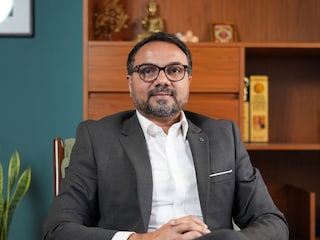
The launch episode features Srinivas Mendu, CEO of FundsIndia Private Wealth, in conversation with host Mridu Bhandari.
Across the discussion, Srinivas Mendu returns to one central idea: in a country entering a long structural cycle of wealth creation, the real challenge for investors is not finding opportunity. It is avoiding mistakes while allowing compounding to do its work over time.
The scale of the opportunity is clear. India is now a roughly $4 trillion economy and expected to grow sharply in the coming decade. Financial assets are expanding just as quickly. "In the last decade, the mutual fund industry has grown nearly tenfold, from about ₹8 lakh crore to almost ₹80 lakh crore," he observed.
The rise in systematic investment plans reflects the same shift. Monthly SIP flows now approach ₹30,000 crore. "That shows the level of awareness that has been created and the shift in investor mindset," he said.
For decades, Indian wealth was anchored in physical assets such as real estate and gold. That balance is changing. More savings are moving into financial markets, and many investors are navigating those markets seriously for the first time. At the same time, the number of high-net-worth individuals is expected to double over the next few years.
For investors, this expansion opens new wealth-creation opportunities. It also introduces new risks - volatility, complexity and behavioural mistakes. In that environment, the value of advice lies less in product access and more in helping investors stay disciplined through cycles.
Building a Client-First Advisory Model
That context shapes how Srinivas Mendu thinks about wealth advisory itself. In a competitive industry, firms often differentiate themselves through access or strategy, whereas he believes the real differentiator is simpler: alignment. "There's no secret sauce," he said. "It's about putting the client first."
At FundsIndia Private Wealth, that philosophy is reflected in structural decisions designed to align advisors with client outcomes. One such decision was the removal of revenue targets for relationship managers. The goal was to ensure recommendations are driven by suitability rather than product incentives. The firm has also removed retirement limits for bankers, allowing advisors to build relationships with families across generations.
"In wealth management, experience matters," he said. "The more cycles you've seen, the better you can guide clients." For investors, those choices matter because wealth management is ultimately a long-duration relationship business, often extending from one generation to the next.
The Philosophy Behind the Platform
Srinivas Mendu traces that philosophy back to the institutions where he began his career. "I started my career with HSBC, and the very first training we had was not product training but client-first training," he said. The experience also shaped his approach to risk. Large institutions, he notes, teach not only growth but discipline - how to assess risk, build mitigation strategies and protect long-term outcomes.
Later, at ICICI, he encountered a different lesson: scale. "The combination of client-first thinking, risk management and scale shaped how I approach this business today," he said. Together, these principles form the foundation of how he says FundsIndia Private Wealth has been built.
Why Simplicity Is an Investment Advantage
As India's wealth landscape becomes more sophisticated, Srinivas Mendu leans towards simplicity over complexity. "Our approach is always simple portfolios," he said. "The simpler the portfolio, the higher the potential alpha."
Many experienced investors eventually arrive at the same conclusion. After experimenting with strategies and products, they realise that complexity often makes portfolios harder to manage and harder to hold through volatility. In long wealth cycles, the real edge is not constant reinvention. It is maintaining a disciplined structure that allows compounding to work uninterrupted.
A Changing HNI Mindset
High-net-worth investors themselves are evolving. "They are well-read, well-travelled and well-informed," Srinivas Mendu said. But greater information has not necessarily made them more aggressive. If anything, the shift since 2020 has been toward more risk-managed investing rather than pure return chasing.
At the same time, asset preferences are shifting. Capital is gradually moving away from traditional physical assets toward financial markets. Interest in private placements and alternative investments is also rising, particularly among HNIs and UHNIs seeking differentiated return opportunities. Still, he emphasises balance. The goal is not to chase every opportunity, but to place each allocation within a disciplined framework.
Goal-Based Investing and Portfolio Discipline
That framework begins with goals. Most investors, regardless of wealth level, organise their finances around a handful of major milestones: protection, children's education, marriage, retirement and legacy. FundsIndia structures portfolios around those objectives through what Srinivas Mendu calls an "investment charter" - a policy document created jointly with the client. "It's like a bible for the investor," he said.
The charter establishes the philosophy and discipline of the portfolio so that both advisor and client remain aligned when markets become volatile. Portfolio construction then follows a relatively simple structure:
- 60-70% core portfolio for long-term growth
- 20-25% tactical allocation
- 10-15% liquidity buffer
The framework is deliberately straightforward. When investors understand the role of each component, they are less likely to react emotionally when markets fluctuate.
After all, volatility itself is not the primary threat. Behaviour is. "Asset allocation is the most basic and most important principle," he said. Compared with earlier crises, he believes Indian investors have matured. Many now recognise that volatility is part of market cycles rather than an abnormal event.
In some cases, uncertainty becomes an opportunity. The advisor's role, he argues, is to maintain discipline when emotions threaten to override strategy.
The "Golden Rule" of Client Advice
At the centre of FundsIndia's philosophy is what Srinivas Mendu calls the firm's "golden rule". "What we recommend to our parents is exactly what we recommend to our clients," he said. The rule serves as a practical filter for evaluating investment decisions. "When my parents ask where to invest, I don't think about which product pays the highest commission," he said. "I think about where the alpha is."
In a business built on trust, that alignment becomes the foundation of long-term relationships. Over the long-term horizon, he remains optimistic about India's wealth trajectory. The country could move from a $4 trillion economy today to roughly $8 trillion by the early 2030s and potentially $25-30 trillion by 2047.
That expansion will generate enormous wealth. But it will also create pressure on the advisory ecosystem. As the HNI population grows, the industry will need far more experienced advisors capable of guiding clients through complex financial decisions. Wealth management, in that sense, is not simply about products. It is about judgment developed over time.
The Discipline of "Boring" Investing
Near the end of the conversation, host Mridu Bhandari asked Srinivas Mendu to share his perspective as an investor rather than a CEO. His answer is deliberately simple. "The discipline of doing boring things creates wealth," he said.
For him, that means systematic investing, simple asset allocation and resisting the urge to monitor markets constantly. When opportunities appear, invest decisively. The rest of the time, remain consistent. "Stay boring and consistent," he said.
In a market full of noise and constant action, that advice may sound understated. But in long wealth cycles, discipline - not excitement - is what allows compounding to do its work.
The pages slugged ‘Brand Connect’ are equivalent to advertisements and are not written and produced by Forbes India journalists.