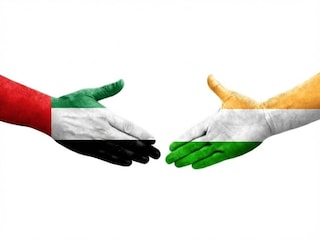
Technology, supply chains, and strategic alignment place India and the UAE at the center of a new global digital order
The strategic partnership between the United Arab Emirates (UAE) and India is rapidly evolving from traditional trade and energy ties into a 21st-century tech and innovation alliance. With the UAE’s recent entry into the U.S.-led Pax Silica initiative and India poised to join, the two nations are positioning themselves as key players in global digital infrastructure, AI, and semiconductor networks.
From Trade Hubs to Innovation Leaders
While trade and investment have long anchored
UAE–India relations, technology is now taking center stage. Initiatives under the Comprehensive Economic Partnership Agreement (CEPA) are fostering collaboration in AI, cloud computing, digital payments, and joint infrastructure projects. Notably, India’s Unified Payments Interface (UPI) is linking with UAE digital platforms, enabling smoother financial flows across markets. The partnership extends beyond fintech. Governments in both countries are facilitating joint data centers, supercomputing projects, and AI research hubs, creating platforms for startups and enterprises to scale across regions.
Startups and Talent Exchange
The UAE has positioned itself as the Middle East’s premier technology hub, attracting global investors and nurturing a thriving startup ecosystem. Indian technology companies are taking notice, leveraging hubs like Dubai Internet City to expand their footprint in the region. Collaborations include NASSCOM-UAE partnerships for startup acceleration, AI R&D programs, and talent exchange initiatives — combining India’s engineering workforce with the UAE’s infrastructure and investment capacity.
Pax Silica: Strategic Tech Diplomacy
Pax Silica, a U.S.-led initiative to secure AI and semiconductor supply chains, adds a critical geopolitical dimension to UAE–India relations. The UAE recently became a formal member, providing energy, capital, and digital infrastructure as part of the alliance. India, while not yet formally a member, is expected to join, bringing a combination of market scale, talent, and growing semiconductor capabilities. Within this framework, the UAE acts as a regional connector and enabler, linking Middle Eastern infrastructure with South Asian innovation. For India, alignment with Pax Silica offers an opportunity to integrate into trusted global tech networks and strengthen its domestic AI and semiconductor ambitions.
Peace, Connectivity, and Strategic Alignment
Beyond technology, the UAE and India are promoting regional stability and cooperation. Initiatives such as the India–Middle East–Europe Economic Corridor highlight shared goals of connectivity, sustainability, and economic integration. This partnership blends historic cultural ties with a forward-looking strategy focused on peace, digital innovation, and mutual growth.
The Bottom Line
For investors, entrepreneurs, and policymakers, the UAE–India partnership represents a powerful convergence of infrastructure, talent, and innovation. With Pax Silica providing a strategic backdrop, both nations are not only shaping regional tech ecosystems but also influencing the broader global digital landscape. In an era where supply chains, AI, and cloud infrastructure are as critical as traditional capital, the UAE–India alliance is quietly emerging as one of the world’s most consequential technology partnerships — and its effects will ripple far beyond the Gulf and South Asia.
The pages slugged ‘Brand Connect’ are equivalent to advertisements and are not written and produced by Forbes India journalists.