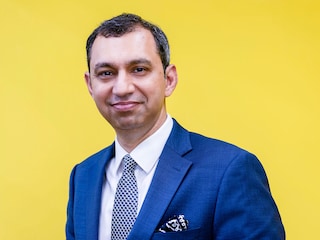
At the India AI Impact Summit, Microsoft announced it is on track to invest $50 billion by the end of the decade to accelerate AI adoption across the Global South. The push includes India-focussed commitments that include AI-ready infrastructure and multilingual capabilities to skilling programmes and community-driven innovation. As the AI divide looms, Microsoft is positioning India as a central node in its global AI strategy.
In conversation with Forbes India at the summit in Delhi, Puneet Chandok, president, Microsoft India & South Asia, talks about the changing nature of SaaS, layoffs and more. Edited excerpts:
We're excited about a few things. One: Just thinking about India first. India is truly unique, because things are coming together in a way no other country has—the largest infrastructure build out, real capital flowing in, talent, the largest developer population in the world, and demand. Every sector in India is asking for AI. Even the investments in data centres—$17.5 billion over the next 5 years, the largest data centre footprint in the country—and skilling 20 million people; 5.5 million we’ve already skilled.
But there’s a lot more to do. We are focusing on building sovereign solutions for India. Our sovereign public cloud offerings, sovereign private cloud, our Copilots, the processing for those Copilots is happening in India so that we keep Indian data residency and sovereignty.So, across the board: Infrastructure, skilling, diffusion across enterprises and the public sector, and then also making sure that from a sovereignty perspective, we’re meeting the demands of India.
Q. With Anthropic’s Claude and Copilot stirring a debate over SaaS being dead and disrupting IT models, what’s your view on such productivity tools, and where is Microsoft with its own productivity roadmap?
Every week something is dropping, which is exciting and sometimes terrifying. Eventually, what we need is diversity in terms of models. So, a series of models working together to give you intelligence that works for you in the context of your organisation, which is secure. So, for example, the way I work with AI is: I get three or four models to debate before they give me the answer. Enterprises are starting to ask for a series of models. Plus, AI still has jagged intelligence—it’s super brilliant at times, and sometimes it’s still not that great. But with multiple models working together, you can make that intelligence consistent for you.
That’s the strategy we're taking at Microsoft. We’ve got the Azure Foundry, which has got 11,000 models, and counting. But we're making sure that we get the right models for the right use cases in an enterprise grade, secure, transparent, responsible way for companies to operate.
Q. Do you really think SaaS will change from the way it is now?
I wouldn't say that, and I don't think I'd go there.
But every industry, every business, is getting reinvented and transformed with AI, as is is SaaS. One, the way we're building software is changing. So, a third of the code that Microsoft has written for our products in the last year is written by GitHub; AI is writing code for us. So, your ability to build SaaS and software is getting much better.
You're obviously delivering more productivity if you use AI tools. Second, there is a real shift taking place towards outcomes, and I genuinely believe this inefficiency economy that we're used to will end with AI, because AI will deliver outcomes. The shift we're making in SaaS is not about how many people are using it, it's the outcome you deliver.
Q. With many roles now getting combined into one, how do you see jobs changing? From a hiring perspective, are you looking to hire more people or fewer?
The atomic unit for work today is the role or the job. I think that will change. But the atomic unit will not be removed; the job won’t disappear. The atomic unit will be saying: I need to get a certain set of tasks done. For example, I need to get this integrated, or I need to get this piece of research done, I need to get this software built. It’s not that I’m hiring for this person, this role; [it will become] I’m hiring for those tasks.
The colour of every job will change. Even if you're not changing jobs, your job is changing, and the needs of those jobs are changing.
Skilling is the oxygen. It's a guerrilla warfare against redundancy. If you're not learning, if you're not truly building with AI, getting AI to work with you like a digital teammate—it’s not just learning or watching a few YouTube videos—a massive mindset shift [is required] for all of us.
Q. With agentic AI raising new safety concerns, especially around open-source clones, what guardrails is Microsoft putting in place, and where do you draw the line on what agentic AI should or shouldn’t be allowed to do?
We've got something called Work IQ that runs as you use Office and email and all our productivity tools. There’s a set of entitlements that you have, for example, you can see some stuff, you’re not supposed to see some stuff. The software makes sure those entitlements and the IQ that we build based on that gets transferred to agents.
I can envision a future when, in your company, agents will join the company and get an ID like you got an ID when you joined. They might get a machine, and get certain entitlements. We built something called Agent 365, which allows you to track every agent in the organisation—what the agent is doing, what entitlements it has.
So, for instance, the agent is supposed to look at your email, but not your SharePoint folder, or vice versa. The entitlements are well defined; the security guardrails are very well defined. Your ability to stop those agents, connect those agents to other agents, are all done in a very transparent way.
Agent 365 is a terrific innovation. We need a lot of that so that; like we have human colleagues with the right set of entitlements and safeguards, you have the same set of entitlements and safeguards for agents.
Q. Layoffs seem to be happening in cycles across the industry. Why is this happening? Are companies over-hiring and then cutting back?
The colours of jobs are changing; investments are being made in new areas and products being built. As organisations, we are constantly re-evaluating where the demand signals are, where the investments need to be made, in terms of skills and people and talent, and where we are building. You will see a lot more agility in organisations in terms of investments. A lot of this is rejigging talent for this new world, and upskilling and getting them ready for this.
I can't comment on whether we will have more hiring or less hiring, but we will continue to invest in areas where we have seen market signals and build AI out of India.