India hunts for cards up its sleeve as US Supreme Court upends Trump’s tariffs
Does India need a trade deal with the US now? Experts weigh in on the pros and cons of a ‘wait and watch’ approach
Last Updated: Feb 24, 2026, 10:52 IST6 min
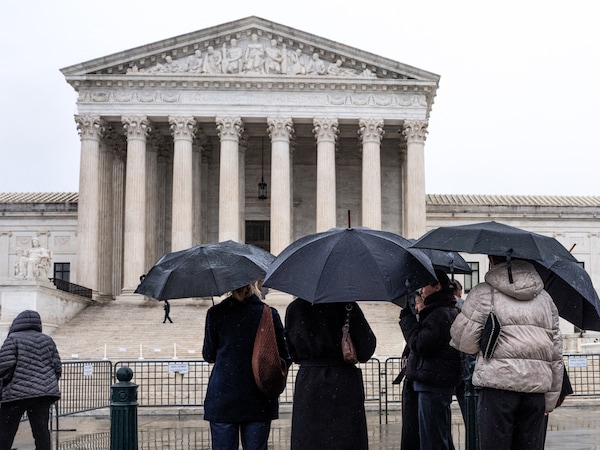
US President Donald Trump’s “art of the deal” has just collided with the rule of law. Last week, the US Supreme Court (SC) dismantled the core of Trump’s protectionist agenda and struck down his sweeping reciprocal tariffs imposed under the now famous International Emergency Economic Powers Act (IEEPA).
For New Delhi, the timing could not be more critical. The ruling arrived just as an Indian delegation was preparing to leave for Washington to finalise the framework of an interim US-India trade deal, which has been touted as among the largest such agreements with any major partner.
India has now put its trade mission on hold, choosing to scrutinise the legal fallout before returning to the negotiating table. According to some media reports, New Delhi is “evaluating all aspects” of the court ruling and is “studying the developments”. Reports also suggest that the goal is no longer just a trade deal, but a deal that restores India’s competitive edge.
With an India-US trade deal still unsigned, and billions of dollars in duties hanging in the balance, India finds itself holding more cards than it perhaps realises as it weighs a fundamental question: Why should it pay a ‘deal rate’ for something the US can no longer legally enforce?
The SC may have struck down Trump’s favourite trade weapon, but the administration still has plenty of alternative statutes to fall back upon.
Immediately after the court ruling, Trump was quick to signal defiance. He has already levied a 15 percent surcharge under Section 122 of the Trade Act of 1974, up from 10 percent levied earlier, which is due to come into effect today. But experts warn that this is not the full picture. “This ‘surcharge’ is over and above the MFN [Most Favoured Nation] rate,” says Biswajit Dhar, a development economist and former professor at Jawaharlal Nehru University, New Delhi. “If the average MFN rate for India was about 2.5 percent before the April tariffs were levied, then effectively we are looking at closer to 17.5 percent tariffs now, not just 15 percent.”
“Every country will have to explain to domestic constituencies why a negotiated agreement remains worthwhile if comparable tariff treatment is available without a deal,” explains Ajay Srivastava, founder of Global Trade Research Initiative (GTRI). He adds that since the Trade Promotion Authority expired in 2021, the US President can no longer unilaterally reduce MFN rates.
Nevertheless, India’s 18 percent deal rate exceeds the new 15 percent global surcharge, rendering previous concessions like zero-tariffs, farm access and Russian oil import curbs, under question. Ayush A Mehrotra, partner at Khaitan & Co, says that for India the practical shift is that the conversation can move from crisis-driven bargaining to predictability and durability. He adds that India’s options could include “pushing for clear transition timelines, defined carve-outs for sensitive sectors, and certainty mechanisms—such as, consultation triggers and disciplined ‘benefit reversion’ provisions—while continuing to diversify supply chains and reduce single-market tariff exposure.”
While some in New Delhi may see the ruling as a chance to claw back concessions, seasoned trade hands warn against overplaying this card. Mark Linscott, a senior advisor at the Asia Group and the US India Strategic Partnership Forum, argues that the February 6 joint statement remains the only viable path forward. “My view is that the joint statement remains relevant and shouldn’t require a complete rework,” he says. “The legal text can be adjusted to address the change in US authority, including Sections 122 and 301.”
Linscott cautions against assuming that India's negotiating position has strengthened in the wake of the SC ruling, and argues that the Trump administration has been explicit about its intention to pursue Section 301 investigations against most trading partners. This route that carries strong legal authority and grants the US Trade Representative broad discretion to impose tariffs targeting foreign trade barriers.
In his view, any trading partner seen as stalling or stepping back from a previously negotiated deal risks inviting an even harsher response. “If a trading partner shows that it is dragging its feet or walking away from a trade deal that has already been negotiated, it is more likely that the Trump administration will threaten higher levels of tariffs, even more than the reciprocal ones established under IEEPA.”
In a stark reversal of India’s long-standing trade policy, the interim deal reportedly traded away India’s ‘red lines’ in the agricultural sector. The move to grant zero-tariff entry for US dairy and crops sparked intense scrutiny, as it dismantles the protective barriers in India’s sensitive sectors.
Dhar argues that India may have rushed into the interim deal without waiting for the judicial dust to settle. “We unnecessarily rushed,” he says, and warns that concessions made in the “haste” of February—particularly in the dairy and agriculture sectors—could open a Pandora’s Box. “If you open your dairy market to the Americans, New Zealand will say, ‘Why not us?’ This could cause significant harm to domestic dairy farmers.”
But with the negation of the tariffs, Dhar suggests India is now in a far stronger negotiating position. “India is the fourth largest economy... we shouldn’t give our market away for free. We should wait and watch how the political scene in Washington pans out.”
Linscott, however, maintains that sticking to the agreed terms is the best defence. “India was given several important exemptions from the existing 232 tariffs on steel, aluminium, copper, and automobiles as part of the deal, and it should want to preserve these in the final Interim Agreement.”
One of the most consequential, and complicated, outcomes of the ruling is the potential liability it creates for the US Treasury. While negotiators argue over future rates, Indian exporters are looking at the past. Estimates suggest that nearly $175-$200 billion was collected illegally under the IEEPA globally.
Recovering this capital will be a company-by-company slog. “Refunds are not automatic,” warns Mehrotra. “Any refund typically goes to the importer of record [the US buyer]. Whether that flows back to the Indian exporter depends on their commercial contracts.”
While a “block refund” negotiated between governments is unlikely, Mehrotra suggests India could instead push for a “facilitation framework” to streamline these claims, including commitments on timelines, streamlining documentation, or an agreed process to handle a defined set of claims. Alternatively, to bypass administrative hurdles, the two nations may swap immediate cash refunds for simpler alternatives like duty cuts or trade credits.
Perhaps the most striking theme to emerge from the ruling is that India may have underestimated its own position at the table. “India is in a better negotiating position today,” says Dhar. “Trump’s MAGA project cannot go ahead without large markets like India.”
The stated justification for these duties remains the US trade deficit, which hit a record $58.2 billion with India in 2025 despite protectionist measures. As the 150-day clock on the Section 122 surcharge begins, New Delhi faces a choice: Accept the 18 percent deal or gamble on a wait and watch strategy that could end with higher tariffs under Section 301.
“No country in the long run can do without India. Even if they have supplies from China, they will need India to counter China,” said an auto-parts industry executive who did not wish to be identified.
The flip-flop has unsettled businesses, but for now companies are passing on the entire cost to customers.
First Published: Feb 24, 2026, 11:00
Subscribe Now