“The tourism sector has the potential to play a large role in employment generation, forex earnings and expanding the local economy,” Finance Minister Nirmala Sitharaman said in her Budget Speech presented at the Lok Sabha this morning. The announced budget has placed tourism, travel and hospitality at the centre of India’s growth strategy. With a clear shift towards experience-led, digitally enabled and regionally balanced tourism, the budget lays out an integrated roadmap spanning skilling, heritage conservation, medical tourism, eco-trails, and high-speed mobility corridors.
Some of the additions and upgrades for the Indian tourism sector in the budget include:
- A pilot scheme for upskilling 10,000 guides in 20 iconic tourist sites through a standardised, high-quality 12-week training course in hybrid mode, in collaboration with an Indian Institute of Management.
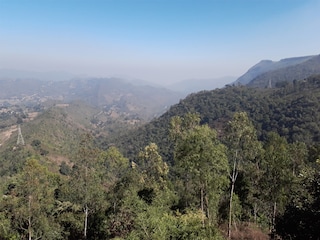
- Realising India’s potential and opportunity to offer world-class trekking and hiking experiences; and developing ecologically sustainable (i) Mountain trails in Himachal Pradesh, Uttarakhand and Jammu and Kashmir; Araku Valley in the Eastern Ghats and Podhigai Malai in the Western Ghats. (ii) Turtle Trails along key nesting sites in the coastal areas of Odisha, Karnataka and Kerala; and (iii) Bird watching trails along the Pulikat lake in Andhra Pradesh and Tamil Nadu.
- Developing 15 archeological sites including Lothal, Dholavira, Rakhigarhi, Adichanallur, Sarnath, Hastinapur, and Leh Palace into vibrant, experiential cultural destinations.
Industry veterans view the focus on sustainable and experiential tourism, including the development of Himalayan trails and the strong policy thrust on the Northeast as a support for the growth of diverse tourism segments while enabling more balanced regional development. “These measures are expected to encourage longer stays, wider travel dispersal, and stronger demand for quality accommodation and services across Tier II and III markets,” says Nikhil Sharma, managing director & COO, South Asia, Radisson Hotel Group.
Sitharaman also announced the setting up of a National Institute of Hospitality by upgrading the existing National Council for Hotel Management and Catering Technology, which will function as a bridge between academia, industry and the government. According to industry experts, the proposal to establish this institute is a timely step toward strengthening one of India’s most employment-intensive sectors. “India’s hospitality capacity is scaling rapidly, with an estimated 2.48 million lodging rooms operational as of June 2024, projected to rise to 3.1 million by 2029 and 4.1 million by 2034. This expansion will drive significant demand for skilled talent across operations, service delivery, and management,” says Dr Nipun Sharma, CEO, TeamLease Degree Apprenticeship.
In her speech, the FM also proposed the establishment of a National Destination Digital Knowledge Grid to digitally document all places of significance—cultural, spiritual and heritage, in turn creating a new ecosystem of jobs for local researchers, historians, content creators and technology partners.
Read More
As per the provisional estimates of the National Accounts Statistics 2025, the tourism sector contributed Rs 15.73 lakh crore to India’s GDP in 2023-24, accounting for 5.22 percent of the total economy. Besides that, according to the Periodic Labour Force Survey (PLFS), the sector generated 36.90 million direct jobs and 47.72 million indirect jobs, together accounting for 13.34 percent of total employment in the economy.
As part of the budget announcement, the FM proposed to reduce the TCS (Tax Collected at Source) rate on the sale of overseas tour programme packages from the current 5 percent and 20 percent to 2 percent without any stipulation of amount. As per Rajesh Magow, chair, FICCI Tourism Committee and co-founder & Group CEO, MakeMyTrip, this is a welcome step that addresses upfront liquidity impact on Indian outbound travellers. “The government’s infrastructure-led investments have played an important role in supporting the growth of domestic tourism, and it is encouraging to see this momentum being sustained. Continued focus on the creation of a national digital repository for destinations will help improve destination discovery and enhance the overall traveller experience,” he adds.
With a focus to promote India as a hub for medical tourism, the FM proposed to launch a scheme to support states in establishing five Regional Medical Hubs in partnership with the private sector. These Hubs will serve as integrated healthcare complexes that combine medical, educational and research facilities. Apart from that, they will have AYUSH Centres, Medical Value Tourism Facilitation Centres and infrastructure for diagnostics, post-care and rehabilitation. They will also enable diverse job opportunities for health professionals.
As per the Budget document, Rs 5.98 lakh crore has been accounted for transport, which in turn will help boost tourism and ease of travel. To promote the ease of travel and also to promote environmentally sustainable passenger systems, the Budget announced the development of seven high-speed rail corridors as ‘growth connectors’ between cities, namely i) Mumbai-Pune, ii) Pune-Hyderabad, iii) Hyderabad-Bengaluru, iv) Hyderabad-Chennai, v) Chennai-Bengaluru, vi) Delhi-Varanasi and vii) Varanasi-Siliguri.
Apart from train corridors, in order to promote environmentally sustainable movement of cargo, the FM also proposed establishing new dedicated freight corridors connecting Dankuni in the East to Surat in the West and operationalising 20 new national waterways (NW) over the next five years.
Read Forbes India's complete Budget 2026-27 coverage here