Blue Lights is a police drama that doesn’t fall into the trope of a moral binary. Set in contemporary Belfast, the capital of Northern Ireland, the series follows three rookie response officers whose initiation into the force becomes the prism through which viewers see a society that’s riven by history and politics. Policing here isn’t just about chasing criminals, but navigating a fragile truce that has held the community together since The Troubles—violent conflicts between the sectarians and the loyalists for a few decades since the 1960s—till it doesn’t. Every routine call here carries the weight of inherited distrust, where, say, sympathies may shape allegiance towards an emerging drug lord. How does civil society come together? Or does it?.
Netflix’s four-part drama on a teen accused of killing his classmate is as gripping as it’s unsettling. The series tracks Jamie Miller’s unravelling triggered by the dark undercurrents on social media, giving viewers a peek into the parallel universe that young adults inhabit online.
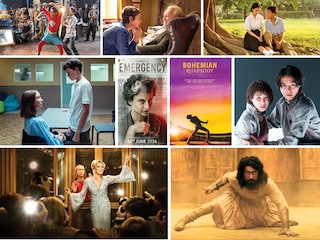
Each of the episodes showcases technical brilliance, having been shot in a single take, complementing the acting performances. But it is its third part—set inside a juvenile detention facility, where Miller is being evaluated by a psychologist—that lingers long after the credits roll, and perhaps stands alone as reason enough to justify its eight Emmy wins.
Hacks explores the yo-yoing dynamics between acerbic comedy legend Deborah Vance and her struggling, woke Gen Z writer Ava, straddling generational clashes and sometimes unexpectedly tender emotions. The duo gets off to a rocky start with both seeing the other as a stopgap. But even when they warm up to each other, their relationship is anything but mellow. Despite comedy setting the backdrop of the show, that’s not what makes Hacks funny—it’s the verbal sparring that is so sharp it even makes the devious seem enjoyable.
What struck me most about the series was Jake Lacy’s character, Peter Irvine. He embodies the kind of controlling partner, father, and sibling who quietly drains the people around him. The series captures themes of regret, power and support from your partner, and the lack of it, and of friendship.
One of the most moving storylines for me was the unexpected bond between two mothers: One whose child has gone missing, and the other whose nanny is responsible for the kidnapping.
The title ‘All Her Fault’ taps into that quick, almost automatic reaction society has: When something goes wrong with a child, the mother is the first to be blamed. It gently dismantles that assumption and shows how far from the truth it can be.
-Samidha Jain
The Ba****ds of Bollywood
I started watching this show with the sole purpose of not missing something made by my favourite actor’s son. It sounds funny, but I try to watch most things associated with SRK, even if they turn out to be not so great. I thought The Ba****ds of Bollywood didn’t disappoint. It was filled with masala and packed with entertaining characters, scenarios, and dialogues. I thought it was a well-done culmination of elements that scream “Bollywood”, put together by someone who has grown up within the industry and has seen the good and bad of it up close.
The plot twist towards the end, (spoiler alert) which is a literal representation of the name of the show, was a fun, unexpected end for me, although a bunch of my friends already anticipated it!
-Samidha Jain
When Life Gives You Tangerines
It was the first Korean show I ever watched. Even after countless recommendations by friends, I wasn’t convinced to spend time watching Korean shows, but for some reason I was instantly pulled in to watch this one—thanks to the reels I kept watching, some filled with joy, others heartbreak.
The series turned out to be a true emotional rollercoaster. It beautifully portrayed how childhood wounds can follow us into adulthood—yet humbling us over time. And at its core, the show carried a meaningful message: “Do good to others if you want good for yourself.”
-Samidha Jain
PHOTO COURTESY NETFLIX
Alice in Borderland, Season 3
After nearly three years, Alice in Borderland returned with its third season, and it was worth the wait. The Japanese series, based on Haro Aso’s manga, follows Arisu, a gamer, and Usagi, a climber, trapped in a deserted parallel Tokyo where survival depends on winning deadly games. Playing cards determine each game’s type and difficulty, and losing means execution by laser.
Season 2 wrapped up ending on the cliffhanger of the Joker card, that it was hard to know what to expect next. It manages to capture the same excitement as the earlier seasons, while expanding the Borderland universe.Some fans were disappointed with the lack of explanations offered at the end of Season 2, but Season 3 leaves no ambiguity about what the Borderlands are or how people move between worlds. It also feels more focussed: Each episode runs for about an hour, so nothing feels rushed. Season 3 keeps the tension and world-building intact, while leaving space for future spin-offs
-Vasudha Mukherjee
The Morning Show
It was its nuanced take on #MeToo that drew me in to this series about the cut-throat world of morning TV news. The series moved on from the gravitas of the first season, but the integration of real-life events—the Joe Biden presidency in the US and the Los Angeles fires to the Covid-19 pandemic and tech billionaires taking over news—kept me watching all the way through its four seasons, as the plotlines lurched and then neatly resolved, its star leads Jennifer Aniston and Reese Witherspoon somehow coming out unscathed. Recommended viewing if you feel you can make the commitment to 10 almost hour-long episodes per season.
-Monica Bathija
The Father
Florian Zeller’s 2021 film is a devastating portrayal of the mental decline of a parent—inevitable, yet tough to reconcile with. Anthony is the protagonist, an octogenarian with dementia, leaning on and raging against his daughter Anne (Olivia Colman). Through his perception of a fractured reality, he dabbles with a caregiver accused of theft, Anne’s husband despite her divorce, her relocation to Paris, and even a different Anne. The filmmaker’s masterstroke is his ability to make viewers see the world not in a straight line, but through Anthony’s eyes, leaving them, at times, as disoriented as him.
-Kathakali Chanda
Thelma & Louise
In the first couple of minutes after I finished watching Thelma & Louise, I felt two things: First, I should’ve watched it earlier; second, what a great film about women who just want to have a fun trip. As I thought about it more, later, it felt like a slow-burning awakening of two women stepping out of the roles the world boxed them into and discovering who they could be when finally allowed to breathe. What stayed with me was the way their friendship carried the weight of resilience and unspoken understanding. As their journey unfolded, it stopped being just a road trip and became a raw, breathless run towards freedom, even if it came at a cost. It was a long film, but kept me hooked throughout, as if I was part of the drive. The ending, though heartbreaking, felt strangely empowering. I felt proud of the two, choosing to not stop being free.
-Samidha Jain
Bohemian Rhapsody
Queen’s performance at the Live Aid concert to raise funds for famine relief in Ethiopia left an indelible dent on my 14-year-old impressionable mind. Freddie Mercury’s powerful, operatic voice impressed me beyond words. The songs, particularly ‘Bohemian Rhapsody,’ ‘Radio Ga Ga,’ ‘We Will Rock You,’ and ‘We Are the Champions,’ had appealed to me immensely. Sadly, the world lost this brilliant singer at just 45—a battle he lost to AIDS. The trivia that Mercury (Farrokh Balsara, before the name change) belonged to a Parsi family and had done part of his schooling in Panchgani, Maharashtra, before moving to England served as a deeper connection.
So, while scrolling through the in-flight entertainment channel on a flight from Kolkata to Mumbai, I stopped in my tracks and excitedly clicked on the thumbnail of the film Bohemian Rhapsody to hobble down memory lane. The Academy Award-winning film celebrates Mercury’s life posthumously. It captures his personal struggles with identity and effectively contrasts his flamboyant, charismatic stage presence with his more private off-stage personality.
The film takes creative liberties with timelines and facts for dramatic effect, but overall, it captures the band’s spirit and chemistry effectively. The surviving band members, Brian May and Roger Taylor were involved in the making of the film and lent authenticity to the scenes. It was particularly exciting to see how some of Queen’s iconic songs, such as the six-minute-long “Bohemian Rhapsody” and “We Will Rock You,” came about, highlighting moments of collaborative experimentation in the studio. If you love Queen, the film is a must-watch.
-Benu Joshi Routh
Brighter Summer day
This 1991 film by Taiwanese director Edward Yang is set in the Taiwan of the late 1950s and early 1960s. The story is that of a Chinese family that is forced to flee Mainland China and move to Taiwan—one among millions after the National Government lost to the Chinese Communists in 1949—thereby finding themselves uprooted from a stable and promising life and flung into uncertainty, humiliation and loss of identity. Each family member navigates this new traumatic reality in their own way, but the lens focuses on Si’r, the family’s teenage boy.
Forced to attend a night school, he finds himself among youngsters who have formed violent gangs. Once a bright student, he now struggles to find recognition and identity by trying to prove his worth amid good-for-nothings. He finds a girlfriend, who herself is struggling with her own displacement. Bright young students turning to street violence reminded me Tapan Sinha’s Apon Jon, but then Sinha was another master of crafting stories on the broken lives of the displaced.
-Jasodhara Banerjee
The Mehta Boys
The Mehta Boys is a film that I happened to watch when I was almost out of choices, yet it lingered on in my mind in a way few films do. What immediately struck me was the unhurried, almost intimate, quality of its storytelling, as if I was being allowed into someone’s living room where old tensions and fragile emotions quietly rise to the surface. It’s a father–son story on paper, but the film feels larger than that.
What worked for me was the emotional control of the film. Nothing is dramatised or forced, the performances are subdued, silences say as much as the dialogues, and the characters feel painfully real. The simplicity of the film makes you reflect upon your own relationships—with your parents, siblings, or maybe even with the younger version of yourself.
By the end, I realised it had quietly opened up questions about forgiveness, expectations and the roles we unknowingly inherit. The film ia not loud, yet it takes a place inside you. The film for me was more of a gentle emotional nudge I didn’t know I needed.
-Siddhant Konduskar
Homebound
Homebound is obviously a film that was most talked about this year. On the surface, it’s a quiet drama about returning home, during the Covid-19 pandemic, but somewhere it speaks to the loneliness, guilt, and memories that follow us no matter where we go The film was light,, and slightly uncomfortable in the best way.
What I loved most is how Homebound treats ‘home’ not as a physical place but as an emotional landscape. The characters move through spaces filled with nostalgia, resentment, and longing; the film allows all of that to exist without judgement. The visuals are minimal, the performances in control. It made me think about the weight of our relationships, friendships and the stories that shape us when nobody’s watching.
-Siddhant Konduskar
Tourist Family
Tourist Family turned out to be one of the most unexpectedly delightful Tamil films I watched this year. What begins almost like a light, observational comedy gradually proves to be a layered story about family and identity, about all the hidden dynamics that come into play when people are pushed out of their familiar environments. I loved how the film makes use of migration, not only as a backdrop but also as a catalyst, how the minor discomforts, and unfamiliar surroundings confronts in ways that everyday life never does.
Often, families operate as well-rehearsed routines, but one change can expose everything unsaid, unresolved, or quietly simmering. The film captures that with humour and tenderness, never ridiculing its characters but observing them with love.
It’s a warm, delightful yet insightful film that would not fail to impress us, because it reminded me that even though families are rarely perfect, they are always worth understanding.
-Siddhant Konduskar
Emergency
Films on political figures and dark chapters in their lives tend to polarise opinions. Emergency is one such movie. Based on the life of former Prime Minister Indira Gandhi and her decision to crack down on civil liberties, it generated a lot of curiosity as it is directed by BJP’s Member of Parliament Kangana Ranaut, who also plays the title role. The four-time National Award-winner aces the character, showing the strong, vulnerable and emotional sides of the Congress leader. She also gets the walk, voice and mannerisms spot on, indicating thorough research and homework on her part. Ranaut has not had a great run at the box office in recent years, but there is no doubt that she is one of Indian cinema’s finest artistes. In her first full-fledged directorial, she treats an important chapter in Indian political history with aplomb. It takes courage and conviction to make a film on such complex subjects. There’s a lot at stake as the censor delays, threats and protests against Emergency show. However, Ranaut chose to push the boundaries of excellence by making this film even at the risk of losing everything that a mainstream star craves.
-Kunal Purandare
Chhaava
Tales of larger-than-life heroes are challenging to pull off in cinema. And there’s greater scrutiny if you are bringing the story of a revered figure like Chhatrapati Sambhaji Maharaj on screen. Chhaava succeeds as a historical film, which is both engrossing and high on emotions. Filmmaker Laxman Utekar is in complete control as he depicts the bravery and fearlessness of the Marathas against the Mughals with high-voltage action sequences. Actor Vicky Kaushal, who plays Sambhaji Maharaj, is flawless in a never-seen-before avatar. He embodies the courage, spirit and valour of the Maratha warrior to perfection. His performance in Chhaava is one for the ages, and a reflection of his dedication, hard work and pursuit of excellence. Whether it’s him as a husband, a friend or a leader the empire looks up to, he truly brings the inspirational figure alive. Actor Akshaye Khanna, who plays Mughal emperor Aurangzeb, is equally brilliant with his menacing portrayal. Chhaava is as much a tale of betrayal and deceit as it is of heroism and heart.
-Kunal Purandare