$18 billion hit? Where can India find affordable crude oil?
The war in West Asia chokes India’s cheapest oil routes through Hormuz, as a massive theoretical hit looms
By
Prefer us on GoogleLast Updated: Mar 03, 2026, 18:53 IST2 min
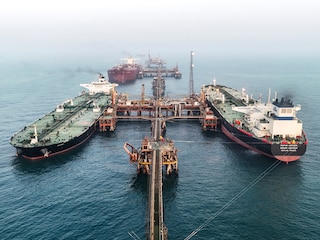
As India looks for alternative sources of crude oil to cope with the disruption in its usual supplies due to the latest conflict in West Asia, the US, Africa, and South America are options—none of them cheap.
But options must be found because the movement of oil through the Red Sea and the Strait of Hormuz is blocked.
“The immediate impact has been seen in terms of the rupee coming under pressure, stock indices going down and crude oil price going up,” says Madan Sabnavis, chief economist at Bank of Baroda. The bond market, though, remains insulated for now.
At the time of writing this story, on Tuesday, crude oil prices had climbed to $85 a barrel — well above the 2025 annual average of $70 per barrel.
Assuming crude oil prices remain elevated by just $10 a barrel for a year, Sabnavis says, the total oil import bill could “go up theoretically by around $18 billion on an annualized basis.”
India imports more than 80 percent of its energy supplies, of which 35 to 50 percent transits the Strait of Hormuz.
“If there is a prolonged conflict, it will lead to a 20 percent gap in supplies [which] is not easy to fill,” says Prashant Vashisht, Senior Vice President and Co-Group Head of Corporate Ratings at ICRA, the rating agency.
Sabnavis agrees that the $18 billion potential hit is an extreme scenario and could likely be absorbed within India’s current account deficit, amounting to roughly 0.5 percent of GDP, the inflationary pressure and logistics disruptions are inescapable.
Ajay Srivastava, Founder, Global Trade Research (GTRI), points out that a “limited conflict could add $5–$20 per barrel to the crude oil price, and disruption to Iranian exports or tanker traffic could push it above $90 per barrel.”
The defining challenge for India now is more about navigating a map where the shortest, cheapest routes are no longer viable.
However, with the rising global oil prices and tightening supply, India’s immediate bottleneck is geographical.
The traditional affordable crude oil sources of Iran, facing long-term sanctions, and Russia, now increasingly constrained by Western sanctions and wartime logistics, are no longer reliable backstops. While imports of Russian oil dipped in late-2025 due to shipping costs and sanctions pressure, they ticked back up last month.
“India has nowhere to turn to for affordable crude. We will have to go back to Russia or buy more expensive stuff from North America,” says Manoj Joshi, Distinguished Fellow at the Observer Research Foundation (ORF).
Diversification comes at a price. India still imports 40 to 50 percent of its crude oil from OPEC countries. And though OPEC+, just before the attack on Iran by US and Israel, agreed to increasing its oil output for April, the physical blockade of transit routes means this additional supply remains out of reach.
Government sources say India is now looking at the Cape of Good Hope as a primary bypass route for non-Gulf oil. Though this ensures physical delivery, it could come at a steep price.
First Published: Mar 03, 2026, 18:53
Subscribe Now