Relief flights begin amid Iran conflict
Emirates, Etihad, Air India and IndiGo operate special relief flights as limited West Asia airspace reopens offering relief to stranded Indians
Last Updated: Mar 03, 2026, 17:08 IST4 min
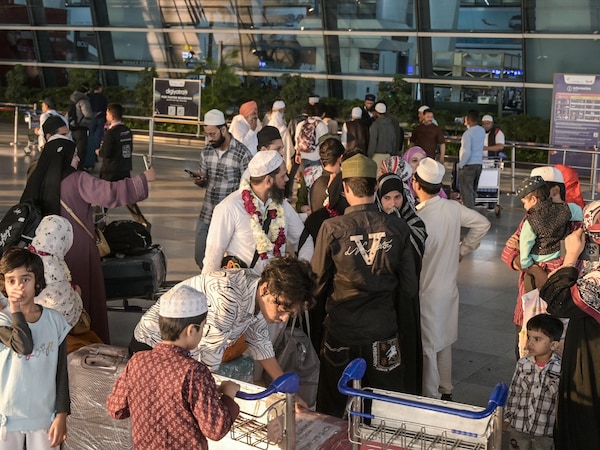
Limited flight operations between parts of West Asia and India resumed on Tuesday as airlines began operating special relief services as well as scheduled ones for stranded passengers. However, continued airspace restrictions forced several flights to turn back mid-air.
On February 28, the United States and Israel carried out coordinated airstrikes targeting Iranian military and nuclear facilities, and killing its leader Ayatollah Ali Khamenei. Within hours, Iran launched ballistic missiles and drones toward Israel and Gulf countries hosting US military bases, including the United Arab Emirates, Qatar, Bahrain and Kuwait.
This led several Gulf states to shut or restrict their airspace, leading to thousands of flight cancellations.
As of Tuesday, airspace restrictions remain in place across parts of West Asia, while relief flights begin.
IndiGo has scheduled 10 special relief flights from Jeddah to India on Tuesday, subject to regulatory approvals and prevailing airspace conditions. Clearance has been secured for four flights operating to Mumbai, Hyderabad and Ahmedabad. The airline said it was coordinating with the Consulate General of India in Jeddah to facilitate stranded passengers.
Air India has resumed its Europe, Canada and UK flights. Air India Express also restarted scheduled services between Muscat and multiple Indian cities including Delhi, Kochi, Kozhikode, Mangaluru, Mumbai, and Tiruchirappalli.
Akasa Air announced it will operate select services on the Mumbai-Jeddah-Mumbai route on March 3 and 4, along with Ahmedabad–Jeddah return services. However, its flights to Abu Dhabi, Doha, Kuwait and Riyadh remain suspended until March 4.
The aviation ministry said: “Special arrangements are being made to facilitate the movement of stranded passengers. Airlines are deploying additional capacity where required and coordinating closely with foreign aviation authorities and Indian missions abroad to ensure safe and orderly passenger movement.”
Despite the partial reopening, instability persisted. Three Dubai-bound Emirates flights from Delhi, Chennai and Bengaluru were forced to return to their origin airports shortly after take-off due to continuing regional airspace restrictions. A Mumbai service managed to land in Dubai after executing midair reversals.
Several Riyadh-bound international flights from multiple global destinations also turned back amid security alerts and reports of drone-related threats.
Airspace closures remain widespread. On Monday, aviation analytics firm Cirium said 79 percent of global flights to Qatar and 71 percent of flights to the United Arab Emirates had been cancelled. Eighty-one percent of flights to Israel and 92 percent to Bahrain were grounded.
Flight tracking service Flightradar24 said more than 4,000 flights a day were being cancelled across the region.
Etihad said regular scheduled services remain cancelled, though “some repositioning, cargo and repatriation flights may operate in coordination with UAE authorities and subject to strict operational and safety approvals.”
As flight cancellations left Indian passengers stuck at Gulf transit hubs and in cities such as Dubai, Abu Dhabi and Bahrain, state governments began compiling lists of affected residents and coordinating return travel with the Centre.
Karnataka: The state activated its State Emergency Operations Centre and district control rooms round-the-clock. According to the Chief Minister’s office, 109 residents from the state are stranded: 100 in Dubai and nine in Bahrain. Chief Minister Siddaramaiah wrote to Prime Minister Narendra Modi seeking evacuation preparedness and enhanced diplomatic coordination.
Andhra Pradesh: The state advised stranded Telugu citizens to travel to Muscat for onward repatriation to Kochi, as Muscat-Kochi flights have resumed. A hotline has been launched, and coordinators in Gulf countries are assisting with temporary accommodation and logistics.
Union Minister Pralhad Joshi said the Centre was in touch with Indian missions and prepared to facilitate safe return if required. “Whenever Indians face distress anywhere in the world, the Government of India has ensured their safe return. Their safety remains our first priority,” he said.
Other states including Telangana, Punjab, Jharkhand, Maharashtra, Uttar Pradesh, and Himachal Pradesh have activated helplines and are coordinating with the Ministry of External Affairs to assist residents.
First Published: Mar 03, 2026, 17:08
Subscribe Now