As Tehran burns, Delhi feels the heat
Cabinet Committee on Security meets; exporters stare at rising freight costs amid fears of prolonged disruption
By Forbes India
Last Updated: Mar 02, 2026, 09:21 IST3 min
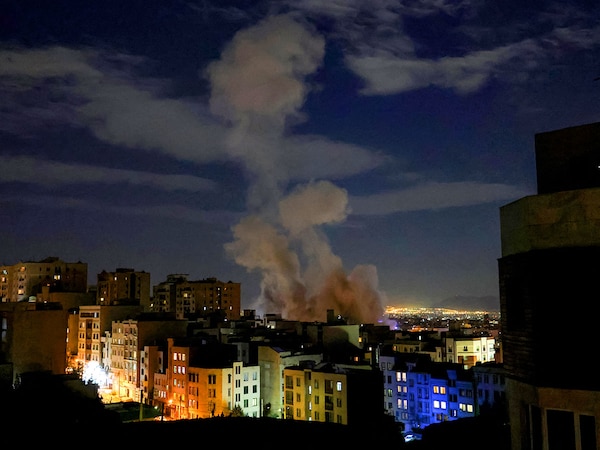
Prime Minister Narendra Modi chaired an emergency meeting of the Cabinet Committee on Security late Sunday as India moved to insulate its economy and citizens from the rapidly expanding conflict in West Asia following the death of Iran’s Supreme Leader.
Modi, who returned to the capital on Sunday night, issued his first formal comments on the hostilities, calling for an “early cessation of hostilities” and an urgent return to dialogue.
In a series of high-stakes diplomatic calls, Modi spoke with Israeli Prime Minister Benjamin Netanyahu and United Arab Emirates President Sheikh Mohamed bin Zayed Al Nahyan, emphasising India’s concern over civilian safety and the stability of global energy corridors.
“Spoke with President of the UAE, my brother Sheikh Mohamed bin Zayed Al Nahyan. Strongly condemned the attacks on the UAE and condoled the loss of lives in these attacks. India stands in solidarity with the UAE in these difficult times… Thanked him for taking care of the Indian community living in the UAE. We support de-escalation, regional peace, security and stability,” Modi posted on X.
The government has moved swiftly to assess the economic fallout. On Monday, the Commerce Ministry is scheduled to meet top exporters and shipping industry representatives to review the impact on trade.
With the Strait of Hormuz — a chokepoint for nearly 40 percent of India’s oil imports — under threat, exporters are bracing for a surge in freight rates and insurance premiums.
Any disruption to the Strait of Hormuz would also delay cargoes and trigger a spike in global oil prices, directly raising India’s import bill, according to a GTRI report.
“In response, refiners may reroute cargoes via pipelines to Red Sea ports, source more oil from Russia, the United States, West Africa and Latin America, and draw on strategic petroleum reserves to cushion short-term shocks, though these alternatives increase costs and transit times,” wrote GTRI founder Ajay Srivastava in the report.
India’s trade with Iran remains modest due to long-standing US sanctions. In calendar year 2025, India exported goods worth about $1.2 billion to Iran, dominated by agricultural products. “On the import side, India bought about $408.6 million worth of goods from Iran, including petroleum coke ($135.7 million), apples ($71.5 million), and dates ($33.3 million),” according to the GTRI report.
The energy market remains on edge, even as OPEC+ agreed in principle to a production hike of 206,000 barrels a day for April. While the increase aims to stabilise prices, analysts warn it may be insufficient if Iranian or Iraqi supplies are physically disrupted.
The human and logistical toll on Indian interests is mounting. An oil tanker near Oman, with 15 Indian crew members, came under attack. The crew, according to officials, was evacuated safely, but the incident underscored the volatile environment for Indian seafarers and energy supply chains.
Economic linkages beyond energy are also under pressure. India’s electronics exports to Gulf markets, worth billions of dollars, face potential disruption as key maritime routes are rerouted and insurers levy war-risk surcharges.
The strikes have decapitated Iran’s top leadership. Following the death of Ayatollah Ali Khamenei in a joint US-Israeli operation, Tehran has appointed Ayatollah Alireza Arafi as interim Supreme Leader.
Late on Sunday, US President Donald Trump told The Atlantic that Iran’s new leadership “wants to talk”, and he has agreed to a meeting, though he noted the Iranians had “waited too long” to seek a deal.
British Prime Minister Keir Starmer confirmed that Royal Air Force planes are “in the sky” over the region, participating in coordinated defensive operations to protect allies and interests.
In a significant diplomatic rupture, the UAE announced the closure of its embassy in Tehran and the recall of its ambassador following Iranian missile strikes that targeted Emirati territory, including residential areas near Abu Dhabi.
Stock markets in Dubai and Abu Dhabi have been ordered closed until Tuesday as the region grapples with immediate volatility.
The conflict has already paralysed aviation. Air India has cancelled at least 50 flights to Europe and North America, while IndiGo has suspended its West Asia operations until at least Monday night.
(With inputs from agencies)
First Published: Mar 02, 2026, 09:25
Subscribe Now