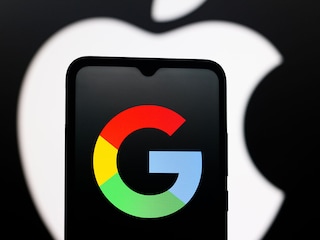
On January 12, Apple and Google made an unexpected announcement after striking a deal to infuse the latter’s AI technology into the former’s mobile software, including an updated version of the Siri digital assistant. As part of the multiyear deal, Google’s Gemini AI models will underpin a more personalised version of Apple’s Siri, sometime in 2026. The deal comes after years of Apple toying with the idea of a partnership with Google, after first having considered OpenAI and Anthropic.
A joint statement released by the two tech giants said: “After careful evaluation, Apple determined that Google’s Al technology provides the most capable foundation for Apple Foundation Models and is excited about the innovative new experiences it will unlock for Apple users.”
Despite the announcement, there are many unanswered questions such as the partnership, including the financial component and the duration of the deal. A few consequences of the deal are already making headlines. Here’s a look at some of the immediate repercussions:
Good days ahead for Google
According to experts, Apple’s decision to partner with Google is in consideration of Google Gemini’s technical capabilities. In the pool of AI upgrades by tech companies, Google’s latest Gemini models (Gemini 3) are among the most capable in the market and gaining traction among both consumers and businesses. While Apple now becomes a part of the AI improvements by Google, the latter stands a chance to gain more. The agreement is expected to generate significant revenue for Google. While the financial terms were not disclosed, a Bloomberg report previously indicated that Apple pays Google roughly $1 billion annually for access to its technology.
Another win for Google could be gaining access to Apple’s vast distribution network which is about 1.5 billion iPhone users worldwide. With Gemini powering the revamped Siri, Google might capture a share of revenue from product searches and purchases made through a Gemini-enhanced Siri. In the long run, this partnership could even pave the way for Gemini’s chatbot app to come pre-installed on iPhones.
Alphabet hit $4 trillion market cap
Shares of Alphabet rose by about 1 percent on January 12, after the Apple-Google deal announcement. As per CNBC, the stock closed at $331.86, pushing Alphabet’s market capitalisation just past the $4 trillion threshold.
This milestone places Alphabet alongside tech giants Apple, Microsoft and Nvidia, the only other companies to have crossed the $4 trillion mark. Alphabet’s entry into the group also comes after the company's remarkable run last year when it ended 2025 as one of Wall Street’s top performers, with its stock surging 65 percent over the year.
Also Read: Gemini in Gmail: Productivity boost or privacy nightmare?
Sergey Brin, cofounder, Google. Photo by Axelle/Bauer-Griffin/FilmMagic
Sergey Brin becomes the third richest man
The deal turned out to be a big win for Google co-founder Sergey Brin. Post the announcement on Monday, as per Forbes’s Real-Time Billionaires List, Brin’s net worth grew by $4.9 billion to $255.6 billion, ranking him behind another Google co-founder Larry Page and Tesla’s Elon Musk with $277 billion and $725.3 billion, respectively. It made Brin the third richest person in the world. With this, Brin has surpassed Amazon founder Jeff Bezos and Oracle’s Larry Ellison with a net worth of $253.2 billion and $251.3 billion, respectively.
Sam Altman cofounder and CEO OpenAI. Photo by YOSHIKAZU TSUNO/Gamma-Rapho via Getty Images
A big blow for OpenAI
Apple had earlier partnered with OpenAI to power some of its AI features, but its latest agreement with Google marks a significant shift. While the deal isn’t exclusive, it’s undeniably a setback for OpenAI. The move sheds light on the newly conceived perception among users that OpenAI and its offerings might no longer be the frontrunners in the AI race.
Moreover, without the advantage of built-in distribution through Apple’s massive customer base, OpenAI could face challenges in expanding its reach. The company currently reports over 800 million weekly users, yet recent reports hint at a slowdown in engagement. CEO Sam Altman has often remarked that many people equate ChatGPT with AI itself—a perception that could erode if Apple users embrace Gemini through Siri and begin to view it as the superior model.
Not long ago, OpenAI onboarded Apple's former chief designer Jony Ive to develop a groundbreaking AI device aimed at redefining how consumers interact with AI assistants, potentially rivalling the smartphone as the primary interface. That device is expected to debut later this year, signalling OpenAI’s push to stay relevant in an increasingly competitive landscape.
Win for the users
For users, the immediate benefit is clear: A smarter, more capable Siri and AI features that feel genuinely useful across everyday tasks such as organising photos, drafting text, managing notifications or enhancing app experiences. By tapping into Google’s Gemini models, Apple is aiming to make its AI more context-aware and versatile, bridging the gap between what users expect and what Siri has historically delivered.
One negative consequence might be Siri feeling more restrained compared to rivals like ChatGPT or Gemini in their standalone forms, as Apple will continue prioritising its philosophy of privacy and safety before anything else.
Read More
If all is executed well, this partnership could usher in a new era of invisible intelligence which will make for an AI that works quietly in the background, anticipating needs and simplifying tasks without demanding attention.