For a company or investor, there are fewer windows to sell: Lightspeed MD
Anuj Bhargava on consensus building for exiting a portfolio company and making it a win-win situation for all
Last Updated: Feb 12, 2026, 14:11 IST4 min
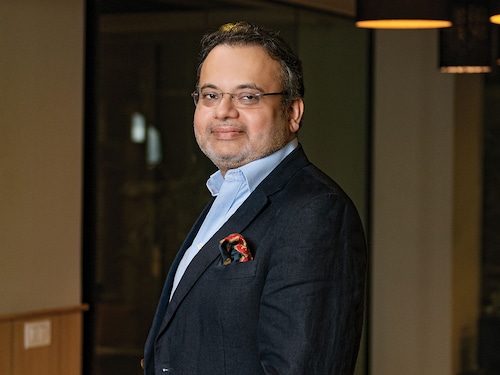
When Anuj Bhargava joined Lightspeed in November 2021 from Deutsche Bank, there were very few venture capital (VC) funds building the practice for executing timely exits from portfolio companies.
Over the last three to four years, there have been more Indian VC funds working on building a team and process to evaluate timely exits across mergers and acquisitions (M&A), and potential secondary sales, as fund life cycles become finite and Limited Partners (LPs) in these funds demand returns.
“LPs will give you money if they have seen the returns and if they have seen the success play out. India is a vibrant public market, and we are becoming an active secondary and M&A market, though we have a long way to go as compared to the US,” says Bhargava, managing director at Lightspeed India Partners.
While Indian markets continue to be ‘creative’ and outperform their peers, predictability of exits is still being built, he adds. “India is not as mature as the US market and with the exception of an IPO, exit opportunities need to be created; nothing happens on its own,” says Bhargava.
Portfolio exits are more an art than science, requiring long-term research into the markets and founder buy-in to make it successful. In an interview with Forbes India, Bhargava explains how Lightspeed has gone about building its exit practice. Edited excerpts:
Q. Which are some of the key criteria you look at before picking portfolio companies which will benefit from an exit opportunity?
There are many reasons to exit companies—at the end of the day, we are not just into investing money but also creating returns for our shareholders and our own agents. That comes from exits and appropriate returns.
We have our own criteria based on the fund life, when we have entered the company and the current returns; it is also based on where and how much upside we see from here, and who the right partner for the company at the particular time is. At the end of the day, we are an early-stage fund, and companies at a certain stage may look for a different profile of investors.
We also look at what is the best way to create value for a company going ahead—can it be more valuable as part of a bigger entity. And overriding all these criteria is the question: Is there a market for the sector the company is in? In those cases, you must wait and be patient. We have seen this in certain sectors like AI and crypto which get a lot of momentum at a point in time and the valuations get ahead of the fundamentals.
These are some of the levers we look at, based on first principles, and we decide what we are going to focus on. No decision happens at the click of a button, and there are multiple stakeholders involved.
Also Read: Why IPOs present more than an exit opportunity for startup investors
Q. What determines which is the most suitable exit route for the company?
Ultimately, it is about where is the most value realisation. Sometimes you can get a higher value in the private markets, sometimes you get better value from a strategic investor, and sometimes it is a great standalone story with the highest value from public investors in an IPO.
Whether it is M&A or a secondary transaction, it must be engineered through some means. In the US, for example, you have a vibrant M&A market led by mid-market private equity (PE) funds. A large chunk of the early-stage technology companies get sold to these. In addition, there are large strategic buyers and the IPO market for exits. In India, we have the last part, but we are still developing the other two which need dedicated attention. In a company’s life cycle or investor’s life cycle, there are many more opportunities to buy and fewer windows to sell. So, you have to stay alert and act quickly.
Q. How important is founder and board buy-in for a successful exit?
In venture-backed companies, you have a diversified cap table and people coming in at different stages of the company, at different valuations and different exit horizons and return thresholds. It is not just the founders but also the board which needs to go along with the exit decision… and the process needs a lot more consensus building as the majority shareholder has a stronger voice.
In my experience, we have had a trusted relationship with our founders and have provided more than just the initial cheque. While people may differ on small things, the purpose overall is to align with realising value.
In recent times, I have seen founders understanding the motivations of investors like us. They understand our obligations to our shareholders and know that we are critical to them in a certain part of their journey, while other investors can add value to them at growth stage, like PE, sovereign investors and others. Our job is to create a situation which is a win-win for all.
From our portfolio, Darwinbox is a recent example where we came in at the Series A stage and were with the company for eight years and brought in PE funds like KKR and Partners Group on the cap table before exiting partially through a secondary sale. We ensured that the right names came in, which will help the company expand further to the US in their next phase of growth.
Q. Do you plan exits through multi-asset sales by bundling a set of portfolio companies together?
It differs from case to case. In case of an M&A, it is always an individual asset. Whenever we have done secondaries, we have considered options for a group of assets. However, India is a developing market where you can look at assets as a basket. It is a complex deal as it involves certain amount of structuring, diligence, and it is not a deep market and there aren’t enough buyers. It can solve a great purpose because you can realise much larger proceeds, but it needs its own time.
First Published: Feb 12, 2026, 14:16
Subscribe Now(This story appears in the Feb 06, 2026 issue of Forbes India. To visit our Archives, Click here.)