Leaner, faster, simpler: Inside Yamaha India’s latest reset
New chairman Hajime Aota on restructuring, EV caution and why volume isn’t everything
Last Updated: Feb 11, 2026, 11:22 IST3 min
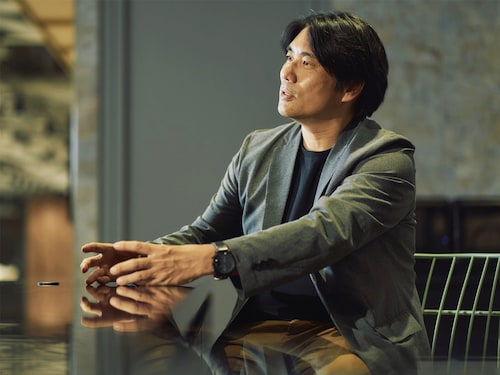
Yamaha Motor India is pushing reset as it looks to turn the business around. The organisation is now leaner, simpler, and more tightly integrated as its new chairman Hajime Aota begins reshaping operations less than six weeks into the job.
“Earlier, things worked, but there were too many complications,” Aota told Forbes India in an interview on the sidelines of the Global Electrification Mobility Summit in New Delhi on Tuesday.
The aim, he says, is not a big transformation but practical efficiency. “Everyone has 24 hours in a day. We don’t get extra time,” he says. “So we have to be leaner and faster with the same resources.”
In January, the company moved to merge its sales, marketing, finance, corporate and manufacturing functions into a single entity, while keeping its R&D arm independent as a dedicated innovation hub.
Aota says India’s interim trade deal with the United States (US) has no impact on Yamaha. “We are awaiting clarity, not just on the US but also the EU deal. I need more time—maybe another two months—to fully understand how this will play out.”
“It’s my 41st day on the job; 41st day and 6.5 hours,” he joked. “Maybe we can revisit this conversation on my 100th day on the job.”
In the interim trade agreement with the US, India has offered to remove duties on Harley-Davidson motorcycles in the 800-1,600 cc segment, according to government sources, a long-standing demand of US President Donald Trump. Yamaha has no direct presence in the segment.
Aota said his priority is not reacting to every external ripple but first understanding the terrain. “These first weeks have been a big learning experience--for business, for people, even for food.”
What has stood out most is not pricing pressure or competition, but the working culture. Aota talks at length about how organisations are structured and how that needs to change. “Earlier, organisations were very functionally divided, and that helped productivity. But in 2025, that model doesn’t work anymore,” he says. “Everything is connected now. Communication across functions is critical.”
Interestingly, he finds India more receptive to this shift than Japan. “In Japan, this kind of change is very challenging. In India, it’s also challenging, but once people understand that this move will change their own lives for the better, participation comes much faster,” he says. “That openness surprised me.”
Does that openness make transition to electric vehicles (EVs) easier?
“EV is a different beast. You cannot take a single-point view. You have to look at the environment, competitors, customer readiness, regulations, and government support. It has to be a holistic view,” he says.
Yamaha, which entered the electric segment late last year, is still figuring out the EV strategy. Pricing is the hardest variable, admits Aota. “India is very price-sensitive. If you push prices down, you lose features and differentiation. If you add differentiation, prices go up,” he says. “The real question is whether customers are willing to pay for what we offer.”
This is where Yamaha’s Japanese roots assert themselves. Japanese companies usually focus on safety, durability and engineering integrity over features that may not be of use to the rider. That will not change in the EV era, says Aota. “We don’t want to abandon what we stand for just because the market is changing. Innovation is important, but safety is non-negotiable.”
He uses an unusually vivid metaphor to defend Yamaha’s late entry into EVs. “We may not be the first guy on the dance floor,” he says. “But we will try and we will dance correctly.” Innovation and safety, he adds, have to move together, even if that makes Yamaha look slower from the outside.
India Yamaha Motor had a market share of 3.48 percent in January, having sold 64,399 units, shows data from FADA.
Volumes are important but “not the biggest priority” for the premium two-wheeler brand.
“Volume is important as a KPI,” he says. “But the most important moment for me is when a customer looks at our product and feels, ‘This is for me, it touched my heart.’”
Profitability remains the key focus but value matters more. “If a customer feels they are overpaying, that’s not a comment I want to hear,” he says. “Providing real value—even at a higher price—is very difficult. But that’s what we aim for.”
“That’s the Japanese DNA.”
First Published: Feb 11, 2026, 11:30
Subscribe Now