How India Eats: Potato, tomato, chicken prices make thali cost cheaper in Oct
Raging onion prices, however, remains a key concern
By
Prefer us on GoogleLast Updated: Nov 06, 2023, 10:57 IST3 min
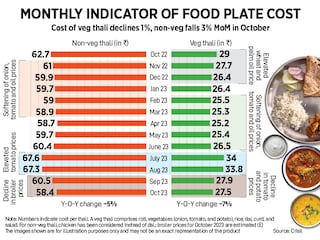
Raging prices of onion is a key concern, rising from Rs34 per kg in the first half to Rs40 per kg in the second half. On an average, onion prices are 25 percent higher year-on-year due to lower kharif output estimated in 2023. A demand-supply mismatch, with erratic monsoons disrupting the sowing of summer crops, alongside sticky demand have made onion prices higher.
The government has, however, swung into action with export duties on onions, minimum export prices and offloading buffer stocks, although prices are yet to cool.
According to Nomura, higher onion prices will be partly reflected in the October CPI inflation or retail inflation with November likely to see a fuller impact. “Going by past episodes, the surge should start correcting after December. Alongside a rise in broader vegetable prices in October, we expect CPI inflation to rise to 5.3 percent YoY from 5 percent in September, with headline inflation tracking 6 percent in November/December, before moderating next year," Nomura economists say.
Crisil estimates thali prices may reverse in November, if higher onion prices persist. Onions account for 10 percent share in the total cost of a veg thali. Price of pulses, accounting for 9 percent share in the total cost of a veg thali, also increased 19 percent year-on-year.
(Forbes India"s monthly series "How India Eats" takes a look at how the average price of a food plate in India changes every month, indicating the impact on the common man"s expenditure, by analysing the Indian thali)
First Published: Nov 06, 2023, 10:57
Subscribe Now