India’s health, education spending lags BRICS peers despite economic growth
Both sectors also grapple with digital divides and infrastructural deficiencies
By Samreen Wani
Last Updated: Jan 30, 2026, 17:12 IST2 min
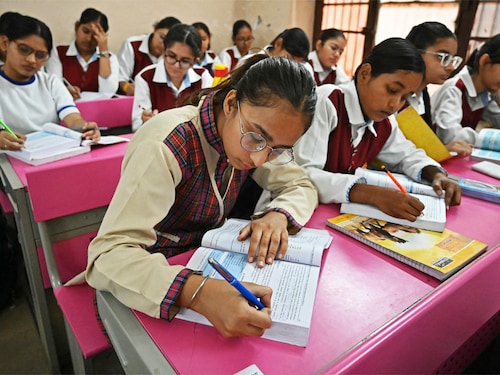
India’s budgetary allocation for health and education has remained largely stagnant as a percentage of GDP over the past six years, with both sectors significantly trailing spending levels among BRICS peers and global averages.
According to data from the Economic Survey 2025-26, general government expenditure on education has declined from 2.9 percent of GDP in FY20 to 2.7 percent in FY26 (budget estimates), while health spending has inched up marginally from 1.4 percent to 1.8 percent over the same period. Education expenditure, which includes spending on sports, arts, and culture, has remained flat at 2.7 percent of GDP since FY22, suggesting limited fiscal prioritisation despite increased focus on skilling and human capital development.
Health spending, which encompasses medical and public health, family welfare, and water supply and sanitation, has shown modest improvement from the pandemic low.
The stagnation becomes more striking when compared internationally. India’s health expenditure in 2023 was less than half that of Brazil (10 percent) and South Africa (9 percent), significantly below Russia (7 percent) and China (6 percent), according to World Health Organization data.
Focus on India’s health budget is also important because it is navigating a critical epidemiological transition. Over the past few years, the country has achieved substantial reductions in infectious disease mortality and increased life expectancy at birth from 49.7 years in 1973 to 70.3 years in 2023. Nevertheless, India confronts a dual burden: Persistent communicable diseases (CDs)—such as tuberculosis and vector-borne infections—co-exist alongside rapidly escalating non-communicable diseases (NCDs) including cardiovascular diseases, diabetes, and cancers.
This concurrent rise in CDs and NCDs is further complicated by pronounced regional and socioeconomic disparities. While Kerala’s health profile mirrors that of developed nations with a predominance of degenerative diseases, other states continue to struggle with malnutrition and infectious disease outbreaks.
The latest Economic Survey also notes that rising obesity has emerged as a major public health challenge in India driven by unhealthy diets, sedentary lifestyles, increased consumption of ultra-processed foods, and environmental factors.
On education, the gap is equally pronounced. India’s 2.7 percent allocation for FY26 falls well short of South Africa’s 6 percent, Brazil’s 5.6 percent, and the 4 percent spent by both China and Russia. India also lags the lower-middle-income country average of 3.4 percent, indicating that India is underinvesting relative to its peer income group, and the South Asia regional average of 2.9 percent, World Bank data shows. The Economic Survey 2025-26 highlights how the Right to Education Act 2009 and the National Education Policy 2020 (NEP) have broadened access to quality education. However, disparities in quality, geographic inequalities, and socio-economic barriers continue to hinder the equitable distribution of educational services.
Health economists have long argued that India needs to raise public health spending to at least 2.5-3 percent of GDP to reduce out-of-pocket expenditure that pushes millions into poverty annually. Similarly, education experts emphasise that inadequate public investment contributes to quality gaps, infrastructure deficits, and limited research capabilities in higher education.
While the latest Economic Survey does say that significant progress has been made in making health services and education more accessible and affordable, however, it adds that both sectors also grapple with digital divides and infrastructural deficiencies. This necessitating sustained investment and comprehensive policy reforms to ensure inclusive development even as India enjoys a demographic advantage.
First Published: Jan 30, 2026, 17:23
Subscribe Now