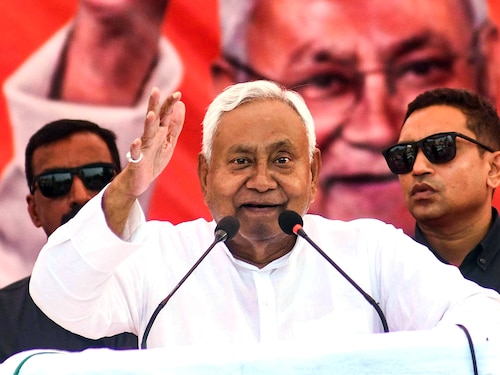
Since November 2005, Nitish Kumar has been the defining figure in Bihar’s governance, interrupted only briefly by Jitan Ram Manjhi’s tenure in 2014-15. Over the years, Kumar has alternated alliances between the Bharatiya Janata Party (BJP) and the Rashtriya Janata Dal (RJD) while staying as chief minister.
Kumar came to power when the state was facing significant economic challenges. The bifurcation of Jharkhand in 2000 stripped Bihar of its mineral reserves and most of its industrial base, leaving it dependent on agriculture and assistance from the central government. Successive governments in Patna have consistently pressed for “special category status”. This classification would grant preferential funding and tax incentives to economically disadvantaged states. The Union government, however, has resisted these appeals, offering welfare packages and centrally sponsored schemes instead.
As Bihar heads to polls this week, nearly 20 years of Kumar’s leadership are under review. Data from the Economic Census 2005 and the Bihar Economic Survey 2024-25 show how the state’s economy, employment and infrastructure have changed the last two decades.
According to the Bihar Economic Survey 2024-25, the Gross State Domestic Product (GSDP) at current prices stood at Rs854,429 crore in 2023-24, while at constant (2011-12) prices, it was Rs464,540 crore. The report notes that Bihar’s GSDP grew by 14.5 percent at current prices and 9.2 percent at constant prices in 2023-24. Between 2011-12 and 2023-24, the state recorded an average annual growth rate of 10.9 percent (current) and 5.4 percent (constant).
Two decades earlier, the Economic Census Report 2005 recorded 12.25 lakh establishments across the state, marking a 17.31 percent increase from 1998. Of these, 8.35 lakh were in rural areas and 3.89 lakh in urban centres. The report noted that non-agricultural establishments constituted 97.15 percent of the total, reflecting early diversification of Bihar’s economic activity beyond agriculture.
Sectoral Shifts
In 2005, Bihar’s non-agricultural activity was dominated by retail trade (55.15 percent), followed by manufacturing (19.15 percent) and community and personal services (6.14 percent). Two decades later, the Economic Survey shows that construction has emerged as the single largest contributor to the secondary sector, accounting for 50.2 percent of its output, with manufacturing contributing 37 percent.
Investment in industry has also grown. Fixed capital in registered factories reached Rs31,950 crore in 2022-23, a 60 percent increase over the previous year.
Bihar’s sugar industry remains one of its largest agro-based sectors: In 2023-24, 677.2 lakh quintals of sugarcane were crushed to produce 68.77 lakh quintals of sugar, with 530 kilolitres per day of distillery capacity and 88.5 megawatts of co-generated power.
Earlier this year, the central government also announced a dedicated Makhana Board of Bihar in Union Budget 2025. This board’s aim is to improve the production, processing and export potential of makhana (foxnuts), a regional crop that dominates the state’s wetland agriculture.
Also Read: Homebound in Bihar: The employment paradox facing the state’s youth
Employment and Labour Market
In 2005, Bihar had 22.69 lakh workers, a 1.62 percent increase from 1998. Of these, 14.04 lakh were employed in rural areas and 8.64 lakh in urban centres. The Economic Census noted that 54.2 percent of workers were engaged in agriculture, while retail trade alone accounted for 44.31 percent of non-agricultural employment.
The 2024-25 Economic Survey reports a work participation rate of 53.2 percent, compared with the national average of 62.1 percent. Agriculture still employs 54.2 percent of the workforce. Construction and services have expanded quickly. Construction now employs 25.4 percent of men and 0.7 percent of women. Manufacturing employs 5.2 percent, and education between 2.4 and 2.8 percent. The data shows continuing rural dependence and a wide gender gap in formal employment.
In an effort to address skilling, the Centre also announced the creation of a National Institute of Food Technology, Entrepreneurship and Management in Bihar, aimed at promoting food-processing and skills training.
Fiscal and Financial Expansion
Over nearly two decades, the state’s fiscal position has seen steady improvement. In 2023-24, Bihar reported a revenue surplus of Rs2,833 crore, with a gross fiscal deficit of Rs35,660 crore, down 20.4 percent from the previous year. Capital expenditure rose from 3.3 percent of GSDP in 2019-20 to 7.2 percent in 2023-24, while tax revenue increased from 15.2 percent to 19 percent of GSDP over the same period.
The Union Budget 2025 included Rs1.5 lakh crore in interest-free loans for states to fund capital projects, which Bihar can access. The Union Ministry of Road Transport and Highways also cleared a Rs33,464 crore road development plan for Bihar for FY26, covering more than 50 highways and bridges. This includes bypasses and regional link roads, according to a report by The Times of India.
Bihar’s 2025 Budget allocated Rs4,392 crore for MGNREGA, Rs4,320 crore under the Pradhan Mantri Awas Yojana (Rural), and Rs7,642 crore for irrigation and flood control, according to PRS Legislative Research.
Infrastructure and Urbanisation
Infrastructure has been a key driver of Bihar’s growth. The Economic Survey notes that the road transport sector grew from Rs8,400 crore in 2011-12 to Rs25,100 crore in 2023-24 at constant prices. The state now ranks fifth in India for vehicle registrations.
New central schemes are expected to strengthen this base further. They include road projects, canal irrigation and airport upgrades. Greenfield airports under the UDAN scheme and the expansion of Bihta airport near Patna are part of this plan.
Social and Human Development
Between 2005-06 and 2023-24, social sector spending in Bihar rose 13-fold. Health spending grew 13 times and education spending 10 times, according to the Economic Survey.
Life expectancy at birth improved from 65.8 years during 2006-10 to 69.5 years in 2016-20. Gains were higher in urban areas, where life expectancy rose by four years, compared to 3.5 years in rural regions.
In 2005, education-related establishments made up just 3.75 percent of total enterprises. Today, public investment drives much of the growth in education and health.
Entrepreneurial and Institutional Base
In 2005, 67.02 percent of Bihar’s establishments were own-account enterprises, and 32.98 percent employed hired workers. Nearly 11.44 lakh establishments were self-financed, while 54,770 received government assistance. By 2024-25, the state’s institutional reach had expanded through higher capital investment and better credit access. NABARD provided Rs6,596 crore in financial support in 2023-24, including Rs2,300 crore in crop loans and Rs2,362 crore for investment credit.
Between 2005 and 2024, Bihar’s economy grew from 12.25 lakh establishments and 22.69 lakh workers to a GSDP exceeding Rs8.5 lakh crore. The shift from small, retail-based activity to investment-led growth in construction, manufacturing and social infrastructure reflects a steady diversification of the state’s economy.
As the people of Bihar prepare to cast their vote this week, these numbers offer a record of its transformation under nearly two decades of Kumar’s leadership, and a reminder of the distance still to go.