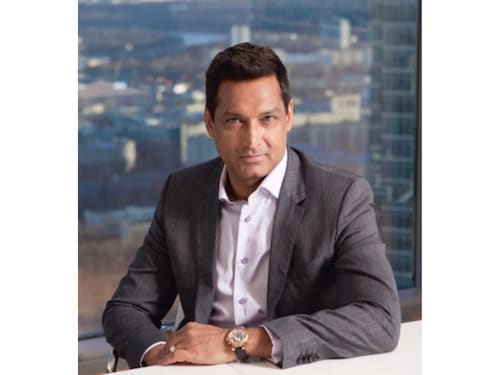
As global pharma realigns, Vikram Punia sees India–Russia–EAEU axis emerging as
Vikram Punia underscores the growing India–Russia–EAEU pharmaceutical axis as a strategic opportunity for Indian firms entering expanding Eurasian healthcare markets
As geopolitical shifts reshape global trade frameworks, the pharmaceutical corridors between India, Russia and the Eurasian Economic Union (EAEU) are entering a phase of accelerated strategic convergence. The India-Russia Business Forum in New Delhi, aligned with Russian President Vladimir Putin’s state visit, is expected to advance this agenda further, signalling growing cooperation between the two nations in critical sectors such as healthcare, advanced manufacturing, and pharmaceutical research.
India and Russia have long shared deep diplomatic and economic ties, supported by sustained leadership-level engagement. What is emerging now is an alignment in pharmaceutical priorities: Russia’s push for medicines sovereignty and India’s position as a global powerhouse in affordable generics and pharmaceutical innovation.
Industry observers note that Russia’s pharmaceutical landscape has undergone a dramatic shift over the past three decades. After the dissolution of the USSR, multinational pharmaceutical corporations - including Pfizer, Novartis, Bayer and Sanofi, rapidly entered the market, supplying essential medicines to meet rising demand. However, analysts now point out that despite strong commercial activity, technology transfer remained limited, slowing the development of truly localised production capabilities.
This gap eventually catalysed policy-driven sectoral reform. With the adoption of the national Pharma-2030 strategy, Russia is no longer positioning itself as a passive consumer market but as an emerging hub in a multipolar pharmaceutical world. The policy encourages collaboration with partner countries rather than isolation, signalling a shift from dependence to strategic autonomy.
Indian pharmaceutical manufacturers now find themselves uniquely positioned within this transition. They have already travelled the path Russia is attempting, evolving from import reliance to domestic production and finally to global export leadership through strong generic manufacturing, R&D capabilities and cost-efficient large-scale production.
According to Vikram Punia, a leading figure in Russia’s pharmaceutical ecosystem, this alignment represents more than opportunistic trade. Punia emphasises that the current environment reflects deep institutional trust between the two nations, built over decades of political, educational and industrial cooperation. In 2023, this trust translated into India becoming the largest supplier of medicines to Russia, with more than 293 million pharmaceutical packages entering the Russian market that year.
But the opportunity extends beyond bilateral exchange. Investments or product registrations in Russia can open access to the broader Eurasian Economic Union — a market approaching 200 million consumers with growing regulatory harmonisation. Under EAEU mechanisms, once a product is registered in one member state, it may benefit from simplified recognition across the bloc. For Indian companies, this significantly reduces time-to-market and regulatory complexity.
Punia notes that Russia’s established scientific base, particularly in clinical research, biotechnology and chemistry, complements India’s manufacturing scale and generics leadership. He argues that the most powerful model now emerging is one of co-development and co-manufacturing, where each side contributes its strengths and benefits from long-term industrial and R&D participation rather than short-cycle trade.
The withdrawal or downsizing of several Western companies following sanctions has accelerated this strategic recalibration. While challenging in the short term, industry analysts suggest it has opened space for new value chains, technological collaborations and long-duration partnerships between Russia and countries classified as friendly markets, with India at the centre of that transition.
The pharmaceutical sector is characterised by long time horizons - from molecule identification to clinical trials, regulatory approvals, and commercial scale-up. Decisions made today will determine industrial positioning for decades. Punia has repeatedly stressed that this is the moment for Indian pharmaceutical companies to act decisively, as early movers are likely to shape not just commercial outcomes but regulatory standards, research models and market architecture across Eurasia.
The emerging India-Russia-EAEU pharmaceutical ecosystem signals the formation of a multipolar pharmaceutical order, where reliance on a single global supply chain is replaced by a network of regional hubs capable of innovation, manufacturing and public health stability.
As new frameworks are negotiated at government and industry levels, one question is becoming increasingly relevant within policy circles and boardrooms:
Which Indian pharmaceutical companies will move early enough to secure a defining role in this evolving Eurasian pharmaceutical landscape?
The pages slugged ‘Brand Connect’ are equivalent to advertisements and are not written and produced by Forbes India journalists.