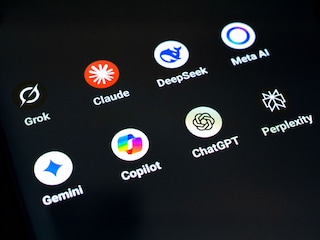
Three years after ChatGPT jolted Silicon Valley, the large language model (LLM) race is no longer just about who can reach the most users. It is now a contest over cost, trust, and control of the emerging AI stack.
The leading players are no longer simply releasing larger or faster models. They are building full scale platforms—integrating models into operating systems, productivity software, search engines, and developer tools—to lock in users across everyday workflows.
The outcome is a fast moving battle that increasingly resembles an operating system war for a new era of computing. From OpenAI’s ChatGPT to Anthropic’s Claude, leading LLMs are now competing not just for user attention, but for long term stickiness—while trying to turn habitual use into subscription revenue.
In Claude’s newly published “constitution”, Anthropic writes that the model’s “moral status is deeply uncertain”. The company is not claiming consciousness; it declines to rule the question out and argues it is safer to design with that uncertainty in mind—an unusual posture in a field where many labs downplay or dismiss the issue.
The publication coincided with CEO Dario Amodei’s appearance at the World Economic Forum in Davos, a week when AI governance featured prominently—placing Anthropic’s transparency drive in front of policymakers and risk sensitive enterprise buyers.
AI safety and ethics have been the company’s core differentiator. Anthropic positions “Claude to have a competitive edge over others in the market, as it positions it as more than just a mere tool”, says Anushree Verma, senior director analyst, Gartner. This commitment resonates strongly with risk-averse enterprise customers and policymakers. “Anthropic’s training methodology ensures that its models, like Claude, adhere to a set of ethical principles (like being “helpful, honest, and harmless”), making them more reliable and resistant to generating harmful or biased output (preventing “jailbreaks”),” adds Verma. Additionally, Gartner says that nearly 80 percent of consumer Claude usage comes from outside the US, with per capita usage in countries like South Korea, Australia, and Singapore outpacing U.S.usage.
Anthropic’s move shows how the market is segmenting: Each provider is turning a specific advantage—reasoning, distribution, multimodality, openness, or governance—into retention and paid usage.
Also Read: Gemini in Gmail: Productivity boost or privacy nightmare?
ChatGPT
OpenAI remains the most visible player in consumer AI, with ChatGPT still serving as the default reference point for millions of users worldwide. Its advantage stems from scale and ecosystem breadth: Paid users can move seamlessly between text, voice, image generation and custom GPTs inside a single interface. Recent development has focussed on reasoning oriented models such as the o series, which show strong performance on mathematics, coding and structured tasks. At the same time, OpenAI has tightened its platform—retiring plugins, steering users toward curated GPTs and relying heavily on Microsoft for compute and enterprise distribution.
Copilot
Microsoft’s advantage in the LLM race is neither the newest model nor the flashiest interface, but distribution and context. Copilot is embedded across Windows, Edge, Microsoft 365 apps, Teams and GitHub—meaning enterprises already paying for Microsoft software gain AI as an incremental extension rather than a new vendor relationship. Unlike standalone chatbots, Copilot can draw on documents, spreadsheets and meetings inside a company’s existing workflow, making context a differentiator as important as model quality. Behind the scenes, Microsoft relies on OpenAI models while offering GPT class systems through Azure OpenAI Service, keeping AI adoption within its compliance perimeter.
Gemini
Google’s Gemini effort is built around native multimodality—models designed from the ground up to understand and reason across text, images, audio, video, and code within a single architecture. This allows Gemini to plug deeply into Google’s core products: Search, Gmail, Docs, YouTube and Android, where it can draw on real time information and user permitted context at enormous scale. Despite early missteps—including a widely criticised 2024–25 image generation failure that prompted a pause and public apology—Google’s distribution advantage remains unmatched, with Gemini deployed from cloud data centres to on device Nano models on Pixel phones.
Llama
Meta has taken the most unorthodox route in the LLM race by releasing increasingly powerful open weight Llama models, including the Llama 3.1 family with variants scaling up to 405 billion parameters. Unlike closed model rivals, Llama can be downloaded, finetuned, and redeployed under Meta’s community licence—broadening its adoption across startups, researchers, and enterprises that want control without API costs. Meta complements this with Meta AI integrated across Facebook, Instagram and WhatsApp, giving it massive distribution even as the models themselves remain openly accessible.
Perplexity
Perplexity sets itself apart by acting more like a search tool than a chatbot. Instead of guessing or relying only on training data, it looks up information on the web in real time and gives short, clear answers with links to every source so users can verify what it says. For people who need reliable information, this focus on accuracy and citations is its biggest strength. The Pro version adds tools for deeper research, letting users analyse files and combine them with up to date web results. By prioritising facts, transparency, and up to date information, Perplexity competes on trust rather than trying to be the most creative or conversational AI.