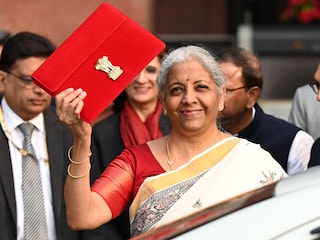
Finance Minister Nirmala Sitharaman will present the Union Budget 2026-27, her ninth consecutive Budget, on Sunday, February 1. For most people, the Union Budget is often reduced to a few headline outcomes: Whether there is income tax relief, whether fuel prices might shift, or whether spending on jobs, infrastructure and welfare will rise. But the Budget story is much bigger than what is captured in the speech alone.
For starters, the Union Budget is not a single document, but a set of documents that together explain the government’s plan for revenue, spending, borrowing and taxation down to the last rupee.
Here is a step-by-step guide to understanding the Budget.
What is the Union Budget?
The Union Budget is the Central government’s financial plan for the coming financial year, which runs from April 1 to March 31. Financial year 2026 (FY27) will begin from April 1, 2026 and run through to March 31, 2027.
In simplest terms, the Budget answers four core questions:
- How much money will the government raise (through taxes and other sources)?
- How much will it spend, and what are the priorities?
- How much will it borrow to bridge the gap between receipts and expenditure?
- What changes will it propose in tax laws and financial rules to implement these plans?
For example, in Budget 2025-26, the government estimated total expenditure at Rs50.65 trillion, up 7.4 percent over the revised estimate of 2024-25, according to PRS analysis. Receipts (excluding borrowings) were estimated at Rs34.96 trillion, implying borrowing would bridge the gap. PRS also pointed out that interest payments formed 25 percent of total expenditure, and about 37 percent of revenue receipts.
What it is not
The Union Budget is not the place where everything about the economy gets decided. For example, Goods and Services Tax (GST) rates are decided by the GST Council, where the Union and state finance ministers participate, and not unilaterally through the Budget speech.
Read the 'big picture' first
The fastest way to understand the government’s intent is to start with the top-level priorities. These typically show up in the opening sections of the Finance Minister’s speech and in headline numbers like the fiscal deficit and capital expenditure (capex). These are the markers that tell you what kind of Budget it is: Growth-focussed, consolidation-focussed, reform-focussed, or a balancing act.
A Budget can promise many initiatives, but its priorities are revealed by:
- Fiscal deficit (how much the government plans to borrow)
- Total expenditure (the overall spending plan)
- Capital expenditure (spending on asset creation, infrastructure, long-term growth)
- Revenue expenditure (day-to-day spending, subsidies, salaries, interest payments)
- Assumptions on nominal GDP growth (important for revenue estimates)
In a Budget season, many discussions revolve around whether the government is prioritising growth support or fiscal consolidation. For instance, in its preview note for FY27, Motilal Oswal expects the government to target a gross fiscal deficit of 4.3 percent of gross domestic product (GDP), slightly lower than 4.4 percent in FY26, indicating continued fiscal consolidation, even while maintaining capex focus.
Understanding the Budget speech
The Budget speech is divided into Part A and Part B. Part A covers the government’s broad economic direction, welfare programmes, sectoral initiatives, and some important macro numbers. It may include the fiscal deficit target, allocations for large schemes, and priorities like infrastructure, manufacturing, agriculture, education, health, jobs and skilling.
Read More
Part B is where tax changes are announced. This includes changes to personal income tax, corporate tax, customs duties, and other direct and indirect tax measures (excluding GST).
It’s important to look out for what the government is signalling about:
- How it sees growth and inflation risks
- Whether it is tightening or expanding spending
- Whether it is prioritising long-term capex over short-term giveaways
- Which sectors it believes will shape India’s next phase of growth
In Budget 2025-26, the tax slabs announced were as follows:
- Nil: Up to Rs4 lakh
- 5 percent: Rs4 lakh to Rs8 lakh
- 10 percent: Rs8 lakh to Rs12 lakh
- 15 percent: Rs12 lakh to Rs16 lakh
- 20 percent: Rs16 lakh to Rs20 lakh
- 25 percent: Rs20 lakh to Rs24 lakh
- 30 percent: Above Rs24 lakh
Reading the Budget in the right order
If you want to understand the Budget efficiently, follow this order:
1) Budget at a Glance
This is the best starting point for most readers. It summarises the key numbers: Receipts, expenditure, fiscal deficit, and major allocations. If you read only one document, it should be this one. It tells you, at a glance, how the government is balancing revenue, spending and borrowing.
2) Annual Financial Statement (AFS)
This is the main constitutional Budget document. It presents the government’s estimated receipts and expenditure for the year. This can be looked at through two lenses:
- Revenue account (routine spending and income)
- Capital account (investment and asset creation)
3) Expenditure Budget / Expenditure Profile
This breaks down planned spending ministry-wise, scheme-wise and purpose-wise. This is the place to track whether the government has increased funding for healthcare, railways, defence, rural development, education or housing.
Revenue expenditure here refers to recurring spending (salaries, pensions, subsidies, administration, interest payments). While capital expenditure (capex) is long-term spending (roads, railways, defence equipment, infrastructure).
4) Receipts Budget
This explains where the government expects to get its money, including tax revenue and non-tax revenue. This is where you can find:
- Direct taxes (income tax, corporate tax)
- Indirect taxes (customs, excise, GST components)
- Non-tax revenue (dividends from public sector enterprises, RBI surplus transfer, telecom receipts, etc.)
- Disinvestment or asset monetisation targets
- Borrowing and other financing sources
The Finance Bill
Announcements in the Budget do not automatically become law. A large part of the Budget is implemented only after Parliament approves relevant legal changes through the Finance Bill, which later becomes the Finance Act.
The Finance Bill includes the text of amendments and changes to laws such as those related to:
- Income tax
- Customs duties
- Excise duties
- Other financial and taxation-related provisions
The Memorandum Explaining the Provisions in the Finance Bill summarises and explains the proposed changes in a more readable format.
Demands for Grants
The Demands for Grants provide detailed expenditure estimates for each ministry and department, and these are voted on in the Lok Sabha (Lower House of Parliament).
This document becomes especially useful if you want to track spending in a very specific way, such as how much is being spent on defence equipment vs defence pensions, how much a ministry is getting for a flagship programme, whether funding is shifting across years, etc.
Fiscal policy statements
The Union Budget includes fiscal policy statements mandated under the Fiscal Responsibility and Budget Management Act (FRBM Act), along with supporting macro framework documents.
These documents help answer how the government justifies its deficit and borrowing plan, what assumptions it is using about growth and inflation, and how the debt trajectory is being managed.
Where the Economic Survey fits in
The Economic Survey is published before the Budget. It is not the Budget but it is one of the most important documents to read if you want context. This year, it will be released on January 29.
The Economic Survey is the government’s annual review of the economy. It lays out:
- What has happened to growth, inflation, trade, jobs and investment
- What the government sees as risks and opportunities
- What reforms it believes are needed
- The analytical thinking that can shape Budget priorities
To understand why a Budget is prioritising certain areas—such as manufacturing, exports, capex, or welfare support—the Economic Survey can provide the framing.
What to watch in Budget 2026-27
- First, the fiscal consolidation path, whether the government keeps the deficit trajectory steady while sustaining growth support.
- Second, the capex story, especially where allocations are heading.
- Third, the composition of revenue, particularly how much the Budget relies on tax buoyancy versus non-tax flows like RBI dividends.
Read Forbes India's complete Budget 2026-27 coverage here