Hope is a skill we all need to practise
How to harness the power of hope when the road ahead feels uncertain
By
Prefer us on GoogleManfred F. R. Kets de Vries
Last Updated: Jan 06, 2025, 15:56 IST5 min
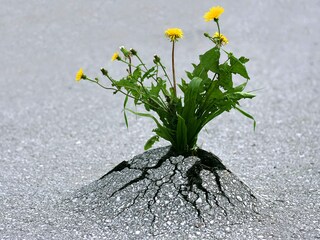
We"re often warned against opening Pandora"s box, a metaphor for unleashing a torrent of evils on the world. Yet, we forget an essential detail: Elpis – the spirit of hope – remained within the box. Even when the world seems consumed by chaos, hope endures.
Throughout history, philosophers and leaders have celebrated hope as a powerful force. The ancient Chinese philosopher Lao Tzu observed, “As long as we have hope, we have direction, the energy to move, and the map to move by." And military leader Napoleon Bonaparte recognised the influence of hope in leadership, declaring, “A leader is a dealer in hope."
Many have conceptualised hope as a desire and a belief in the fulfillment of that desire. However, hope isn"t just naà¯ve or unbridled optimism, where we assume a positive outcome is inevitable it entails action. Hope is goal-oriented and accompanied by a realistic plan, making it a powerful source of motivation. It is an engine that not only helps us envision a future possibility but also empowers us to take action to create this future.
Hope can be categorised into two main types: realistic and unrealistic hope. Realistic hope is grounded in what is reasonable, possible and achievable. It is action-oriented, driving a person toward attainable goals. Unrealistic hope, however, is wishful thinking, where we expect positive outcomes to fall into our laps. Individuals harbouring unrealistic hope may find themselves disappointed and frustrated when their expectations aren"t met.
In addition, there is existential hope, a more general belief that something good is going to happen, and utopian hope, a collective belief that combined action can lead to a better future for everyone. Then there is religious faith, which involves hope in the unseen, such as divine union and eternal happiness.
To better understand the nuances of hope, we must consider the concept of "locus of control", a psychological term referring to an individual"s perception of the main causes of events in their life. People with a strong internal locus of control believe they have agency over their own actions. When they hope for something, they also believe in their ability to achieve it. In contrast, people with an external locus of control think that whatever happens to them is the result of luck or fate. They believe they are at the mercy of outside forces (such as fate, God or powerful others). These people will be less inclined towards realistic hope due to their lack of agency.
Hope isn"t something you either have or don"t have it"s a learned skill that can be cultivated. So, how can we learn to be more hopeful and channel hope into action?
There will be moments in life when you feel like you"re drowning, when giving up seems tempting, and hope feels out of reach. In these times, resist giving in to despair. Instead, hold on to hope – one of life’s greatest miracles. Hope has the power to inspire you to achieve the impossible and carry you through difficult times. Like Elpis, who remained in Pandora’s box, hope acts as a counterforce to the demons of anger, revenge and despair, replacing them with faith, courage, joy and love.
As Dale Carnegie, the American pioneer of self-improvement said, “Most of the important things in the world have been accomplished by people who have kept on trying when there seemed to be no hope at all."
First Published: Jan 06, 2025, 15:56
Subscribe Now