Cover to cover: The books we read and loved in 2025
The pick of Team Forbes India's reading list from the past year
By
Prefer us on GoogleLast Updated: Dec 26, 2025, 10:01 IST8 min
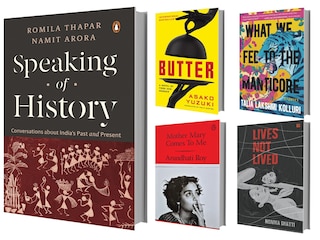
The book is also an ode to her mother, Mary Roy, an educator par excellence, an advocate for women’s rights and also a mother whose tough love made her children want to escape home. The book is in equal parts about Arundhati Roy’s adventures through life as an architect-turned-writer-activist and her quest to make peace with her mother. Roy, who has spent a life pulling no punches to write against the Big and the Powerful, has now turned her critical gaze on the Indian family. A must-read for all those who do not agree with her otherwise.
-Himani Kothari
For One More Day hit me in a deeply personal way. It’s a story about regret, forgiveness, and the longing for just one more moment with someone we’ve lost. The simplicity of the writing makes the emotions feel even more intimate, almost like reading someone’s confession. It left me reflecting on people I wish I could go back and speak to, even for a single day, like my grandfather.
-Samidha Jain
The book, which questions how ethics can keep up with scientific progress through different events, leading up to the creation of the atom bomb, ends on a surprising note where it connects the dots of years of research which went into laying the foundation and advancement of artificial intelligence as we know it today.
-Payal Ganguly
The story explores the changes within the household of a family that moves from rags to riches, the shift in loyalties, the unsaid rules and the nonchalance over moral compromises. There’s something uncomfortably recognisable about it all, as if these characters exist in far too many of our own families. The title itself, which means “all messed up” nailed the emotional knots we so often pretend aren’t there.
This book worked for me because it reminded me that the most complex stories can be narrated in the simplest of languages. It is the kind of book that stays on long after the last page, making you question your own silences and complicities. A small book that leaves a big impact.
-Siddhant Konduskar
It was, therefore, fortuitous that this book came my way. Its format is akin to a podcast transcribed for print: Conversations between historian Thapar and writer Arora around the subject of history, how it is interpreted, how this interpretation has evolved depending on available evidence and the leanings and agendas of those who interpret it, and how it shapes our understanding of ourselves and our current times.
I loved this book because it took me back to scholarship and academic discourse in a manner that did not remind me of my college text books and research papers. It discussed subjects, methods and approaches that I have myself formally studied, and was grappling to revisit and re-interpret through the prism of current narratives.
-Jasodhara Banerjee
Kolluri uses these voices to explore questions of belonging, loss, survival and environmental collapse. By letting animals narrate their worlds, she exposes how deeply global crises affect beings whose inner lives we barely recognise. Their experiences become living metaphors for our own, inviting readers to consider empathy beyond the human boundary.
At under 200 pages, the book is easy to pick up and finish, especially for readers who want something meaningful without committing to a lengthy read. It stays with you because it makes big topics feel personal and accessible.
-Vasudha Mukherjee
The story is a journey of discovery: Of a young woman navigating a suffocatingly patriarchal society and workplace, treading the unending thin lines between ambition and professional success on one hand, and acceptance and derision by her peers on the other; of another woman, ridiculed and reviled by everyone, manipulating her way through the same society; and a host of supporting characters, all lost and confused in their own little bubbles, floating along with the tide. And holding these characters and their story lines together is the idea of food, our relationship with it, and how it reflects our relationship with ourselves.
Butter is an absolute revelation about how the theme of a journalist chasing an interview with an alleged killer can be turned on its head, and made into a commentary on societal expectations, eventually blurring the lines between right and wrong.
-Jasodhara Banerjee
What impressed me most was the book’s emotional honesty. It reflects the subtle pain of all those unlived dreams and desires that lie hidden under the surface of our ordinary lives. Bhatti catches that feeling of looking back and wondering how many choices were truly our own and how many were pressed upon us by circumstance, responsibility or fear.
The writing is simple, direct and powerful. It doesn’t dramatise grief or regret but expresses it with ease. Though this was the only read of the year, it carried enough depth and reflection to last the entire year for me. In its stillness and emotional truth, the book felt like a companion—one that understood the unspoken parts of my own year.
-Siddhant Konduskar
Their romantic interests—Peter (32) is dating a woman 10 years younger, while Ivan (22) starts dating Margaret, 14 years older—set up scenes and a plot that throws light on the messiness of life. “Are there even reasoned arguments to be made in matters of love, marriage, intimate life?” Margaret asks at some point in the book. An estranged mother and Peter’s ex-girlfriend and soulmate Sylvia, add to the entanglements as the brothers grapple with sibling rivalry and try and find solace in the places they can. It’s Sally Rooney doing what she does best: Making 440 pages of reading a joy with her deep understanding of people, of life, and of loss.
-Monica Bathija
First Published: Dec 26, 2025, 10:00
Subscribe Now