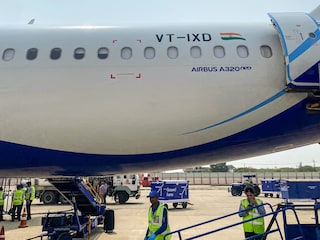
A global software recall across Airbus’s A320 family triggered widespread flight delays over the weekend after the aircraft manufacturer warned on 29 November that intense solar radiation could corrupt data vital to flight-control systems.
The warning followed an incident earlier in November in which an A320 experienced a brief uncommanded pitch-down while the autopilot remained engaged. Airbus said its analysis linked the risk to a faulty version of the elevator aileron computer, or ELAC.
What happened with the Airbus A320?
On 28 November, the company issued an Alert Operators Transmission calling for immediate precautionary action and said these instructions would form the basis of an Emergency Airworthiness Directive from the European Union Aviation Safety Agency (EASA). EASA issued that emergency directive the same day, effective 29 November, stating that an A320 had recently experienced “an uncommanded and limited pitch-down event” and that a malfunction of a specific ELAC flight-control computer was a “possible contributing factor”.The directive warned that, if uncorrected, the condition “could lead in the worst-case scenario to an uncommanded elevator movement that may result in exceeding the aircraft’s structural capability.” It required operators to replace or modify the affected ELAC “before next flight”.
The global impact was immediate. Airlines began rolling software back to earlier stable versions — a fix that typically required about two hours, according to media reports. Airbus later said on 1 December: “Out of a total number of around 6,000 aircraft potentially impacted, the vast majority have now received the necessary modifications.”
What triggered the alert?
The chain of events began on 30 October, when a JetBlue A320 suffered an abrupt pitch-down linked to the ELAC system. The suspected mechanism was a radiation-induced Single Event Upset, in which cosmic or solar radiation temporarily alters microelectronic states in avionics hardware.To contain the risk, Airbus mandated software updates for most aircraft and hardware replacement for around 100 aircraft worldwide.
Airlines impacted globally
More than 11,000 A320-family jets are in service worldwide. Over 3,000 of them were in the air at the time Airbus issued its bulletin, Reuters reported. With repair shops already strained by ongoing engine-maintenance delays and labour shortages, the sudden need to ground and update thousands of aircraft added further stress to global airline operations.The recall affected operations during a peak travel period, including the Thanksgiving weekend in the United States. American Airlines said on 29 November that the fix would take “about two hours” per aircraft and that updates “should be completed for the overwhelming majority on Friday.” It confirmed some delays but said safety would remain its “overriding priority.”
In Japan, All Nippon Airways cancelled 65 domestic flights for Saturday and warned of further possible cancellations on Sunday.
Read More
British Airways said only three aircraft required the update. EasyJet said there might be changes to its flying schedule and promised to inform passengers. Lufthansa said most updates were completed overnight into Saturday morning and added: “No Lufthansa Group Airlines flights are expected to be cancelled due to the current situation, but there may be minor delays over the weekend.” SAS reported that flights were operating normally after overnight work.
Colombian carrier Avianca said more than 70 percent of its fleet was affected and temporarily closed ticket sales through 8 December.
India grounds its A320 fleet
On 29 November, the Directorate General of Civil Aviation issued a nationwide grounding order, saying, “No aircraft should continue in service without meeting the required safety standards.” The regulator instructed airlines to halt operations of the A318, A319, A320 and A321 until mandated updates were completed.For most passengers, the impact was concentrated between Friday evening and Sunday afternoon; however, IndiGo and Air India reported no cancellations.
The DGCA added that aircraft would need to be “grounded briefly to install the software fix” and confirmed that around 338 aircraft in India were affected across IndiGo, Air India and Air India Express.
By the afternoon of 30 November, the DGCA announced that “the software upgrade has been completed in 323 out of 338 affected aircraft.” IndiGo had achieved full compliance across its 200 aircraft. Air India had completed updates on 100 of 113 aircraft, and Air India Express on 23 of 25.
This marked the second technical glitch to significantly impact flights in India that month. A technical issue in Delhi Airport’s Automatic Message Switching System on 6 November caused widespread disruption, delaying nearly 800 flights as air-traffic controllers switched to manual processing of flight-plan data. At least 20 flights were cancelled during the outage, which affected both domestic and international operations. The Airports Authority of India restored the system by the evening of 8 November, allowing normal operations to resume. Following the incident, the government directed the AAI to fast-track replacement of the ageing AMSS with a modern Aeronautical Message Handling System within three months.
Solar-radiation risks
The suspected cause of both the JetBlue incident and the precautionary grounding — the Single Event Upset — is a known but rare hazard in aviation. It occurs when cosmic or solar radiation changes the state of a microelectronic component. While redundancy is built into flight-control systems, SEUs can bypass safeguards under specific conditions. Such events were also believed to be a contributing factor in the Qantas Flight 72 incident of 7 October 2008.Industry safety frameworks require that hazards such as SEUs be designed out of critical systems. EASA’s certification standard CS-25.1309 and the FAA’s FAR 25.1309 demand that designers identify environmental failure modes and ensure catastrophic failures are extremely improbable. Software must comply with DO-178C, which governs verification and validation of all flight-critical logic.
Airbus said in its 28 November update that it was working “to implement the available software and hardware protection, and ensure the fleet is safe to fly.”
Where do things stand now?
By Monday, 1 December, global disruptions had largely tapered off. Airbus said that fewer than 100 aircraft were still awaiting updates and apologised again, saying, “Airbus apologises for any challenges and delays caused to passengers and airlines… and thanks its customers and the authorities for their support.”With EASA directives now met by most carriers — including near-total compliance in India — flight schedules are expected to normalise. The incident, however, has reinforced the importance of addressing environmental hazards such as solar radiation proactively and maintaining rigorous oversight of complex flight-control systems.