How India rewrote the playbook in 11 days
From trade deals with the US and EU to a reform-minded Budget and a measured RBI, India aligned trade, fiscal and monetary policies
By
Prefer us on GoogleLast Updated: Feb 24, 2026, 14:06 IST4 min
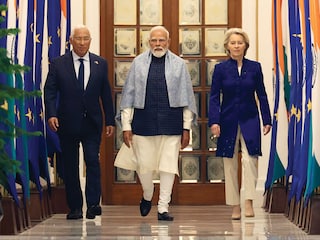
Heading into this year’s Budget on February 1, India was hemmed in by a tough external scenario, curdled beyond recognition by US President Donald Trump’s decision to raise tariffs on Indian goods to a level several times higher than before. The first relief came in the form of a long-awaited trade deal with the European Union (EU) on January 27, which was followed by Trump’s decision to lower tariffs, which he announced on social media on the night of February 2. The previous day, Finance Minister Nirmala Sitharaman presented a Budget that takes forward the reforms push and seeks to build domestic capacities. And on February 6, the Reserve Bank of India (RBI), though it did not lower interest rates further—which it was not expected to—said the Indian economy was “in a sweet spot” with strong economic growth and low inflation.
In a matter of 11 days, India began to look like a very different country to do business with and invest in. Those 11 days can one day become a case study in how macroeconomic scenario can quickly turn when politics, economics and pragmatism align.
Here is where India was before January 27: There was no trade deal with the EU after years of negotiations, the country was locked in an attritional standoff with Washington DC, and it was about to present a Budget with little elbow room given what had already been done outside the Budget exercise, the biggest of them being the GST cuts effective September 22 last year. Monetary policy, too, looked tapped out after 125 basis points of rate cuts since the easing cycle started in February 2025. In effect, the government appeared boxed in.
It stepped out of the box in those 11 days.
With this, New Delhi showed it was ready to close deals—fast. For Europe, it was an acknowledgment that India now sat closer to the centre of global supply chains.
What stood out weren’t the details of the interim trade framework but the willingness to do an imperfect deal now and keep working on it later. India was also negotiating from a position of confidence having just signed a deal with the EU.
The result was not a sweeping bilateral agreement, but a pragmatic truce. The pragmatism was underlined further when the revised factsheet of the deal removed a reference to pulses and said India “intends to buy” US goods worth $500 billion. An earlier draft had said “committed”.
The Union Budget was measured in its tone. It did not have eye-popping giveaways and, instead, focussed on getting the job done.
The focus was on future-oriented sectors such as data centres even as infrastructure spending continued to do the heavy lifting on growth. It signalled that if India wanted deeper trade relationships, it needed domestic capacity that can scale, compete and absorb global capital. This was less about shielding local industry and more about equipping it.
At its monetary policy meeting, the RBI struck a careful balance. “External headwinds had intensified though the successful completion of trade deals augurs well for the economic outlook,” Governor Sanjay Malhotra said.
The RBI stayed alert to inflation risks while acknowledging a global environment defined by uneven growth, volatile capital flows and policy divergence among major economies. The central bank’s pause signalled confidence in India’s growth.
The past few days were an example of how trade, fiscal and monetary policy must speak the same language. In an era of unprecedented global uncertainty, that alignment itself is the most valuable signal.
First Published: Feb 24, 2026, 14:16
Subscribe Now