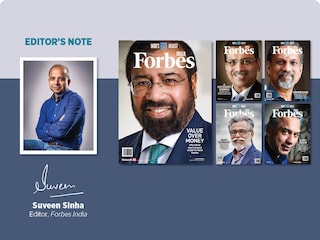
Fifteen years ago, the Munjals of the Hero Group parted ways with Japan’s Honda Motor Co and Rama Prasad Goenka divided his RPG Group between his two sons, Harsh and Sanjiv. There was no link between the two developments. However, if you look at them in unison, you will find a common thread between them that can be heartwarming.
The RPG Group settlement has become an example of how family businesses should manage succession. It is a matter not to be taken lightly. Succession has plagued family businesses around the world. A research paper on mckinsey.com, dated August 2, 2024, lists five points that differentiate top performing family-owned businesses from others. “Effective transition from one generation to the next” is listed at number two, right behind “core operational excellence”. Yet, according to a Grant Thornton article of March 2023, though 80 percent of Indian businesses are family-owned, only 21 percent have a succession plan in place.
RPG stands out for the way the patriarch, who is part of Indian business folklore for being the original “takeover tycoon”, thought it wise to split the empire between his sons. Harsh Goenka, as he tells Samreen Wani in a conversation over home-made khandvi and cheese toast, knew nothing about the plan. He was enjoying a holiday in a quiet village in Switzerland when a fax arrived informing him about his father’s decision. Since then, though Sanjiv has carved out a distinct identity, rebranding his business as RP-Sanjiv Goenka Group in 2011, both the brothers have thrived.
The Munjals of Hero faced no smaller odds when they ended their 27-year partnership with the Japanese automobile giant. In the 1990s, as Indian industry was opened up for foreign participation, several multinational corporations (MNCs) headed to our shores and forged joint ventures with Indian companies. In some cases, it was because the regulation did not allow 100 percent foreign equity. In others, it was because the MNCs needed an Indian partner to navigate the lay of the land. After the turn of the century, as the MNCs began to believe they had understood India, those joint ventures began to unravel. Honda itself walked out of its venture with Pune-based Kinetic and took complete control of its car venture with the Siddharth Shriram Group. But it continued its partnership with the Munjals despite setting up a wholly-owned subsidiary in India that competed with Hero Honda.
Read More
That, as Amrit Raj points out, made the 2010 divorce all the more poignant and sowed the seeds of doubt in the minds of industry observers about Hero’s future. However, defying all odds, Hero MotoCorp, as the group rebranded itself in 2011, remains the world’s largest manufacturer of two-wheelers. That is a story of how Hero’s magic has been kept alive by Executive Chairman Pawan Munjal.
Another heartwarming development in the last few years is that India’s businessmen have come to get the respect they always deserved for being wealth creators and employment generators. Of course, money means different things to different people. To some, it is a means to make their ends meet. To some, it can be the path to acquiring things and experiences they crave. And to some others, it can be a validation of their worth.
Harsh Goenka thinks differently. “A truly rich person is one who is very happy and who lives based on his moral conscience,” he says.
What also matters is that India, as a society, has begun to accept wealth as a virtue and wealth creators as heroes.
Suveen SinhaEditor, Forbes IndiaEmail: suveen.sinha@nw18.comX ID: @suveensinha