PSLV-C62 encounters an anomaly during third-stage flight
ISRO’s Chairman confirmed that late third stage roll anomalies and “increased disturbances” caused a flight path deviation
By Samreen Wani
Last Updated: Jan 12, 2026, 13:12 IST2 min
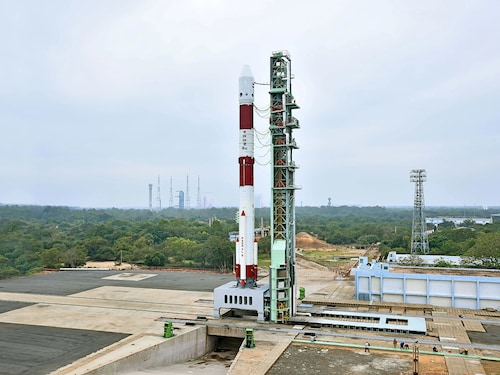
ISRO confirmed the PSLV-C62 mission experienced anomalies during the third stage's final phase. The mission began with liftoff at 10:18 IST from Sriharikota, but India’s first launch of 2026 encountered a "disturbances" during the third stage (PS3) operation. The rocket was carrying a diverse set of strategic and commercial payloads, most significantly DRDO's Earth observation satellite Anvesha or EOS-N1.
ISRO Chairman Dr. V. Narayanan confirmed that "increased disturbances" and an anomaly in roll rates occurred toward the end of the third stage, causing a deviation in the flight path. While the first two stages performed as expected, the trajectory shift meant the vehicle could not achieve the required velocity for orbital injection. Put simply, the rocket failed to generate the speed required to successfully deposit the 16 onboard satellites, including the strategically significant Anvesha, into their designated orbits.
ISRO has not yet disclosed the specific nature of the third-stage malfunction or confirmed whether any payloads were lost.
The NewSpace India Limited (NSIL) had organised the launch for several domestic and international partners, including Hyderabad’s Dhruva Space and Spanish startup Orbital Paradigm. A previous mission in 2025, PSLV-C61, was unsuccessful during the third stage, reportedly due to a "drop in pressure within a critical part of the rocket".
The stated intent of the mission was to deploy multiple payloads into a sun-synchronous orbit. A commercially dense mission operated by NewSpace India Limited (NSIL), the success of PSLV-C62 would have underscored India’s growing dual-use space strategy, blending national security with private-sector commercialisation.
The primary passenger for this 64th flight of the PSLV was EOS-N1—also known as Anvesha—an Earth observation satellite developed for the Defence Research and Development Organisation (DRDO).
A mini-satellite, EOS-N1 is equipped with advanced hyperspectral imaging technology. Unlike standard cameras that see only primary colours, hyperspectral sensors capture hundreds of light bands across the electromagnetic spectrum. For the defence sector, this means the ability to see through camouflage, identify material compositions on the ground, and monitor border activities with unprecedented precision.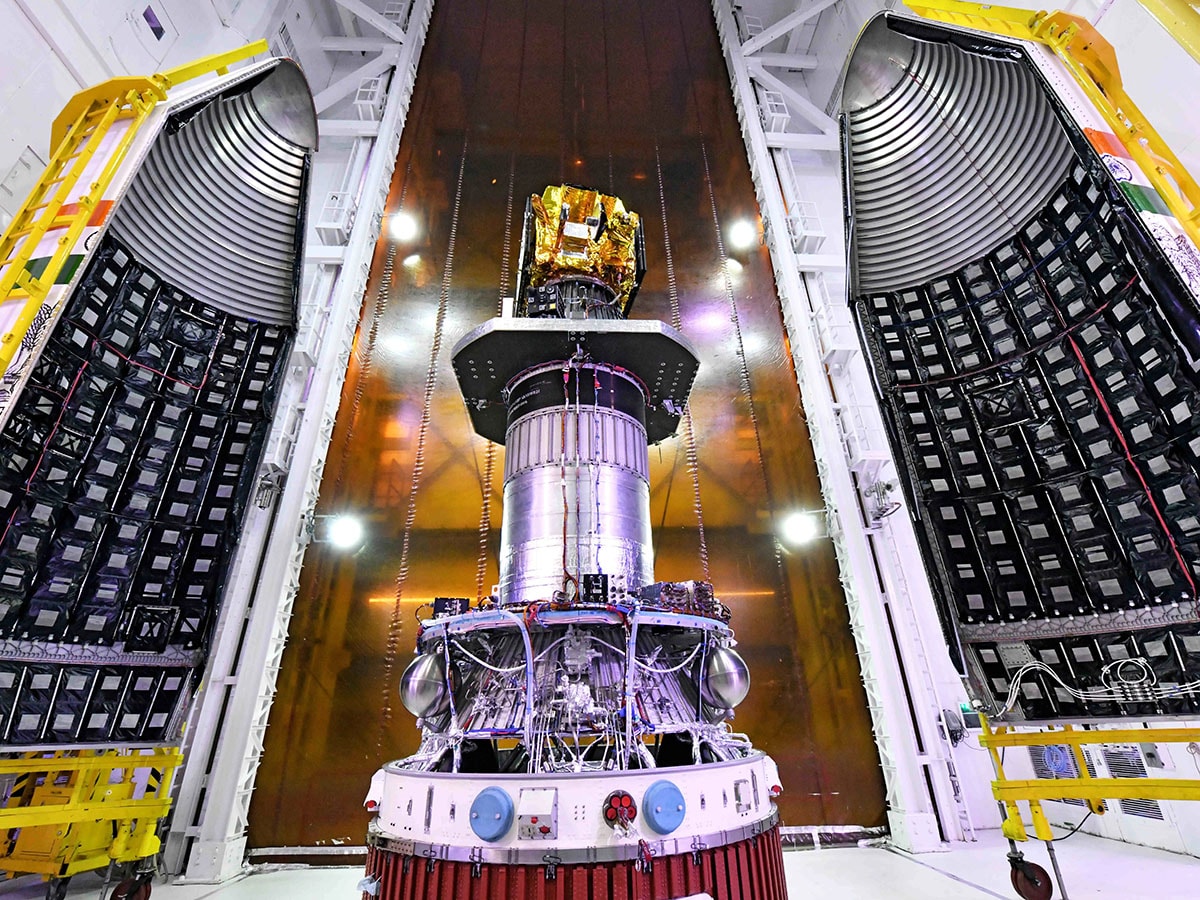
Beyond the primary DRDO payload, the mission’s 15 startup co-passengers highlighted a maturing Indian space industry. Here is a look at some startup payloads aboard ISRO’s workhorse launch vehicle:
1. OrbitAid’s AayulSat: Bengaluru-based OrbitAID was launching a satellite designed to demonstrate on-orbit fuelling. This technology could extend the lifespan of assets that currently “die” once they run out of propellant.
2. Dhruva Space’s Polar Access-1 (PA-1) mission: This full-stack program enabled 10 missions across six Indian states and two nations. Utilising in-house platforms and ground-station services, it supports disaster communication, environment monitoring, and academic research, institutionalising long-term space capability.
3. Orbital Paradigm’s Kestrel Initial Demonstrator (KID): The Spanish startup Orbital Paradigm’s Kestrel Initial Demonstrator (KID) was a small-scale prototype of a re-entry capsule. As the final co-passenger scheduled for deployment, KID was intended to separate last before performing a controlled atmospheric re-entry, culminating in a precision splashdown in the South Pacific Ocean.
4. International Roster: The flight also carried a diverse group of international satellites, including the Thailand-UK jointly built Earth observation satellite THEOS-2A, a technology demonstration satellite from a Nepal university, and several IoT-focused satellites from Brazil.
The anomalies in PSLV-C62 is the second consecutive PSLV loss after May 2025’s C61 mission—a sobering double-fault for India’s space sector. For a rocket that serves as the bedrock of India’s reputation for low-cost, high-reliability space access, these back-to-back third-stage anomalies threaten to rattle the global commercial market. The loss of Anvesha and 15 private payloads stalls the momentum of the domestic private sector, besides being a significant financial hit.
First Published: Jan 12, 2026, 13:43
Subscribe Now