Being humane: How business scions are furthering the legacy of giving
An emerging generation of donors, driven by strategy and impact, is altering the nature of philanthropy
By
Prefer us on GoogleLast Updated: Dec 21, 2018, 11:51 IST13 min
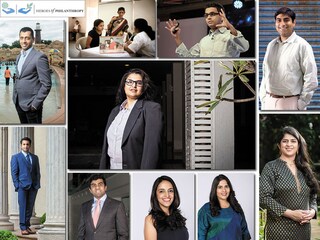
India is in the midst of one of the largest wealth transfers in history,” says Deval Sanghavi, partner and co-founder at Dasra, an organisation that helps donors better strategise their philanthropy. Some ₹12,800 crore, or $128 billion, will be transferred from one generation to the next in the coming decade, he says, citing research by Karvy Private Wealth. Much of this wealth has already been directed towards philanthropy. Private donations accounted for 32 percent of the total contributions to the development sector in 2016, up from 17 percent in 2011, according to consultancy Bain.
It’s a trend that will only grow stronger, as the younger generation to whom wealth is being transferred—along with responsibility and decision-making powers—is “socially conscious”, says Sanghavi. They’re informed, aware and want to make a difference to the world’s knottiest problems. “It’s built in their DNA.”
To plug that gap she set up The Lighthouse Project, a not-for-profit that pairs volunteers with children from under-resourced communities aged 13 and above, to mentor, guide and shape their futures. “Going from education to employment is often a challenge if you don’t have the right guidance,” says Screwvala. “We’re hoping to change that.” Since starting out in 2013, the Mumbai-based organisation boasts 700 mentors and 700 mentees who meet twice every month over one academic year.
“It’s not just about cheque-writing for them [next-gen philanthropists],” notes Hari Menon, director at the Bill and Melinda Gates Foundation, where he oversees global philanthropy strategy, particularly focusing on India and the Middle East. “They’re eager to roll up their sleeves and devote their time, talent and expertise to the causes they care about.” *****
The focus is more long-term, more systemic and more nuanced. Consider the Murty Classical Library of India at Harvard University that alumnus Rohan Murty set up in 2010 with a $5.2 million bequest. “My father [Infosys Founder Narayana Murthy] and I would often debate… he’s interested in solving problems that are relevant today and for the future—creating jobs, education, etc. But I look at longer-term horizons and also what we can learn from the past for a better future,” says the 35-year-old. “I’m interested in systems that produce and sustain knowledge and make it accessible and mainstream. Look at the history of mankind,” he argues, “Buildings and monuments fall away, powerful people come and go, but what has withstood the sands of time is knowledge. It influences mankind’s thought.” So also with Marico Founder Harsh Mariwala’s daughter Rajvi Mariwala, 38. A canine behaviourist, she set up the Mariwala Health Initiative (MHI) in 2015 to provide funding and capacity-building support to NGOs working in the area of mental health. “It’s an area that has been neglected for too long because of the stigma around it,” she says. But the sheer numbers of those silently suffering from mental illnesses—150 million Indians were in need of active interventions, according to the 2016 National Mental Health Survey—as well as conversations with service providers, beneficiaries and experts in the field, convinced her of the need for a “rights-based approach” to mental health.
While the ‘what’ of the next-generation’s idea of philanthropy differs, the ‘why’ of their philanthropy is not so different from that of their predecessors. Hard facts and numbers matter, but not as much as the little differences they’re able to make. “When you see a student’s eyes light up after getting admission in his dream college, or you notice how her confidence has been upped because of a little mentoring, it makes everything worth it,” smiles Screwvala.
*****
When Jeff Bezos announced that he would give $2 billion of his fortune to tackle homelessness and improve pre-school education in the US, he drew parallels with his ecommerce business. “We’ll use the same set of principles that have driven Amazon… most important among those will be genuine, intense customer obsession,” he said in a statement in September. “The child will be the customer.”
But the idea of applying entrepreneurial chops to solve social problems is hardly new. Andrew Carnegie presented the idea back in 1889 in an essay titled ‘The Gospel of Wealth’. He wrote that “surplus revenues” amassed by the super-rich should be looked upon as “trust funds”.
“The man of wealth thus becoming the sole agent and trustee for his poorer brethren, bringing to their service his superior wisdom, experience and ability to administer—doing for them better than they would or could do for themselves,” noted the industrialist who is estimated to have parted with 90 percent of his wealth to build schools, establish libraries and fund scientific research, by the time he died in 1919.
However, Screwvala sounds caution. Applying the rigour of a business to a not-for-profit is good, she says, but “scale” for example, is not the core objective of the Lighthouse Project. “My father for instance, is ocused on scale Swades [Ronnie and Zarina Screwvala’s foundation that helps lift rural Indians out of poverty] has done tremendous work across large geographies in rural Maharastra. However, we have chosen to focus more on the depth and personal equation of each relationship, since mentoring is a long term process that involves changing mindsets and behavioural patterns.”
*****
Wedged between local stores, dumpsters and crushing traffic lies the entrance to Jijamata Nagar, a sprawling slum in Mumbai’s Worli. Shacks, often little more than blue tarpaulin sheets strung over metal struts, flank the alleyways that lead up to Shabina Khan’s doorstep.
A slight 26-year-old, she parts the floral blue curtain that acts as a door to her home and flashes a smile. “mMitra has really helped me,” she says in Hindi, holding her toddler on her hip while her two older children frolic about. “From the time I was three months pregnant with this one,” she says, lurching her baby forward, “I’ve been listening to their calls and following their advice. I wasn’t able to for my first two children and you can see the difference. This one is more active and has stronger immunity.”
“I was looking for ways to help out and was sector agnostic,” says Aparna Piramal Raje, 42, “when the folks at Dasra introduced me to Armman.” Daughter of VIP Industries’ Chairman Dilip Piramal and business historian Gita Piramal, Raje did her homework, met with Dr Aparna Hegde, the NGO’s founder, and spoke with experts in the field, all through Dasra. It is here—in the ‘how’—that today’s philanthropists mark a clear departure from the past. Younger philanthropists readily engage in partnerships—with their peers, service providers or organisations like Dasra—to amplify their work. In Raje’s case, once she was convinced about Armman, she decided to enter one of Dasra’s “giving circles”—a grouping of 10 philanthropists who donate ₹10 lakh annually for a period of three years and collectively decide on disbursements to an NGO. She drummed up support from her network of neighbours and formed her own consortium, a subset of a circle, in 2017. Today their monies are spent not just to scale up the mMitra call service, but also to build and strengthen capacity at Armman.
Meanwhile, newer avenues like impact investing are opening up. A form of investing that seeks to generate both a social benefit as well as a meaningful financial return, it is still “a nascent area”, says Yatin Shah, co-founder and executive director at IIFL Investment Managers. “But it will grow in time to come. Our clients’ children are asking questions and exploring ways to give effectively and meaningfully,” he adds.
As the philanthropic landscape evolves, one constant remains: “For all the talk about giving, I actually get so much back in terms of intellectual stimulation, learning, fulfilment and pure joy,” says Raje.
That’s a benefit that can’t be measured.
First Published: Dec 21, 2018, 11:51
Subscribe Now