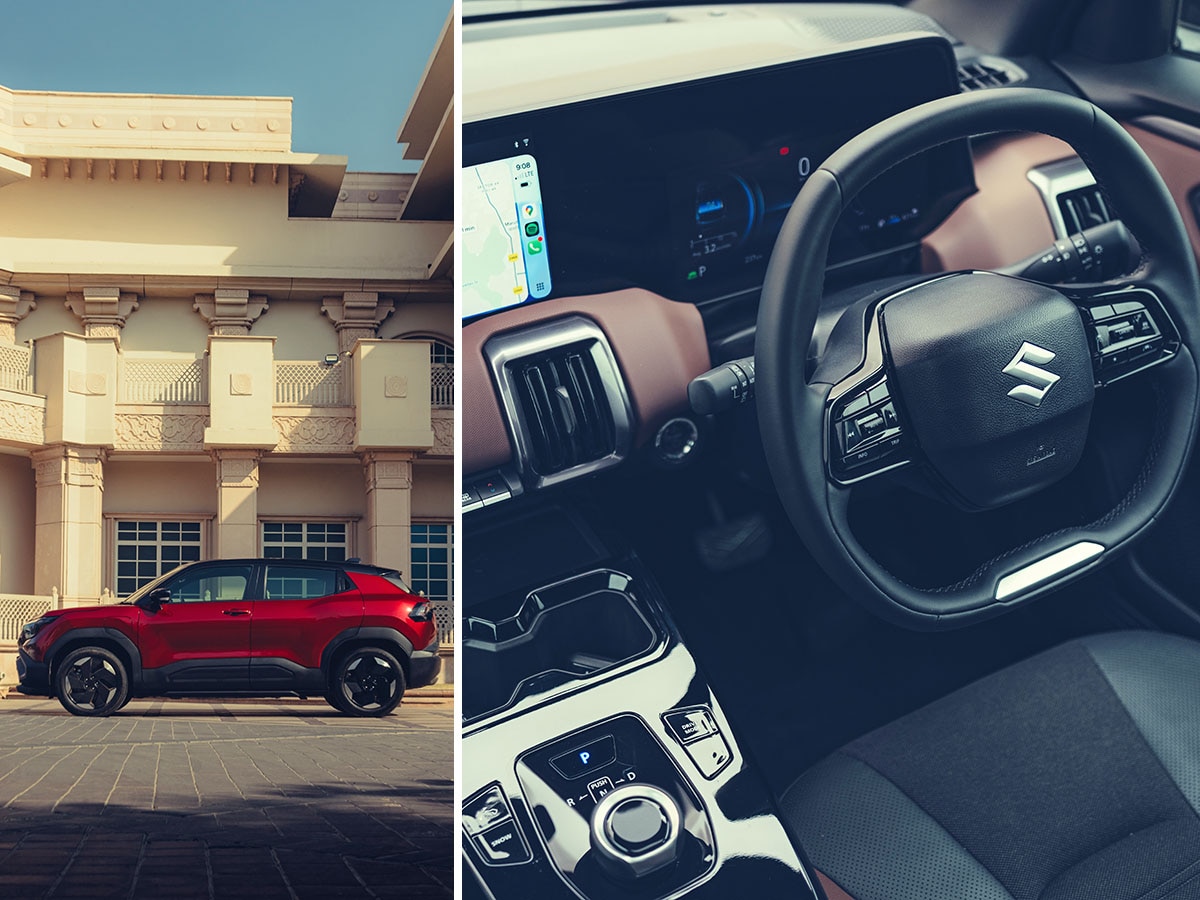
Maruti Suzuki on Tuesday said it has started deliveries of its first battery electric model, the eVitara, positioning it as the lowest-priced option in India’s midsize electric SUV segment. Photo Courtesy by Maruti Suzuki
After flirting with an electric vehicle (EV) debut for more than a year, Maruti Suzuki on Tuesday said it has started deliveries of its first battery electric model, the eVitara, positioning it as the lowest-priced option in India’s midsize electric SUV segment. With an introductory base price of Rs10.99 lakh under a battery-as-a-service (BaaS) plan and a running battery EMI of Rs3.99 per kilometre, India’s largest carmaker has chosen to compete not just on brand heft but also on affordability.
The price is introductory and only valid till March 31. The full price list for all models will be launched in some time, said Partho Banerjee, senior executive officer for marketing & sales at Maruti Suzuki, at a media call on Tuesday.
Assuming an average charging cost of Rs 1 per kilometre, the eVitara would cost about Rs 18.97 lakh to own and run over 1,60,000 kilometres before other costs like insurance, maintenance and financing.
The company is pairing the pricing structure with paid extended warranty coverage aimed at easing concerns over long-term ownership. The eVitara is covered for eight years or 1,60,000 kilometres, whichever comes earlier.
Maruti said every e Vitara buyer will receive a complimentary 7.4-kilowatt AC wall-box charger with installation. The carmaker is also offering one year of free charging at its dealer locations for vehicles sold till March 31.
The development is significant for the EV market where penetration remains low—at around 4 percent in 2025. With more than 40 percent share of the passenger vehicle market, Maruti Suzuki has the reach to pull EVs out of their early-adopter niche and into the mainstream.
The eVitara was unveiled in January 2025 and has already been selling in export markets, but the launch in India has been delayed. Executives have said the delay was intentional. “We’re just not launching a product. We’re launching an ecosystem,” said Banerjee.
Defending Maruti’s late EV entry, Banerjee had earlier said Maruti chose to first build out charging infrastructure before launching domestically, wary of repeating early missteps seen elsewhere in the EV market.
That groundwork was unveiled in December, when the carmaker announced tie-ups with 13 charging-network operators, more than 2,000 charging points across its dealer network and an ambition to help enable over 100,000 public chargers by 2030.
The e Vitara has secured a five-star Bharat NCAP rating for both adult and child occupant protection, with seven airbags offered as standard across all variants. It offers a driving range of 543 kilometres on a 61 kWh battery pack. It also comes with a buyback plan.
On pricing, eVitara is disruptive. It undercuts most rivals in the midsize e-SUV segment. The closest competitor is MG ZS EV, which starts from about Rs13 lakh under its own BaaS model, with battery usage charges beginning at roughly Rs4.5 per kilometre. Other mainstream offerings sit significantly higher: Hyundai Creta Electric starts at Rs18.02 lakh, Tata Curvv EV at an introductory price of Rs17.49 lakh, and Mahindra BE 6 at Rs18.9 lakh. An already crowded field will tighten further with the expected launch of the Tata Sierra EV later this year.
The e Vitara has secured a five-star Bharat NCAP rating for both adult and child occupant protection, with seven airbags offered as standard across all variants. Photo courtesy by Maruti Suzuki
MG pioneered the BaaS model in India that lowers upfront prices. However, only around 15 percent of its sales come from this model.
Analysts say Maruti’s scale could change the market’s trajectory. “Maruti’s entry into the EV segment is likely to strengthen consumer confidence in EVs and increase overall acceptance of the category in India,” said Som Kapoor, partner at EY India, specialising in automotive consulting. “With a market leader stepping in, the industry could approach an inflection point where the total cost of ownership for EVs begins to fall, supporting long-term growth of the ecosystem.”
“When a company with around 40 percent market share launches new products in a category, it expands customer choice and helps accelerate broader adoption,” he added.
Production constraints
Maruti has a production line in Gujarat which has a capacity of 1,00,00 vehicles. “But we have to cater to the demand of our OEMs, export market needs and also the demand for Fronx, which also has a huge waiting period,” said Banerjee.
That constraint would ease after July when Maruti expands the line capacity.