Since its inception in 1984, Titan has transformed from a watch manufacturer into a lifestyle conglomerate, expanding into diverse categories like jewellery, watches, eyewear, fragrances, handbags and ethic wear.
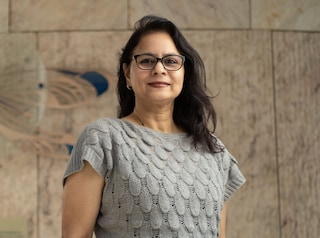
Central to this transformation is the Design Excellence Centre led by Chief Design Officer Revathi Kant who joined Titan in 1991, when she was 22. After spending a decade in marketing functions, including serving as the marketing head for West Asia and Africa, she was approached to lead Titan’s design studio. She started with heading design for the jewellery division, and then across all categories—under her leadership, design has shifted from a support function to a core business strategy, ensuring a balance between aesthetics and profitability. Edited excerpts from an interview:
Since we spoke last in 2019, Covid was the biggest turning point. Coming out of Covid really stood out for us. We were seen as a company with a heart. We supported our vendors, karigars (craftspeople), our franchisee partners through the bad patch.
Second, all of us were forced to become digital-savvy with the digital business becoming important for the organisation. For example, in Tanishq, we did some Rs10,000 crore business just online. At some point, we would have thought women would never buy jewellery online, because we felt it was a touch and feel business. A lot of myths got rewritten.
Consumer-centricity, assessing the opportunities where we can bring organised play, and what businesses we can evolve into became an important focus area for us. We have watches, jewellery, eyewear, accessories, and ethnic wear. In each of these businesses, we have found sub-segments and come up with newer brands. We launched a women’s handbags brand called IRTH in 2022, and our latest kid in the block is a lab-grown diamond brand called beYon, which we launched recently.
In our watches business, we focussed on premiumisation. For the first time, we launched our own in-house tourbillon movement in our limited-edition watch called Jalsa, which, for the first time, got represented in the Grand Prix d'Horlogerie de Genève, 2025 (GPHG), which is the watch industry’s most prestigious annual award ceremony. Even though Titan is a mainstream brand, having achieved an in-house flying tourbillon movement is really pushing the envelope for us.
The Titan Jalsa, a limited-edition timepiece painted by miniature artist Padma Shri Shakir AliPhoto Courtesy Titan
Q. Can you elaborate on the ‘flying tourbillon movement’ and talk about the design of the Jalsa watch?
Tourbillion is the most respected complications in high-end watchmaking. It’s entirely mechanical, not run by a battery. As a brand, we have become a major actor in the somewhat democratised quartz movement. But when you focus on premiumisation, the calibre/movement—automatics and mechanicals—become important.
For us, launching Jalsa was two years of hard work. So, we had to launch it in a manner, which was also truly spectacular. The design team decided the best way to showcase it would be to talk about India's art, culture, and heritage. So, we chose the Hawa Mahal in Jaipur, which coincidentally was celebrating 225 years last year, as the theme. The hand painted marble dial-- miniature artistry envisioned by Padmashri Shakir Ali—is a masterpiece. Our team designed a sapphire magnifier counterpoise on the minute hand, an 18-carat rose gold case, the movement/calibre visible through a sapphire crystal caseback. We brought in red agate because it represents Hawa Mahal's colour. To showcase the details of the miniature painting using a brush tipped with a single strand of squirrel hair, the second’s hand had a magnifying glass attached to it. That was a limited edition of 10 watches priced at Rs 40 lakh each.
Tanishq Diamonds’ collection Desert Diamonds complemented Rahul Mishra's collection at Paris Haute Couture WeekPhoto Courtesy Titan
Q. Titan has a large footprint in the precious jewellery space with a five-brand portfolio. Can you talk about their strategic positioning and how you are innovating in response to rising gold prices?
Our flagship jewellery brand is Tanishq. We have Mia [lightweight, trendy jewellery for daily wear] which is growing at a fast pace—it will be a Rs2000 crore brand by end of this year. The footprint of Zoya, our premium diamond brand, has grown from two to 10 stores. Fourth is CaratLane that has been fully acquired by Titan. The most recent acquisition is Damas, a Middle Eastern jeweller.
Rising gold prices have led to a change in consumer behaviour in India. Traditionally, 22 carat gold was preferred, but there has been a steady rise in the demand for 18 carat jewellery because of its perceived better value for money, even though it is difficult to create traditional designs because of its hardness compared to the softer 22 carat gold. In studded jewellery, consumers are willing to settle for even 14 carat gold because the gold is not visible. So we are trying to minimise the use of gold by lowering the karatage and by creating designs in CAD (computer-aided design).
And we are now bringing in regional focus. While Tanishq is an overarching pan-India brand, consumers in different geographies also seek something local, which caters to their taste, but with the differentiation that Tanishq is known for.
As you reach out to discerning consumers, collaborations with designers become important. Recently, we collaborated with fashion designer Rahul Mishra at the Paris Haute Couture Week. Jewellery created by us complemented his garments on the runway. It gave us good mileage. Year before last we had partnered with Tarun Tahiliani for Rivaah, a specialised bridal jewellery brand in gold and diamonds.
Q. How do you manage a multidisciplinary team in the Design Excellence Centre to ensure distinct brand identities?
The Design Excellence Centre is a separate vertical now, while, in the organisation, it's a horizontal because we cater to every business. All the heads of design for each business report to me and I report to the managing director. Design has finally got its place which I was trying to bring for many years. Currently, the team consists of 154 members, including designers, design trend researchers, engineers, and technical designers, who convert our design concepts into CAD with technical detailing. Then we also have product development. So, it is a multidisciplinary team and cross-pollination of talent is really the key.
A customer buying a Raga brand may simultaneously consider Tanishq jewellery, IRTH leather bags, or fragrances. What makes it interesting for me is connecting the dots, understanding the consumer preferences and identifying the offerings going forward.
A 19 piece limited edition collection designed by British designer Alice Cicolini in collaboration with Indian jewellery brand ZoyaPhoto Courtesy Titan
Q. Can you highlight a few projects that demonstrate Titan’s approach to collaboration to introduce new aesthetics?
For us, design is not just about what we create in our own studio, it's also about finding talent outside. Last year, we collaborated with the British designer Alice Cicolini to bring out a limited-edition collection for Zoya. Inspired by Lhasa’s cherry blossoms, the monasteries, and the gongs, she offered a British point of view on minakari (enamel work) but with a take on Indian aesthetics. Using uncut diamonds, pink sapphires and bringing in those pastel enamel hues, the jewellery acquired a unique look and feel. Cicolini’s approach was novel yet involved the Indian karigari.
For IRTH bags, right from the start, we were clear that the world did not need just another handbag, so we focussed on common consumer pain points like shoulder pain from heavy loads and a lack of internal organisation. We prioritised ergonomics and utility, designing specific load-distributing straps that spread weight uniformly across the shoulders to reduce strain while also incorporating multiple pockets to cater to women’s liking.
Q. The launch of Titan’s lab-grown diamond brand beYon came as a surprise. How did this come about and how do you approach lab-grown diamonds differently than natural diamonds in terms of design?
As you rightly said, everybody was surprised and post the launch, we got many reactions from the industry that now that we have set the precedent, the rest will follow. Titan has legitimised the market.
Today, the market is full of startups. Every other store is a jewellery [diamond] store—whether natural or lab-grown. Women are evolving, they want to look good, they want to wear jewellery, and affordability is a case in point. But, for us, we hold a huge portfolio of natural diamonds which we will continue to because we are a jeweller. We are very clear that, at a strategic level, they are two different categories—therefore, beYon is going to play in the space of fashion, quick accessorising and everyday jewellery. We are not creating beYon to compete with our natural space at all. So yes, it is a tightrope walk for us to ensure that the design language remains distinct. Our focus in the product portfolio itself will be on the lower price segment, and it will have its journey via just one store.
Q. What about the danger of cannibalising your own brand of natural diamonds, because lab-growns are cheaper?
As a consumer, you can consume either of the two. If you were to look at the pearl market, when the cultured pearls came in, they democratised the scene. But the real pearl market, while niche, is still precious. Today, even though we launched beYon, those who want natural diamonds will always buy that. Other brands are entering the space, so the landscape is changing. Sometimes you have to take the plunge and explore the concept to see what transpires.
Q. What are the design trends that are shaping products and retail storytelling at Titan?
There is a significant shift in consumer preferences in India towards meaningful jewellery, moving beyond mere aesthetics to emotional connections. So, we have looked at five broad trends.
The first is cultural pride, reflected in collections like Mriganka, which integrates traditional artistry such as Kundan and Meenakari with contemporary designs. The second is ‘curiosity’—people are curious when it comes to the outer space and the deep ocean, exemplified by the Stellar men's watch collection, which draws inspiration from cosmic themes. Third is ‘freedom’, the idea of liberating oneself from the cycle of trends and focusing on self-expression. beYon, sits perfectly in that space. Then comes ‘innocence’, the soft aesthetics that influences the Elan jewellery series. Last but not the least is ‘safe’—consumers are seeking comfort in timeless classic pieces that provide a sense of stability.
Q. How is Titan integrating technology, especially AI, in the new products that are being introduced in the market?
For us, the convergence of design and technology is a strategic effort to balance functional utility with aesthetic excellence. In our watch business, we have moved beyond the “dead” look of typical digital faces by developing hybrid smartwatches that feature analogue displays alongside advanced health monitors. This allows users to track parameters like heart rate or Vitamin D levels while wearing a piece that remains a beautiful fashion accessory suitable for any occasion.
In eyewear, our smart glasses for Titan and Fastrack integrate music and phone synchronisation, a technological shift that has even influenced the market's aesthetic towards broader frame designs.
I view AI as a good assistant to boost productivity and efficiency. We use it to render our original sketches quickly, helping brand teams visualise final colours and forms. However, I have instructed my team never to use AI for original creative input or idea generation. Because AI generates content based on existing data, there are serious ethical and plagiarism concerns. For a reputed brand like Titan, every design idea must remain original to ensure full compliance.
Q. What’s the future of design in India?
For the first time in the Budget speech, ‘design’ was spoken about. In my opinion, introducing design at the schools and college level is a great idea because that would help students, schools and colleges to experience what design is all about. Also, the major push for the AVGC (Animation, Visual Effects, Gaming, and Comics) sector to develop India's “orange economy” is another very good initiative, because it's going to get a lot more people into it. There is a huge demand-supply gap in that space. Education and industry must go hand in hand, and if we are investing in the infrastructure, we are certainly going to build a society which is going to be aware of design from an early stage.
What I feel very strongly is that we talk of Make in India but before that it should be ‘Design in India’. So, if you don't build an infrastructure, how is your Make in India alone going to thrive? And with the Make in India initiative, you need product designers who can design for the MSMEs to build an ecosystem in India. In that sense, we are on the right path.