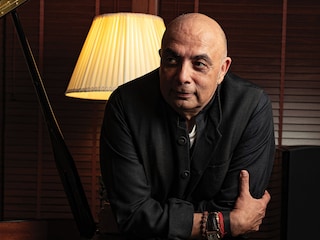
At 24, Tarun Tahiliani was selling oilfield equipment as part of the family business. Then a 1987 cover story in India Today magazine changed everything.
“High fashion is finally out of the closets,” the story read. “In need of a new outfit for tonight’s party? Don’t panic. It’s just down the road at your friendly neighbourhood boutique. Or rather, boutiques. Suddenly, fashion is no longer cocooned in five-star hotel arcades as the private preserve of perfumed socialites. It is now rioting in the streets in dozens of boutiques flourishing hip-to-hip in almost every big city.”
There. Tahiliani found a business case for his passion.
He was always drawn more to the worlds of art and glamour than oil; in fact, he met his wife Sailaja when she walked a Pierre Cardin fashion show in New York during a brief modelling stint. When he read the India Today piece on how Indian fashion was moving away from tailors and dress material to readymade outfits sold in high fashion boutiques, he came away inspired. The couple founded their multi-designer boutique chain, Ensemble, later that year.
Ensemble pioneered India’s luxury retail story in many ways. Today, Tahiliani finds himself on another exciting cusp: Taking his eponymous brand to foreign shores, emblematic of a shift in India’s fashion landscape again.
On this voyage, he will hardly ever be bereft of the company of compatriots.
In the post-Covid years, a wave of corporate investments flooded the luxury fashion ecosystem. Reliance Brands Limited (RBL) invested in Manish Malhotra, Ritu Kumar, Abu Jani Sandeep Khosla and Abraham & Thakore between 2021 and 2022. Aditya Birla Fashion and Retail Limited (ABFRL) added Tarun Tahiliani, Sabyasachi, House of Masaba, and Shantanu and Nikhil to its portfolio around the same time.
Now, many of these leading brands, armed with institutional funding and access to operational knowhow, are exploring international markets. Sabyasachi opened a store in New York’s West Village in 2022. In 2023, Manish Malhotra launched a 5,000 sq ft retail store in Dubai Mall’s Fashion Avenue. Anita Dongre expanded her global footprint to Los Angeles’s storied Beverly Hills in November 2024.
Dongre’s company was one of the first of its kind to seek corporate investment, raising about ₹150 crore from General Atlantic between 2013 and 2015 for a nearly 40 percent stake. Investors have reportedly readied for exits since 2024, and the business is reverting to majority family ownership.
Brand Tarun Tahiliani is set to launch its standalone store in Dubai’s Jumeirah this summer, close to the Burj Al Arab.
“It’s beautiful, it’s big, it’s got high ceilings and it’s over two floors,” Tahiliani tells Forbes India. “I think that fashion and luxury is very much about the experience, not just about the actual act of wearing it. And so now our new stores are being set up with this in mind. It has beautiful salons and a private couture room. It is actually more luxurious, I think, than any of our Indian stores.”
Though corporate investment from the likes of Reliance and Aditya Birla Group have certainly accelerated the growth and scaling possibilities for these brands, a lot of the shift, experts say, is also driven by growing demand.
“Globally, demand is rising for authentic, culturally grounded design narratives—something Indian couture offers uniquely through craftsmanship, textiles and cultural symbolism,” says Anand Ramanathan, partner and consumer industry leader, Deloitte India.
Ramanathan connects the dots via different sources. Deloitte’s October 2025 consumer signals report points to premiumisation, rising affluence in urban clusters and a global appetite for culturally rooted, high-quality products, all of which shape the push for Indian luxury abroad, he says. India Fashion Forum’s January 2026 report says Gen Z’s rising trend-driven purchases and consumers’ growing willingness to pay for quality, cultural relevance and craftsmanship are reshaping the market.
At the same time, consumer confidence remains elevated. Deloitte’s consumer signals report records India’s Financial WellBeing Index at 110.3, well above global averages, indicating stronger spending capability.
“As a result, Indian designers are expanding not simply because capital is available, but because there is finally a well-matched consumer pull in diaspora and non-diaspora markets demanding differentiated fashion propositions,” Ramanathan says. “Funding helps scale operations and retail, but the driver is clear consumer appetite.”
Anurag Mathur, partner-consumer goods and retail, Bain & Company, says this is coupled with a strong “ethnic fashion legitimacy” built on the back of Indian designs and designers getting global acceptance on fashion runways. “Indian designers now regularly show at Paris Haute Couture Week. Gaurav Gupta has dressed Cardi B and Megan Thee Stallion. Even Prada is incorporating Kolhapuri sandals. The world has shifted from seeing India as a manufacturing hub to recognising it as a design powerhouse. When Zendaya wears Rahul Mishra or Beyoncé chooses Gaurav Gupta, it creates viral legitimacy,” he says.
Manish Malhotra’s flagship store in Dubai
Sewing the India Story
India’s fashion market hit $130 billion in 2024, with luxury projected to grow from $4 billion to $7 billion by 2030. “Covid-19 accelerated ecommerce, letting designers test global demand before committing millions to physical retail,” Mathur adds.
Some of the brands leading the charge are two, even three decades old, but, according to them, international expansion began to feel viable only recently. “Indian craft has always been extraordinary: What has changed is visibility, confidence, and how it’s being presented,” says fashion designer and entrepreneur Manish Malhotra. “When craftsmanship meets modern tailoring, global silhouettes and thoughtful storytelling, it becomes timeless. The global consumer doesn’t just want beauty. They want meaning, authenticity and emotion. Indian craft has an abundance of stories, and the world is finally listening.”
Much of this change has been brought about by cultural storytelling and visibility on social media. “Social media has given Indian craft a global voice,” adds fashion designer and entrepreneur Anita Dongre. “A garment can be created in a small village and seen around the world within minutes. That kind of visibility was unthinkable a decade ago. It has helped us tell stories directly, build community and find customers who value authenticity. While it requires responsibility, it has been a powerful tool in expanding our reach across borders.”
It is an exciting time for Indian couture, designers say, but while corporate funding brings the ability to scale and gain visibility, they are mindful that they need to protect the soul of Indian craftsmanship.
“Corporatisation has brought structure and long-term thinking to the industry,” Dongre says. “It has encouraged designers to invest in systems, innovation and sustainability. Funding has helped ideas scale faster. But for me, growth must always be rooted in values—numbers alone cannot define fashion. It is a balance of creativity, ethics and business discipline.”
For Malhotra, creativity and structure have to come together with mutual respect, so Indian couture doesn’t just participate globally, it leads with confidence, clarity and a strong sense of identity. “This means protecting the soul of Indian couture: The artisans, the handwork and the emotion behind every piece,” he says.
How, then, can scale be balanced with artisanal craftsmanship?
“You have to just become more professional and be ready with your sampling in advance,” Tahiliani says. “If you want to be international, you have to work in an international way—that is true for any industry that’s made it right. So, if your Fall/Winter samples are to be shipped in August, they need to be ready in February or March.”
Couture, of course, has limits, he adds, unlike pret or factory-made lines. “It’s unlikely that I will have an order of 1,000 pieces of a couture outfit, which relies on heavy embroidery or handwork. The simple reason is that it is so exclusive because it is not possible to produce so many.”
Anita Dongre, fashion designer and entrepreneur
Choosing the Right Market
“India has the world’s largest diaspora population—more than 30 million people. The US alone has more than 4 million people of Indian origin, with more than 0.5 million in the NYC metro area,” Mathur of Bain says. “The UAE and UK have similarly strong concentrations. All combined, it is a $900 million-plus opportunity for Indian designer brands, which is largely untapped.”
The diaspora market has undergone a shift too. A few years ago, Indian textile and craft were not considered coveted; now they carry a degree of heft.
“The diaspora today carries its identity with much more confidence,” Dongre notes. “Five years ago, the demand was largely occasion-led. Now, we see a shift toward everyday expressions of culture where people want pieces that reflect who they are, beyond just celebration. There is a growing pride in wearing Indian craft as contemporary luxury, and that evolution has been encouraging for us to witness.”
The golden rule remains: Location, location, location. But the perception of the right location has gone through an evolution in the past few years.
About a decade ago, going ‘global’ meant going to the US or Europe. Now, markets in West Asia and Southeast Asia show serious prowess, along with a natural connection to India and its offerings.
“Today, the Middle East and Southeast Asia are incredibly influential—culturally, economically and creatively. These regions have strong identities and a deep respect for craftsmanship, tradition and individuality,” Malhotra says on why he chose Dubai. “They are not just consuming fashion, they are shaping it. For Indian couture, these markets feel very intuitive because they understand embellishment, textiles and emotion—things we have grown up with. There is an unspoken familiarity that allows our designs to resonate naturally.”
For Tahiliani, the UAE also serves as a hub for Indian-origin folks who may live across the Gulf or Africa. “I have been looking for space for a long time, and you know that Dubai is among the most expensive retail cities on the planet right now,” he says. “But it is for all the right reasons—pollution-free, super safe, managed Covid beautifully from all accounts, obviously has tax benefits and is home to high net-worth individuals.”
Dubai, he says, also draws Indian-origin shoppers from many countries. “A lot of Indians who live in places like Tanzania, Uganda, South Africa are now seventh, eighth, ninth generation. They have no connection to India other than that they may have maintained their religion or may celebrate certain festivals. India can be overwhelming for many people without local connections, but they all go to Dubai to shop,” he says.
The Fashion Forum report, along with FICCI’s Massmerize report from August 2025, emphasise that 10 million affluent Indian consumers account for nearly 80 percent of premium consumption in top Indian cities. “Extrapolating behavioural patterns from this cohort suggests that diaspora hubs—such as New York, Los Angeles, Dubai—represent highly primed markets where affluence, cultural affinity and premium purchase behaviour converge,” Ramanathan of Deloitte says. “Dubai is highlighted as a key international retail growth zone across the Deloitte FICCI report, due to high NRI density, luxury retail penetration and strong preference for culturally resonant South Asian fashion.”
Globally, the opportunity extends beyond these three cities into London, Toronto, Singapore and Sydney, which mirror similar demographic-economic combinations: Large Indian-origin populations, strong luxury appetite and multicultural retail centres.
The reports also point to the growing opportunity in non-diaspora markets driven by cultural curiosity—mirroring how KBeauty or JBeauty scaled internationally.
Ramanathan estimates that there might be potential in cities such as Paris, Milan, Tokyo and Seoul, where customers value ‘story-rich’, artisanal design.
Each market comes with its own preferences, however. According to Dongre, West Asia has always embraced colour, embellishment and celebration, while the US consumer, especially on the coasts, responds to craftsmanship, sustainability and sharp tailoring. “The aspirations are similar, but the cultural language is different. The US remains a valuable market not just because of its scale, but also because it engages with design through a lens of purpose and lifestyle,” she says.
For her, Los Angeles (LA) seemed to be a natural brand fit. “Los Angeles reflects a global and conscious way of living. It is creative, diverse and deeply connected to culture. We have seen growing interest from clients on the West Coast over the years, especially those who value slow luxury and handcrafted design. LA felt like a natural step forward not just geographically, but philosophically,” she says.
Staying Afloat
As evident from retail trends from around the world, running a physical store comes with several challenges. Mathur sees four key roadblocks: One, money burns fast—in rent, customer acquisition and investing working capital into handcrafted inventory with long lead times. Two, the operational challenges—managing inventory across time zones and customs regulations, hiring multilingual staff, navigating legal and financial details in both countries. Third, achieving scale with artisanal work, and fourth, maintaining relevance and a customer base while competing against European luxury houses for similar consumers.
“The Economic Survey highlights macroeconomic volatility, high operating costs and shifts in global retail demand, suggesting Indian brands abroad must be prepared for market instability, currency fluctuations and tight competition from entrenched European luxury players,” Ramanathan adds. “Moreover, they might look into strengthening localised manufacturing, logistics strength and agile operations, to achieve global scale.”
Storytelling around brand India will be the key to success, however.
“We still have to because we have the luxury of working with hands,” Tahiliani says. “Because of our population and our crafting, India can offer things that you just couldn’t do anymore anywhere else in the world. It is still in our DNA. We have been the embroiderers of the world, and that is what we have to offer: The luxury of time.”