Don’t you feel bad for January at times? It is a month already nursing a week-long hangover and burdened with bizarre resolutions, greeted by confusing wishes like ‘Happy New Year’ and desperate pleas like ‘#PleaseBeGoodToMe’. None of the other 11 months carries such weight; they come and go without being judged. But not January. Just like the firstborns? Perhaps. Even among the non-hashtag generation, there is a sense that this month should fade in gently, rather than appearing with a sudden flip of the page.
We wish for a slow start, but as usual, January never fails to disappoint. First, the mailbox fills with year-end sales figures, quickly followed by price-hike announcements. Then, WhatsApp begins to ping with messages that start with ‘Happy New Year’ and end with ‘Please carry this press release’.
However, this January arrived with something extra. It wasn’t just the headlines about BYD overtaking Tesla or the debates over Venezuela’s oil reserves. This month also brought a clearer picture of the EV (electric vehicles) adoption story in India, particularly within the luxury segment.
The year 2025 proved to be a landmark one for India’s luxury car market. According to Srihari Mulgund, partner and new-age mobility leader, EY Parthenon India, it was the best year yet for luxury EVs, which seized 14 percent of the sector’s total 59,000-unit sales (this includes premium vehicles in the ₹30 lakh-plus bracket).
According to various data, the premium and luxury EV market had been stuck at around 10 percent throughout 2023 and 2024. While EY’s analysis provides the macro view, data from the Federation of Automotive Dealers Association (FADA) reveals some more nuances. Beyond the usual mass-market suspects, two figures define the story of India’s high-end electric segment. While Tesla’s official entry added some buzz in the market, the growth shown by BMW is truly indicative of the current trend.
While 2025 ended with the highest-ever car sales of 18,001 units for BMW, with a 14 percent-plus growth, it also solidified the group’s leadership in the luxury electric segment. The brand is leading at both ends—iX1 at the entry segment and i7 at the top. With a YoY (year-over-year) growth of 200 percent, BMW delivered 3,753 EVs (BMW and MINI combined) in 2025. The EV share in BMW’s total sales has gone up to 21 percent, up from 8 percent last year. The iX1 was the highest-selling EV not only for the company, but also for the premium EV segment in India.
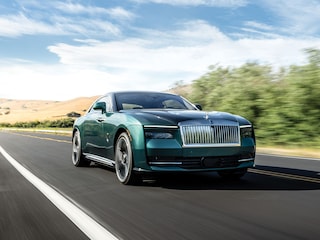
Vahan data offers two further insights: Porsche’s numbers are in the red, while Rolls-Royce is firmly in the green. For Rolls-Royce, electrification is an interesting path as it goes with the image they have been known for, silent drive and effortless power.
Why separate a discussion on Porsche? If you follow automotive blogs, you’ve likely seen the viral reports regarding the Taycan’s resale value. Some owners claimed values plummeted by nearly half in just a few years. That narrative dominated Reels, podcasts and television discussions: The idea that multi-crore EVs suffer from rapid depreciation. That, mixed with the consumer sentiment in the US, where battery replacement cost and infrastructure challenges started to become big speed breakers on the road to electrification, put all the potential buyers in a dilemma. However, the tide is turning now. The common customers are looking at EVs in a more nuanced, rational manner, and the luxury car makers are pivoting fast. Electric cars now account for 10 percent of Porsche’s overall sales in India, while the Spectre has become the second most delivered Rolls-Royce model over the last two years.
Also Read: How a young India is redrawing the luxury road map
The Electric Mix
So, this is it. The segment isn’t that big, options are not that many, and variants? Well, a fraction of what we see in the mass market products. The latest entrant was Tesla with its Model Y, the brand’s first official offering for India and due to its pricing, it automatically falls in a segment above the one it is seen in in the international market. The Model Y starts at ₹59.9 lakh ex-showroom, this for the rear-wheel drive option. The Long Range option comes in at roughly ₹67.9 lakh ex-showroom. BMW India offers a wider spread across segments. The BMW iX1, which is locally assembled, starts at an ex-showroom price of ₹49.90 lakh. This SUV is the most affordable electric from the German luxury brands and the only electric product from Bavarian Motors with a price tag of under a crore. The next in line is i5, a sedan, starting at an ex-showroom price of ₹1.19 crore, iX from ₹1.39 crore, the i7, the top-of-the-line sedan in the portfolio, sat at ₹2 crore and its M version starting at an ex-showroom price of ₹2.58 crore.
BMW iX1
Mercedes-Benz India’s electric portfolio is equally varied, with EQA at the entry point starting at an ex-showroom price of ₹67.2 lakh. The electric version of the B Class, EQB, starts at ₹72.2 lakh, EQE at ₹1.41 crore, and the G Class at ₹3.1 crore. There are two versions of EQS, the sedan starts at ₹1.3 crore and the SUV version at ₹1.33 crore.
Volvo has two electric products—EX40, a compact electric SUV, is priced at ₹50 lakh, ex-showroom. The other option is a coupe-shaped crossover called EC40, at an ex-showroom price of ₹59 lakh.
One of the headliners in this segment, the Porsche Taycan Electric, is available in India at a starting price of ₹1.69 crore, and the Cayenne Electric starts at ₹1.75 crore. Rolls-Royce Spectre starts at around ₹7.6 crore. The Black edition was launched at ₹9.5 crore.
Lotus Emeya
The Heritage. The Hurdle
The luxury segment is about exclusivity. It breathes on storytelling and flourishes on scarcity. This is what made brands like Rolls-Royce and Ferrari more than a mere piece of automotive machinery. They command a unique respect from a fan base, a year-long or maybe longer wait, and the bragging rights that come with it. But stories have a shelf life. While these brands have a powerful image, growth is a different question. Will they appeal to a younger generation concerned with sustainability who may not share a traditional fascination with big names? This generation will guide the market sooner than we think, especially as the average buyer’s age hits the mid-30s.
We are seeing a sharp drop in the average age of luxury buyers: The average Rolls-Royce customer is now 43, down from 56 in 2010. For Spectre, it must be lower. For brands like Mercedes-Benz, BMW and Lamborghini, that figure has fallen to between 35 and 38.
This demographic shift could be the most defining argument in the ICE (internal combustion engine) versus EV debate. Younger buyers care about the environment and sustainability; they don’t value lip service. They decide with intent, viewing their purchase as a contribution to the climate cause. Granted, this transition will take time. We are currently seeing a global ‘EV fatigue’. The initial euphoria has faded, replaced by concerns over infrastructure, battery prices and the geopolitical grip on rare earth minerals. This resulted in the shocking news of Porsche’s 99 percent operating profit fall last year and a subsequent scaling back of their EV plans—a move mirrored by Ford, GM and Stellantis. Was it a case of investing too much, too early—much like the current scepticism surrounding AI? Perhaps. But the market will consolidate and move forward once more ‘soulful’ products arrive from giants like Ferrari and Bentley.
Porsche Taycan
Gimmicks versus Legacy
The tragedy of modern cars is that the feature list is getting longer while the shelf life is getting shorter. They are becoming obsolete faster than Gen-Z vocabulary. And, this is not because of hardware, but the tech is becoming outdated. This is where the new-age tech-centric manufacturers have an edge: Their agility, focus on new technology, experiments with new features and over-the-air (OTA) updates. They approach cars like a smartphone. Legacy players, on the other hand, possess a century of automotive wisdom, but tech often takes a back seat. Luxury EVs fall in the unique cusp of the latest cutting-edge tech and legacy. We are seeing how legacy brands are trying to pivot towards tech-heavy products, and the new-age EV makers are trying to make up for the story, the craftsmanship, and the anecdotal legacy. This is a unique race toward the ‘holy grail’ of a hardcore, performance-oriented luxury automobile equipped with AI, seamless OTAs and instant torque.
Look at the products from Chinese giants like Xiaomi SU7 and BYD Yangwang U9, breaking records set by Porsches and Lamborghinis and that too at the ‘Green Hell’, Nurburgring, Germany, track. But, is the traditional luxury car buyer going to pay the same money for those two Chinese cars? Nope. To fight legends like Lamborghini, Ferrari and Porsche, you need to be a legend. In this day and age, can algorithms trump the legacy and find you a shortcut to legendary status? Possible. Remember the Hayabusa story? How a land speed record of 300+ kmph turned it into an overnight sensation.
Also Read: India-EU FTA could reshape luxury carmakers’ India strategy
The Changemakers
Covid-19 changed us. It skewed the entire planet and altered our worldview and our life goals. In the luxury car market, ‘YOLO’ wasn’t just a hashtag; it went beyond Drake and Coldplay lyrics to become a mantra for Indian buyers. Customers once known for being conservative, ‘anti-showoff’ and waiting for milestone purchases have changed. Rather than saving, many have adopted a ‘treat yourself’ mindset. Buying a Rolls-Royce, Bentley, Lamborghini or Maybach is no longer just an ‘arrived in life’ announcement. While the mass market was realigning post-Covid, luxury car companies saw record sales quarter after quarter. The biggest catalysts were young startup bosses, entrepreneurs and heirs of established businesses who pressed the pedal to the metal—and many are ready to go the sustainable path as well.
Santosh Iyer, CEO of Mercedes-Benz India, says: “Our younger buyers, comprising startup founders, entrepreneurs and salaried professionals, are increasingly preferring top-end BEVs, and many are buying these cars as their first luxury vehicle. This reflects a gradual reduction in the average age of customers and a growing preference for digital features and the sustainability narrative. However, some traditional luxury buyers still view BEVs as a niche addition to their mobility needs, maintaining a preference for ICE vehicles.”
Take Manan Shah who feels bad ditching his Rolls-Royce Spectre for any trip outside Mumbai, opting instead for the ICE or hybrid models in his fleet, which includes a Bentley, Lexus and several AMGs. Shah, the managing director of MICL Group, never considered himself an ‘EV person’, but he now has three electrics in his stable, including the Spectre and a Cayenne. “The perception game has changed, and customers forget the old ways,” he says, noting that several friends have also bought the Spectre.
According to him, the electric revolution is here to stay. He loves using these cars in Mumbai traffic; that extra scoop of excitement from instant torque is a game-changer for him, while the electric system adds a level of quiet refinement to an already-customised, feature-loaded vehicle. During one such conversation, conducted from his Rolls-Royce in the heart of Mumbai, one could hear no honking or traffic bustle in the background.
However, luxury customers need more than just acceleration and silence. Shah clearly outlines the issues makers need to fix. While the bespoke experience is world-class, Indian customers often cannot experience the cars before buying due to a lack of display units. Shah bought both his Spectre and Cullinan without a test drive. Clearly, Indian customers are ready to splurge like those in international markets and should be given similar options. This includes the charging network; manufacturers must work on longer ranges and dedicated charging stations for luxury cars rather than relying on third-party infrastructure. Exclusive cars deserve exclusive infrastructure.
Volvo EC40
How is 2026 Looking?
According to EY Parthenon India, electrics could reach 16 to 18 percent of the premium segment this year. Their assessment suggests that the GST 2.0 tweaks and the 5 percent GST on EVs, alongside PM E-Drive incentives, are finally showing results. While these subsidies significantly impact mass-market cars, the benefit for a luxury buyer is measured differently—it’s about the exclusivity of the experience.
With a pipeline of new models from almost every manufacturer, we are seeing a redefined strategy. BMW’s Neue Klasse (starting with the iX3) and Mercedes’s new GLC EV represent a radical design shift. Furthermore, the Indian love affair with the SUV remains unshaken; it is the body shape that will continue to rule the charts.
The entry of India’s largest mass-market manufacturer into the EV space also means an infrastructure boost. The luxury car buyers can afford larger batteries, so that they get a longer range, have drivers who can take care of the charging duties, but a more robust national charging network will help overall buyer confidence. The case study of the BMW iX1 LWB has shown that when you combine range, strong resale options and local manufacturing, Indian luxury buyers are ready to plug in.
In 1900, Charles Rolls, the co-founder of Rolls-Royce, said: “The electric car is perfectly noiseless and clean. There is no smell or vibration, and they should become very useful when fixed charging stations can be arranged. But for now, I do not anticipate that they will be very serviceable—at least for many years to come.”
That time has finally arrived.