Q. After the GST changes, where is demand coming from--affordable cars or premium models?
It’s still early. The last three months have thrown a lot of mixed signals. We had three things coming together: The GST changes, the festive season and a trailer shortage across the industry. So, retail numbers were driven by what dealers could deliver, not just by demand.
That said, there is a clear underlying trend: Customers are not stepping down, they’re stepping up. If a buyer has a fixed budget, the question is whether they downgrade the car they wanted or hold the budget and buy a higher variant. We are seeing much more of the latter. That’s why you’re seeing higher trims doing better and newly introduced upper variants finding traction.
We introduced an additional variant in one of our models—without any grand plan around GST—and it coincided with the tax change. That variant didn’t exist earlier, and volumes surprised us on the upside.
Our entire Bolero portfolio is now under Rs 10 lakh, which wasn’t the case earlier. That helped, but more importantly, customers used the benefit to buy better versions, not just cheaper cars.
Q. Is the post-festive demand holding up?
This, I have to insist, is very early to say. So far, yes, demand continues to be robust, helped by a strong wedding season in November. January would be a good place for us to see how things play out.
Q. What kind of growth are you looking at now?
We remain optimistic. When we guided for mid-to-high teens growth earlier this year, many thought it was aggressive at a time when the industry is growing much slower. We’re sticking to that view.
Also Read: EV market is where auto industry was 4 decades ago: Maruti Suzuki
Q. Do you see the GST reset as a structural change for the auto industry?
Absolutely. It’s a major simplification. Earlier, you had different rates for petrol and diesel, different cess levels, and a lot of confusion. Now it’s simpler: Fewer slabs, no fuel-type distortion. That helps customers make clearer decisions, and it helps us plan products better.
Q. You’re fighting for the Number 2 spot.
We’re not. We’re not chasing the No 2 spot, or any ranking for that matter. Market position is an outcome of what we do, not the objective itself. We don’t look over our shoulder at competitors. Our focus is the customer; if we get that right, volumes will follow.
We have no aspirations tied to where we rank in the market. What we do track very closely is brand power. That’s measured every month by a third party, not by us. We look at how customers perceive Mahindra. When buyers are asked which OEM is the most technologically advanced SUV maker, we want to lead, and we want to lead by a clear margin.
From a customer perception standpoint, that’s where we aim to be No 1. Everything else is simply an outcome of that focus.
Q. Tata has already built a lead in EVs. Is Mahindra late to the segment?
I’ll give you a slightly different answer.
We’ve always tracked revenue market share, not just volumes. Because we play in the upper end of the SUV market, our volumes will naturally be lower than others. But I’m not chasing the volume market, I’m chasing revenue market share.
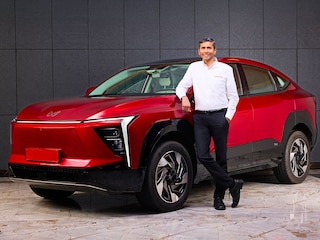
In EVs, within seven months, we are already number one by revenue. Our strategy for EVs remains the same as that for ICE. We launched products that customers fall in love with first. The fact that they are electric is almost secondary. So, we're not as worried about being late. When we came in, we came with a bang.
Q. What do you think about EV depreciation, which worries many buyers?
Early EVs didn’t come with battery warranties, which scared second buyers. We give lifetime battery warranties to first owners and even if you’re selling it, we have 10-year warranties that’s applicable to the second owner. That gives confidence to buyers. Also, the resale market is too young to draw conclusions; the market prices have not been established yet.
But, more importantly, people are looking at how much value they recover before resale, through lower running costs and tax benefits.
Q. There’s a lot of emphasis on exports. The brand is already strong in South Africa and Australia. How’s the UK plan shaping up?
The reason we’re looking at the UK is it’s a right hand-drive market and it’s a big SUV market. But we are studying the economics carefully. With Chinese players already there, we need to be convinced we have a clear right to win.
Q. So, if you realise what’s working in India might not work there, would we see some changes to the products?
Yes, absolutely. One of the early decisions we made was: If we go there, it will be EVs only because there’s no point entering with ICEs in a market that’s phasing them out. Also, the EVs we’ve developed meet international safety standards so that helps us as well.
Our focus is very clear: EV-only, SUV-only, and most likely larger SUVs. That’s the space we believe makes the most sense for us.