Tata Group shows why institutional memory is a strategic asset
N Chandrasekaran taking over from Ratan Tata was not simply a baton pass, it was a transmission of deeper ethos
By
Prefer us on GoogleLast Updated: Dec 22, 2025, 10:12 IST4 min
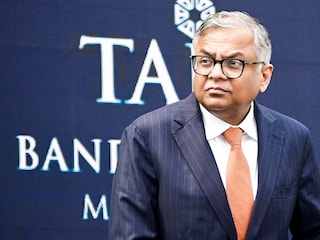
The Tata Group has recently drawn scrutiny over a listing debate, successor development, transparency at the trusts and a plane crash. Such issues warrant attention, but they need to be placed within a longer institutional arc: This is a 157-year-old enterprise shaped by cumulative decisions, leadership philosophies and governance choices across generations.
In the pursuit of agility and short-term performance, organisations often trade continuity for efficiency. One casualty of this trade-off is institutional memory. Although it is a strategic asset, most firms fail to document, transmit or protect it. Yet, for family businesses, where stewardship extends across generations and identity is inseparable from values, institutional memory is foundational.
The Tata Group exemplifies this proposition. Consider the 26/11 terrorist attacks in Mumbai, which left the Taj Mahal Palace Hotel, a symbol of Indian hospitality, under siege for nearly 60 hours. What followed was not merely a textbook case in operational resilience or crisis management, but also a masterclass in empathetic leadership, values-driven decision-making and cultural clarity. Employees did not abandon their posts. Some led guests to safety; others formed human shields. Several perished in their efforts to protect others. Lives were lost, but not principles.
The Tata Group, led then by Ratan Tata, responded with moral clarity. A dedicated Trust was established not only to support the families of the affected employees and guests, but also railway staff, street vendors, police personnel and even pedestrians who had suffered during the attack. This response was an extension of the group's longstanding values rather than a PR-mandated reaction. The Harvard Business School case study, The Ordinary Heroes of the Taj, underscored that not a single employee left the hotel to save their own life. This was not training, it was character.
That such behaviour could manifest across ranks and functions without explicit instruction speaks volumes about institutional culture and memory. It is not born of mission statements or crisis manuals. It is cultivated through leadership modelling, lived values, and an intergenerational understanding of what the institution represents.
Fast forward to 2025. An Air India aircraft, operated by the now-Tata-owned airline, heart wrenchingly crashed in Ahmedabad. Within hours, the group’s leadership swung into action. Assistance was swiftly mobilised for victims and their families. Information was disseminated transparently. The chairman of Tata Sons, N Chandrasekaran, was visible, present and deeply engaged. The response had all the hallmarks of organisational muscle memory: Calm, humane, decisive.
To those who have studied the Tata Group, this is not surprising. Chandrasekaran, the first non-family executive to lead Tata Sons, is not an outsider. His professional journey, spanning decades within the Tata ecosystem, including his stewardship of TCS, has steeped him in the group’s cultural DNA. He represents not a break from the Tata tradition, but its professionalised continuation. His response in Ahmedabad was, in many ways, an extension of the group’s 26/11 playbook. Not copied, but remembered. Not repeated, but reflexive.
This intergenerational consistency is what makes the Tata Group a case study in institutional memory. Memory, in this context, is not passive. It is performative. It lives in how decisions are made under pressure, how priorities are set in moments of ambiguity, and how organisations treat their most vulnerable stakeholders in times of crisis.
Family businesses, particularly those operating across generations, must internalise this lesson. Institutional memory is more than history. It is the core operating system. It shapes instinct, not just protocol. But for memory to endure, it must be deliberately cultivated. Stories must be documented. Experiences must be codified. Values must be articulated through lived examples, not slogans.
Organisations can institutionalise memory through several channels: Structured onboarding that includes legacy narratives; crisis handbooks that document prior responses and lessons; leadership development that focuses on intergenerational transmission of values; and retention strategies for long-serving employees who act as memory-carriers. Oral histories, archival projects and annual commemorations can serve as vital rituals that reinforce institutional continuity.
Moreover, succession planning in family businesses must go beyond capability assessments to include cultural alignment. The successor need not mirror the founder but must carry the flame. When N Chandrasekaran took over from Ratan Tata, it was not simply a baton pass; it was a transmission of a deeper ethos. He was not merely chosen for his operational excellence, but for his fidelity to the Tata way of doing things. That fidelity was visible in how the group responded to the Ahmedabad air crash—swiftly, compassionately and without showmanship.
Critics often argue that institutional memory can ossify an organisation. But the Tata example suggests otherwise. Memory does not mean stagnation. When well-curated, it enables firms to evolve without losing their soul. In a world that prizes reinvention, family businesses must resist the temptation to discard the past in the name of agility.
Institutional memory also helps professional managers operate with conviction in the absence of constant oversight. It becomes the unwritten code of conduct. If culture is what people do when no one is watching, institutional memory is what guides them when no one is instructing.
As family businesses across the globe strive for scale and relevance in a rapidly shifting landscape, the question they must ask is not only what legacy they will leave, but also how that legacy will be remembered, transmitted and applied. The Tata Group provides a compelling answer: Institutional memory, when paired with moral clarity, is not just a relic of the past. It is a strategic asset for the future.
The writer is founder and family business navigator, Bodhi Advisory & Nurturing Group
First Published: Dec 22, 2025, 10:27
Subscribe Now