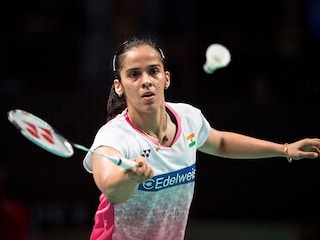
On January 19, on a podcast hosted by Subhojit Ghosh, badminton player Saina Nehwal announced her retirement. The news, which came after nearly two years away from playing and competition, marked not just the end of a glittering personal journey but the closing of a defining chapter in India’s sporting history. After years of grappling with a persistent knee injury that closed the door on any hopes of returning to competition, the 35-year-old chose to step away from the sport. Speaking on the podcast, she revealed that the extensive damage in her knees had made rigorous, top‑level training an unachievable demand. Her final appearance on court dates back to the Singapore Open in 2023.
Over a remarkable 21‑year journey, Nehwal waged battles far tougher than physical injuries. Born in a conservative household which favoured boys, Nehwal, despite support from her parents, struggled to pursue training. During her formative years, her father, Harvir Singh, made many personal sacrifices to support her training, including borrowing money to ensure his daughter had access to quality coaching and facilities.
Rising like a phoenix from all this, Nehwal was able to revolutionise badminton in India, becoming a player of many firsts. In 2008, when she made her international breakthrough, she became the first Indian woman to win the BWF World Junior Championships. That same year, she reached the Beijing Olympics quarterfinals—another first for India. Then, in 2009, at the Indonesia Open, she became the first Indian woman to win a BWF Super Series title.
Remarkable milestones and many more firsts followed—the first Indian badminton player to win an Olympic medal, which was a defining moment for her and the nation at the London 2012 Olympics, where she won the bronze; first Indian woman and only the second Indian (after Prakash Padukone) to reach World No 1 in 2015; and the first Indian woman to win two Commonwealth Games singles golds (2010, 2018).
Read More
All of Nehwal’s wins led to a powerful impact. It altered the sport’s place in India. Badminton viewership surged; academies sprung up nationwide, and a generation of young athletes, including future stars like PV Sindhu and Lakshya Sen, took inspiration from her success. She transformed the landscape of Indian badminton.
In her illustrious career, spanning nearly two decades, Nehwal won over 24 international titles, 11 of which are Superseries ones. Her wins were duly recognised by the nation with the Arjuna Award, Rajiv Gandhi Khel Ratna, Padma Shri and Padma Bhushan.
Rise to glory, filled with struggles
Born in 1990, in Haryana, Nehwal started her badminton training at the age of eight, after a push from her mother Usha Nehwal, who was a state-level badminton player. Before badminton, Nehwal had taken up karate, where she excelled, earning a brown belt. After moving to Hyderabad, upon her father’s transfer, Nehwal joined the Pullela Gopichand Academy to train in the sport at the age of 13.
Years of training led Nehwal to a quarterfinal place in the 2008 Beijing Olympics, but she lost that match and was devastated. In a 2010 interview with Forbes India, her coach Gopichand recounted an incident after the tournament. “We were on our way back and Saina was crying. I tried to lighten the mood, but it didn’t work. So, I told her that we would start practising the next day at 6 am to shock her out of it. I meant it in jest. She looked at me seriously and said, ‘Sir, can we please start at 7 instead of 6?’ I was shocked.”
In another 2013 interview, Nehwal told Forbes India: “My parents initially wanted me to focus on studies, but God wanted me to become a badminton player. One day in Hyderabad, Arif sir [a Dronacharya Award winner] recognised me as a player and I became one. Since 1999, badminton has been my only focus. Nothing else.”
After a host of wins and ensuring a strong presence for India on the global badminton map, Nehwal met with a career-altering injury. During the Rio 2016 Olympics, she had to undergo surgery because of a severe knee injury. The surgery was successful and Nehwal made a comeback, and still managed to win a World Championships bronze in 2017 and the Commonwealth Games gold in 2018, proving her indomitable resolve. But by 2024, her knees had deteriorated significantly. Arthritis and cartilage erosion meant she could train only a couple of hours before swelling set in. The intense eight-nine-hour training routine required for world‑class competition became impossible, a fact she openly shared during her retirement explanation.
Other significant impacts
Nehwal’s rise sparked a nationwide surge in youngsters playing badminton, fuelling investments in training centres, academies and sponsorships that radically expanded the sport’s ecosystem. She also emerged as a powerful symbol of women’s empowerment: A reminder to countless young girls that talent, determination and resilience can overcome both societal bias and limited access.
In 2024, Nehwal inaugurated the Badminton Pros Academy by Saina Nehwal. Managed by sports operators like Hotfut Sports, it offers expert coaching for various skill levels with the goal of nurturing future badminton champions. It has courts, offers training and sometimes even pay-to-play options.