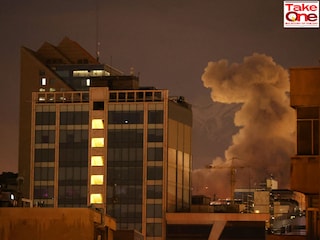
Escalation of geopolitical tensions in West Asia has stirred chaos, confusion and fear among investors worldwide, while equities in India and other oil-importing countries are reeling under pressure.
With the US and Israel launching fresh targeted attacks on Iran, the bargaining chip continues to be the critical oil corridor, the Strait of Hormuz (SoH), through which almost 20 percent of global oil and liquefied natural gas (LNG) is traded. Over 40 percent of India’s crude imports transit through the SoH.
“How long this conflict lasts and how oil prices react to these events, we think, will be the key to monitor for risk sentiment,” says Chetan Seth, Asia-Pacific Equity Strategist, Nomura.
Seth adds that any sustained rise in oil prices (due to supply disruptions) will be negative for Asian equities, which are mostly in net energy-importing countries. Conversely, if the conflict ends relatively quickly, alongside the fall of the Iranian regime, any negative impact on stocks will likely be short-lived.
Brent crude has already moved to a seven-month high of $72.8 per barrel. Analysts suggest that a Hormuz disruption could push prices above $90 per barrel, while a broader regional conflict could take crude beyond $100 per barrel. India imports more than 85 percent of its domestic oil needs, while around half of its crude oil imports currently transit through the SoH. In FY25, Iraq, Saudi Arabia, the UAE and Kuwait (in the Persian Gulf) cumulatively comprised close to 46 percent of India’s annual crude oil imports, underlining the importance of this chokehold for India’s energy security.
The SoH is the only marine entryway into the Persian Gulf, with Iran on one side and Oman and the UAE on the other. It also links the Persian Gulf to the Gulf of Oman and the Arabian Sea in the Indian Ocean. The closure of this critical oil corridor will lead to a steep increase in oil prices, affecting all countries, even if oil is not imported from the Gulf region, as prices tend to be linked across markets.
“The conflict also complicates matters for India, which imports large amounts of Middle East oil and has agreed to wind down purchases of Russian oil as part of a trade deal with the US — a deal which now sits in limbo after the US Supreme Court struck down US President Donald Trump’s country-based tariffs,” say analysts at Moody’s.
The conflict in West Asia has already sunk most Asian markets on Monday, with Indian benchmarks, the Sensex and the Nifty, losing around 1 percent each. Markets elsewhere in Japan and Hong Kong also skidded around 2 percent.
Trump earlier warned that combat operations in Iran were continuing and would carry on until all of Washington's objectives are achieved, Reuters reported.
Israel unleashed a new wave of strikes on Tehran on Sunday, saying it aimed to dominate the skies after killing Iran's supreme leader, Ayatollah Ali Khamenei, and leaving the Islamic Republic scrambling to rebuild its leadership amid its biggest test in five decades, Reuters reported. The leader, who had built Iran into a powerful anti-US force and spread its sway across the Middle East during his 36-year iron-fisted rule, was working in his office at the time of Saturday's attack.
Tehran retaliated with missiles and drones aimed at Israel and countries hosting US forces, including the United Arab Emirates, Qatar, Kuwait, Bahrain, Iraq, Jordan and Saudi Arabia.
However, economists at Nomura are optimistic that a regime change in Iran could lead to the dismantling of its sanctions, and India could benefit from an increase in global crude oil supply as a consequence over time.
Oil Prices Spike: The Fallout
According to Dayanand Mittal, analyst at JM Financial, crude prices may easily jump to $90–100 per barrel in the near term if the SoH is blocked for a prolonged period. “Although that is a low-probability event, as Iran has not been able to block the same for a prolonged period during earlier wars as well due to strong measures taken by the US and Western countries against any such disruptions,” he adds.
Brent crude prices had already risen over 10 percent in February to $73 per barrel on potential supply disruption risks due to heightened US-Iran tension. Oil prices have been drifting higher since mid-January, building in a higher geopolitical risk premium.
“Though the US is unlikely to damage Iran’s oil and gas assets, any disruption to Iran’s crude exports of 1.5–2 mmbpd can be absorbed in a well-supplied oil market, given the likely oversupply of 3.7 mmbpd in 2026 and 1–2 mmbpd of spare capacity with Saudi Arabia,” Mittal explains.
Meanwhile, on March 1, OPEC+ agreed to a modest oil output boost of 206,000 barrels per day for April, just as the West Asia crisis disrupted oil flows from key members of the producer group in the Middle East. Oil, gas and other shipments from the Middle East via the Strait of Hormuz have come to a halt since Saturday after shipowners received a warning from Iran saying the area was closed for navigation, according to Reuters.
Barclays commodities analyst Amarpreet Singh has warned that the price of Brent crude oil could hit $100 per barrel in the near term following the outbreak of conflict in the region.
However, analysts at Barclays are still not concerned about a Brent crude price hike or its impact on the economy.
“This would not be the first time that Emerging Asia might have to contend with $100 per barrel oil — and there remains little reason to be alarmist over the economic effects of higher energy prices, in our view,” they argue.
Economic Risks
The maths of India’s economy becomes more complex with rising crude prices. Every US dollar rise in crude increases the annual import bill by $2 billion, putting pressure on the trade balance, according to estimates by Venkatesh Balasubramaniam, analyst at JM Financial.
Simply put, higher crude oil prices should lead to higher retail prices of fuel products and increased inflation. The RBI estimates that a 10 percent increase in global crude oil prices leads to a 0.15 percentage point drop in gross domestic product (GDP) growth and a 0.3 percentage point increase in inflation, but this is based on the old inflation series.
Factoring in the new series, Nomura economists see a much lower impact of 0.1 percentage point on inflation and GDP growth and believe that there is a buffer to absorb crude oil price shocks before the government needs to consider a fiscal hit to make up for under-recoveries.
“India’s major external sector risk, though, is not from its current account but from the capital account, where a sharp drop in foreign investment flows is leading to a large balance of payments deficit in FY26. A combination of a widening current account deficit (CAD) and foreign institutional investor (FII) outflows due to global risk aversion could accentuate rupee weakness,” they add.
Others concur. Balasubramaniam explains that prolonged tensions may increase logistics and marine insurance costs, disrupt Gulf shipping routes and pressure the trade balance. The Indian rupee also faces a near-term depreciation bias, with potential RBI intervention through forex reserves. The transmission channel is clear: higher crude increases inflation risk; higher inflation pushes bond yields up; rising yields compress equity multiples.
Asia’s high-income economies, which heavily rely on commodity imports, are particularly vulnerable to the direct economic fallout from the conflict. Japan, South Korea, Taiwan (China), Singapore and Hong Kong import more than 80 percent of the energy they consume domestically. They also depend heavily on food imports.
“Higher commodity prices would raise consumer and producer inflation, potentially forcing central banks to pause their easing cycles or even raise policy rates. Higher prices would also inflate import bills, weakening trade balances. As imports become more costly, greater financial outflows would weaken currencies,” Moody’s says.According to Nomura economists, temporary supply-side shocks can trigger even higher oil prices if there is a curtailment of Iran’s oil exports, damage to Gulf energy infrastructure, or a vessel traffic shortage or partial disruption in the SoH.
“Higher oil prices are a negative terms-of-trade shock for Asia, but with local fuel prices often regulated, the impact on growth and inflation should be manageable,” they say.
Nomura economists expect inflationary risks to become a larger threat if the rise in oil prices is sustained and spills more broadly into food and other commodities due to an increase in transportation and freight costs, as that could push up inflation expectations.
The impact of higher oil prices on Asian inflation is not straightforward. While energy accounts for 3–14 percent of the consumer price index (CPI) basket, and every 10 percent oil price change, on average, adds 0.2 percentage point to headline CPI inflation, the actual pass-through differs significantly across economies due to government intervention.
Aditi Nayar, Chief Economist at ICRA, says that as the situation in West Asia unfolds, the extent to which it is prolonged and widens will have a bearing on India's macros, including the impact of fuel prices on inflation, the twin deficits, as well as remittances.
Who Gains When Oil Rises?
Mahesh Nandurkar, Head of India Research and Equities Strategist at Jefferies India, feels that the impact of the Middle East conflict is likely to be short-term for markets. He adds that recent regional conflicts have been temporary, and a dip could be a buying opportunity.
“Crude remains the key macro variable for Indian equities under the current escalation scenario,” Balasubramaniam says.
He explains that Indian markets are likely to move from earnings-driven to oil-driven trading in the near term. Upstream energy and defence may see relative support, while oil-sensitive sectors such as oil marketing companies (OMCs), paints, tyres, aviation and chemicals face margin pressure.
ONGC and Oil India are likely to be key beneficiaries if Brent sustains above $70 per barrel, as every dollar rise in oil prices boosts their earnings by 1.5–2 percent each.