Mahindra exits Japan farm unit, sharpens ‘growth gems’ strategy
As M&M leaves Japan, a look at all the businesses it has exited under Anish Shah
Last Updated: Mar 02, 2026, 18:25 IST2 min
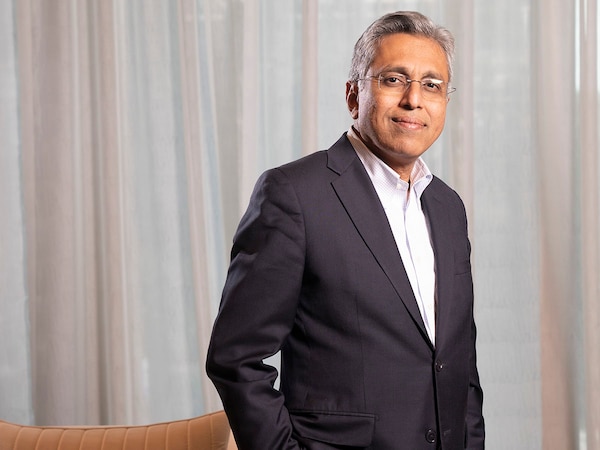
Mahindra & Mahindra (M&M) is accelerating its “no holy cows” capital allocation strategy, exiting a loss-making Japanese agricultural joint venture as Group CEO and MD Anish Shah continues to prune the conglomerate’s global portfolio to focus on high-growth businesses.
The “holy cows” reference dates back to when Shah was taking charge at M&M, first as deputy MD and group CFO in April 2020, and then as group CEO a year later. At the time, Anand Mahindra, who was stepping down from executive functions, had told Shah: “There are no holy cows. You can change whatever you want.”
On Monday, M&M said it will exit its Japan agricultural machinery business as part of portfolio rationalisation following a strategic review.
Mitsubishi Mahindra Agricultural Machinery (MAM), an associate of the Indian automaker, will now move toward liquidation, according to an exchange filing on Monday. The Matsue-based unit plans to cease production and sales by the first half of fiscal 2027, though it will continue to provide spare parts and warranty services to existing customers.
The exit marks the latest move by Shah to distance the group, which posted revenue of Rs1.59 lakh crore in FY25, from underperforming international assets that have long weighed on its consolidated balance sheet. Since taking the helm in 2021, Shah has championed a mantra of “Think big. Do less. Execute flawlessly.”
“The basic message we gave people was do less, but whatever we do, do it very well,” Shah said in an earlier interview with Forbes India.
Under Shah’s leadership, Mahindra has been ruthless in identifying and offloading businesses that fail to meet a clear path to an 18 percent return on equity. MAM, which reported a loss of Rs227.4 crore ($27.4 million) for the year ended March 2025, fell squarely into that category.
The Japanese unit had a negative net worth of Rs17.7 crore as of last March. By exiting, Mahindra eliminates the need for ongoing funding to cover annual losses, the company said.
The Japan withdrawal follows a string of high-profile exits under the Shah Doctrine:
SsangYong Motor Company (South Korea)
Mahindra had already stopped funding the struggling automaker before Shah formally took charge, but under his watch the company completed its disengagement as SsangYong went through court-led rehabilitation and changed ownership in 2022. It marked the end of a decade-long experiment in global automotive expansion that never delivered sustainable returns.
In early 2023, Mahindra transferred control of Peugeot Motocycles to Mutares, retaining only a minority stake. Operational control moved out. The European two-wheeler bet, like SsangYong, had promise but required disproportionate managerial and financial bandwidth.
In 2023, the group exited aircraft manufacturing through divestments and subsequent liquidation of its Australian aerospace arm. It was capital-intensive and peripheral to the core thesis.
“Exiting businesses created a momentum and the stock price tripled,” Shah noted in the earlier Forbes India interview, emphasising that the market has rewarded the group’s focus on its core SUV and tractor franchises.
The cash and management bandwidth freed up by these exits are being diverted toward what Shah calls “Growth Gems”—a portfolio of 10 businesses ranging from renewable energy to tech services that the group believes can scale significantly in valuation.
The valuation of these “gems” has already jumped to $4.2 billion in 2024 from $0.8 billion in 2020. By cutting the cord in Japan, Mahindra is signalling to investors that it will not hesitate to let go of its past to fund its future.
First Published: Mar 02, 2026, 18:33
Subscribe Now